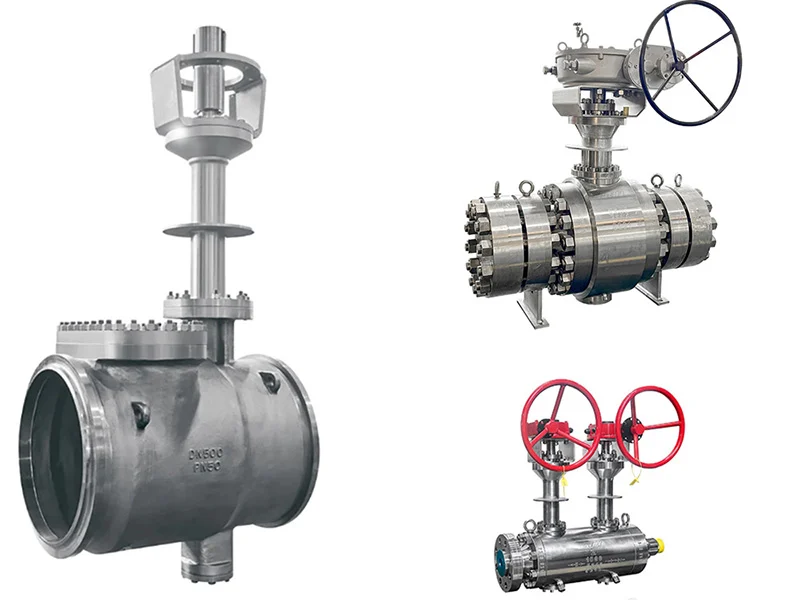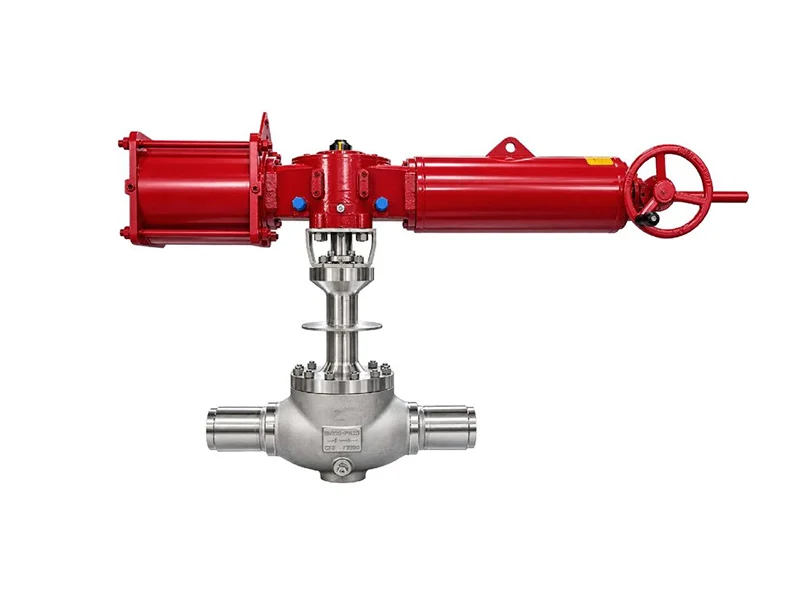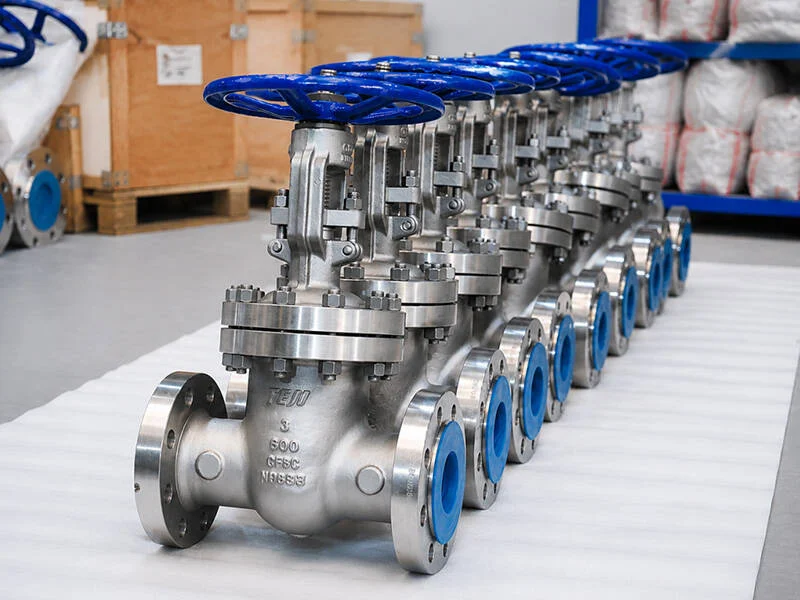
Cryogenic valves are typically used to handle extremely low temperatures and often high pressures, such as liquefied natural gas, liquid oxygen, and liquid hydrogen. Cryogenic valve testing is a crucial step in ensuring their safe, reliable, and efficient operation under extreme conditions.
In actual production, we sometimes encounter situations where rigorously tested cryogenic valves leak as soon as they are warmed up. Is this due to insufficient testing? Of course not.
Under cryogenic conditions, the seals are forcibly compressed to achieve a seal. However, the elastic deformation within the material is not fully synchronized. When the valve rapidly warms up from a -196°C environment to room temperature, the rebound speed of the sealing material lags behind the temperature change. A tiny gap instantly appears between the previously compressed sealing surfaces, allowing the medium to leak out.
Simply put, the essence of leakage is that the deformation recovery speed cannot keep up with the pace of temperature rise. After the elastic element is completely unloaded from the cryogenic load, it does not immediately complete its full deformation recovery; it takes time to return to its initial state.
What should you do in this situation?
On-site Inspection Checklist
Safety Preparations Beforehand
Operators should wear anti-freeze gloves and goggles, familiarize themselves with the characteristics of the cryogenic medium and emergency response procedures in advance, and confirm that on-site ventilation and fire-fighting facilities are in good working order. Reduce the system pressure to a safe range beforehand; do not disassemble valve components under pressure to avoid freezing damage from cryogenic medium spray.
Leakage Type Location and Troubleshooting
Inspect the valve stem packing, flange connection surface, and valve body in sequence to check for frost or signs of medium seepage, and determine the location of external leaks. Check for internal leaks at the sealing surface by observing abnormal changes in downstream pressure and flow, or by using a helium mass spectrometer leak detector at the valve outlet.
Root Cause Confirmation for Temperature Rebound Leaks
Check the valve cryogenic treatment record to confirm whether the 2-6 hour cryogenic setting process was completed, and investigate whether the delayed rebound is due to insufficient release of material elastic deformation. Inspect the sealing material to confirm whether the difference between its cryogenic shrinkage rate and the shrinkage of the valve body metal exceeds the design allowable range, and investigate sealing gaps caused by asynchronous shrinkage. Re-measure valve stem curvature and flange bolt pre-tightening torque to confirm whether there is sealing failure caused by bolt loosening or valve stem deformation at low temperatures.
II. On-site Rectification Operation Checklist
Minor Leakage Non-invasive Rectification
For minor external leaks at the valve stem packing and flange, tighten the gland/flange bolts evenly in a diagonal sequence, with a single tightening amount not exceeding 1/4 turn to avoid compressing the packing and causing valve stem jamming. For valves with soft-seal structures, use a wrench to finely adjust and tighten the sealing components appropriately to temporarily eliminate small gaps caused by elastic rebound.
Component Replacement Rectification
If tightening is ineffective, disassemble the valve and replace it with aging-resistant PTFE or graphite packing suitable for low-temperature operating conditions. Install the packing in a staggered manner (30°~45°) around each ring to ensure uniform sealing. Replace the low-temperature compatible sealing gasket and retighten the flange bolts diagonally to the standard torque to eliminate sealing gaps caused by asynchronous shrinkage.
Deep Fault Rectification
If the valve seat or valve core is deformed or damaged, directly replace it with a low-temperature valve of the same model, re-perform cryogenic shaping according to specifications, and then reassemble. For leaks in the valve body caused by pinholes or microcracks, pressurized injection or welding sealing techniques are used for repair. After repair, a low-temperature helium leak test is performed again to verify the sealing performance.
III. Post-Rectification Verification Steps
After reassembly, a room-temperature hydrostatic strength test is first performed to confirm that there is no structural leakage in the valve body. A room-temperature sealing test is then completed by introducing helium gas. Next, the valve is immersed in liquid nitrogen to cool to -196℃ and kept at a stable temperature to complete the low-temperature sealing test. After the valve naturally returns to room temperature, the room-temperature leakage rate is measured again. Only after confirming that there is no secondary leakage after returning to room temperature and that the rectification is qualified can the valve be put into use.