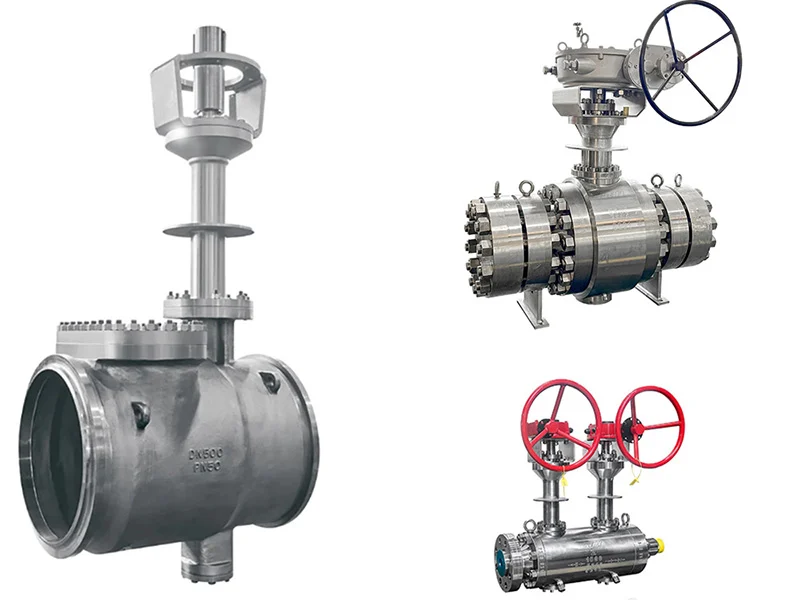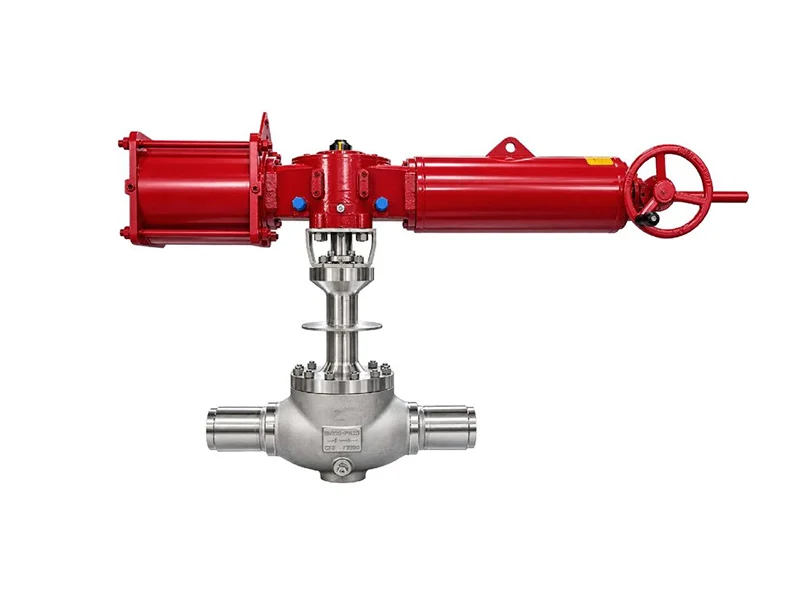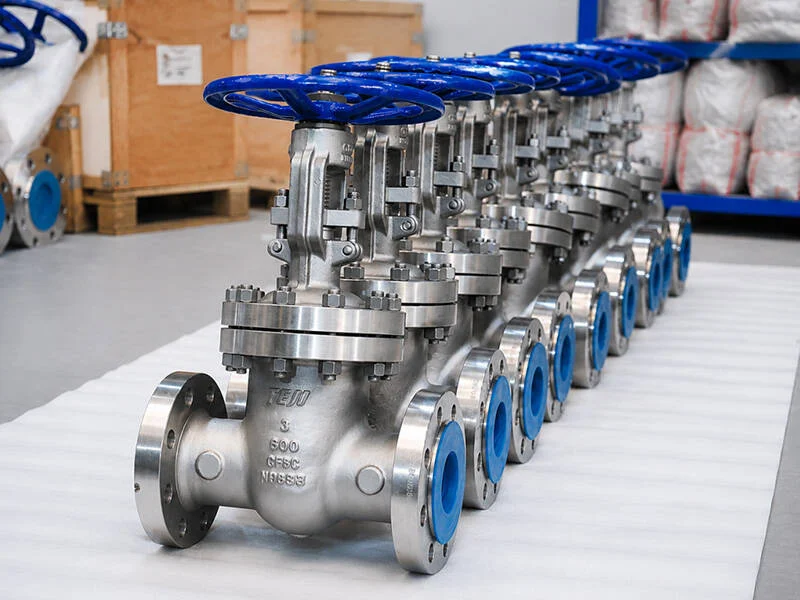
Cryogenic valves are industrial valves specifically designed for media temperatures ranging from 40°C to 196°C or even lower. They are suitable for ultra-cold fluid systems such as liquid oxygen, liquid nitrogen, liquefied natural gas, and ethylene. They utilize cryogenic materials and specialized structural designs to ensure reliable sealing and stable operation in extremely low-temperature conditions. Common types include cryogenic ball valves, gate valves, globe valves, and butterfly valves, and are widely used in aerospace, nuclear industry, petrochemical industry, and natural gas industries.
Operating Principle of Cryogenic Valves
Cryogenic valves control the flow and pressure of cryogenic media by adjusting the opening between the valve core and the valve seat. Their core operating principle can be divided into three steps:
Signal Reception: An electric or pneumatic actuator receives an electrical or pneumatic signal from a control system (such as a DCS or PLC).
Drive and Adjustment: A servo motor or cylinder within the actuator transmits power to the valve stem through a speed reducer, moving the valve core and adjusting the valve opening.
Feedback Control: The valve positioner monitors the valve core position in real time and provides feedback to the control system regarding the actual opening, creating a closed-loop regulation loop to ensure that the flow or pressure precisely matches the setpoint.
Why do cryogenic valves use long stems?
Protecting the stuffing box
In cryogenic environments, as the temperature drops, the packing’s elasticity gradually diminishes, reducing its leak-proof performance. If the medium leaks, ice can form between the packing and the valve stem. This not only affects the normal operation of the valve stem, but also scratches the packing during vertical movement, causing serious leakage. A long stem isolates the stuffing box from the cryogenic medium, keeping it at room temperature as much as possible, above 8°C. This maintains the packing’s elasticity and sealing properties, ensuring the valve’s tightness.
Easy to Insulate
Cryogenic valves require effective insulation to prevent cold energy loss. The long stem design provides ample space and length for wrapping insulation material, effectively enveloping it, reducing heat transfer, preventing vaporization of the cryogenic medium, and maintaining system stability and operational safety.
Easy to Maintain and Replace Valve Maintenance
Process piping and valves in the cold section of equipment are often installed in a “cold box.” The long stem allows it to extend through the wall of the cold box. When replacing the main valve components, simply remove them through the bonnet, without disassembling the valve body. The valve body and pipe are welded together to minimize leakage from the cold box, ensuring valve sealing and facilitating maintenance and replacement.
How to Maintain Cryogenic Valves
Cryogenic valve maintenance should focus on sealing, material low-temperature performance, and operational reliability, requiring a combination of regular inspections and targeted maintenance.
I. Key Points for Daily Maintenance
1. Sealing Inspection
Inspect the valve body, bonnet, and joints for leaks during each shift. Immediately shut down the machine if any abnormality is detected. Regularly replace packing and gaskets to ensure proper compression of the stuffing box to prevent leakage and ensure smooth operation of the valve stem.
2. Lubrication and Cleaning
Lubricate moving parts such as the valve stem and threads at least monthly to prevent the ingress of impurities. Keep the exterior of the valve clean and regularly remove any ice, oil, or corrosive media residue.
3. Operating Instructions
Open and close the valve slowly to avoid material cracking or damage to the sealing surface caused by sudden temperature changes. For valves that are frequently opened and closed, maintain lubrication records and adjust the operating frequency as necessary.
II. Regular Maintenance Cycles
Monthly Maintenance: Check the operating status of actuators (such as electric and pneumatic heads) and calibrate positioner feedback signals.
Quarterly Maintenance: Disassemble and inspect key seals, test valve leakage, and perform non-destructive testing (such as ultrasonic thickness measurement) on valve bodies operating under low-temperature conditions.
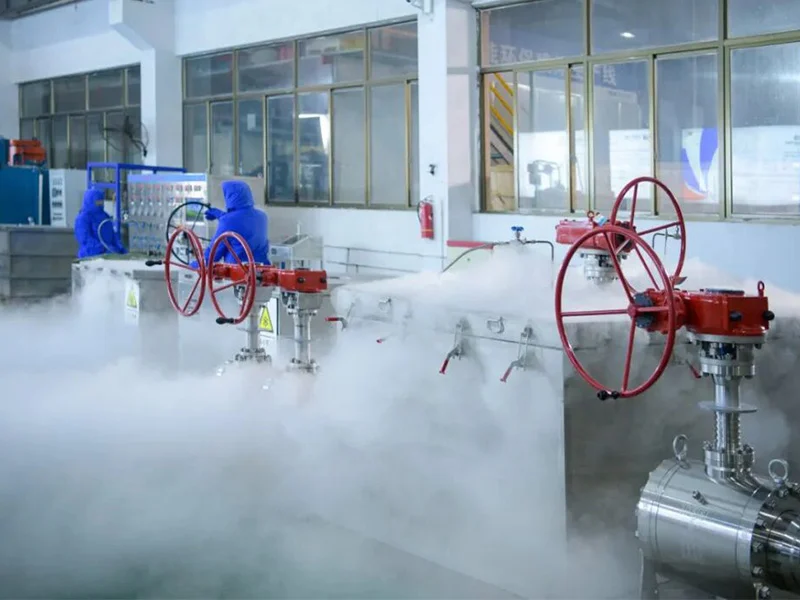
Annual Maintenance: Perform a comprehensive disassembly inspection, replace aged packing, gaskets, and other wear parts, and re-perform low-temperature seal testing (such as liquid nitrogen cooling).
Summary
Cryogenic valves are widely used in various industries due to their critical functions. If you are looking for a suitable cryogenic valve manufacturer, TEJI is a good choice. We not only provide high-quality valves, but also offer professional valve solutions. We welcome your inquiries.