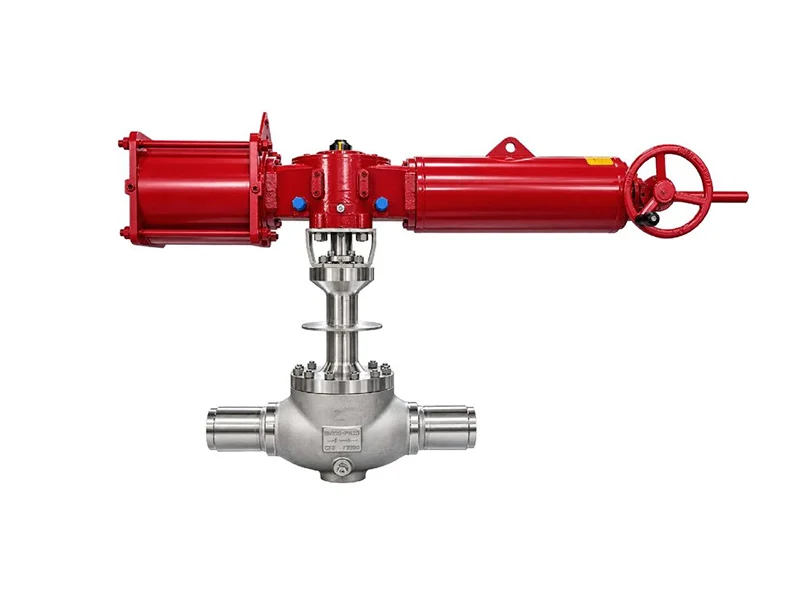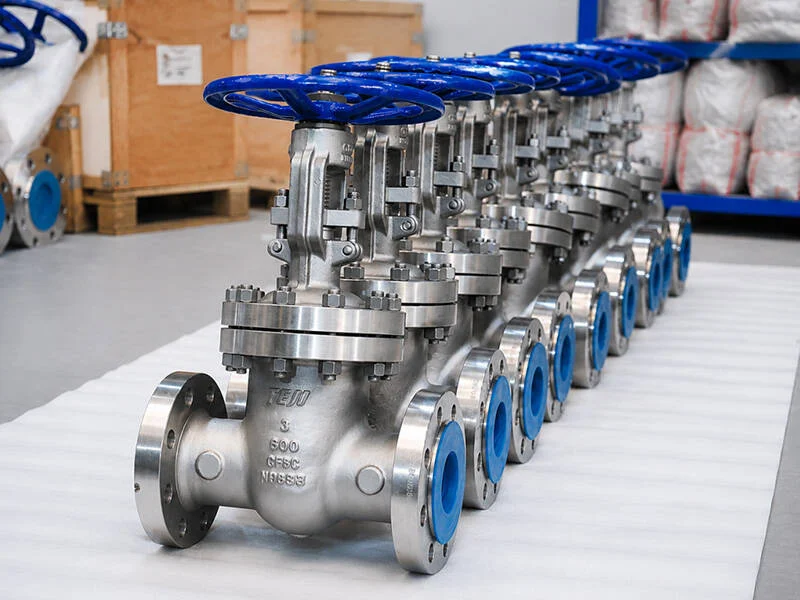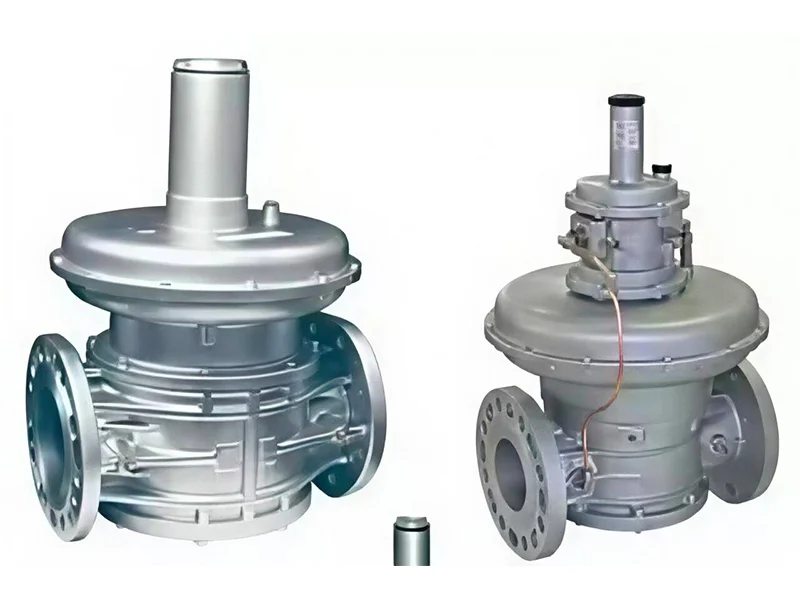
A plug valve is a rotary valve with a closing member or plunger. During operation, a 90-degree rotation connects or separates the passageway on the plug with the passageway on the valve body, achieving opening or closing. The plug can be cylindrical or conical. The passageway in the former is generally rectangular, while the passageway in the latter is trapezoidal. It features a simple structure, rapid opening and closing, and low fluid resistance, making it ideal for shutting off and connecting media, diverting flow, and sometimes also used for throttling.
Types of Plug Valves
Based on their structure
Tight-type: The sealing gap is adjusted using a nut at the bottom of the plug. This simple structure is suitable for low pressure and small diameters.
Self-sealing: The sealing surface is self-tightened using media pressure, and sealing performance improves with increasing pressure.
Lubrication: A grease injection system maintains a balanced sealing grease pressure, making it suitable for high-pressure and high-temperature applications.
Lifting: During operation, the plug is first lifted to release contact between the sealing surfaces, and then rotated 90° to complete the opening and closing process, significantly reducing the opening and closing torque.
Compression-type: An earlier design, using PTFE sealing rings, suitable for corrosive media.
Classification by Channel Type
Straight-through type: A single fluid channel with a low pressure drop coefficient (0.15), primarily used for shutting off media.
Tee-type: A T-shaped channel, used for media diversion or flow direction switching.
Four-way type: A cross-shaped channel, used for multi-directional flow distribution, commonly used for pipeline pressure regulation.
Classification by Sealing Method and Application
Soft-seal type: Made of elastic materials such as PTFE, it offers excellent sealing performance and is suitable for corrosive, highly toxic, and highly hazardous media, with a leakage rating up to ANSI B16.104 Class VI.
Hard-seal type: A metal sealing surface combined with grease forms an oil film, capable of withstanding pressures up to 64 MPa and temperature resistance from 29°C to 425°C, suitable for high-pressure and high-temperature applications.
Rising-type plug valve: Available in both soft and hard seal versions, it allows for in-line maintenance and is commonly used in chemical and petrochemical plants.
Advantages of plug valves
Quick operation and quick opening and closing
Plug valves can be switched from fully open to fully closed, or vice versa, by simply rotating the valve plug 90 degrees (a quarter turn). This enables it to quickly shut off or start flow, making it ideal for applications requiring emergency shutoffs or rapid switching.
Minimal flow resistance, high flow capacity
When a plug valve is fully open, the shape and size of its valve orifice (port) typically matches the pipe’s inner diameter, forming a straight-through flow path. Fluid flows virtually unimpeded, resulting in minimal pressure loss. This straight-through design provides near-optimal flow characteristics (high Cv values) among various valve types.
Excellent sealing performance, enabling bidirectional sealing
High-quality plug valves (especially oil-lubricated or pressure-balanced types) offer excellent sealing performance. Their tapered plug design allows mechanical means (such as a nut) to compress against the valve seat, achieving a bidirectional seal (i.e., both sides of the valve can withstand pressure and seal), effectively preventing leakage in both directions.
Simple structure, easy maintenance
Plug valves have relatively few parts, resulting in a compact and simple design. This means fewer points of failure, and if maintenance is necessary, disassembly and assembly are generally quick and easy.
Disadvantages of Plug Valves
Sealing Surfaces Susceptible to Wear: During the opening and closing process, the sealing surfaces rub against each other, causing significant wear and tear. Even at high temperatures, this can easily cause galling, affecting sealing performance and reducing valve life.
Limited Flow Control Capacity: Poor throttling performance makes it difficult to precisely control flow. After a certain opening, flow changes are insignificant, making it unsuitable for applications requiring precise flow control.
High Maintenance and Repair Costs: Some plug valves often require manual sealant addition. While automatic injection can overcome this issue, it increases the cost of additional equipment.
Large Installation Space Requirements: Large dimensions and opening height require a larger installation space.
Applications
Oil and Gas
Used for intercepting and controlling high-pressure, sandy, or corrosive media in onshore and deep-sea oil and gas wellheads, long-distance pipelines, and offshore platforms; and in atmospheric and vacuum distillation, hydrocracking, and coal-to-olefins plants. Resistant to temperatures exceeding 450°C and highly corrosive media such as cyclohexane acids.
New Energy
Hydrogen station compressor outlets, liquid hydrogen storage tank inlets and outlets, and hydrogen fuel cell hydrogen supply systems address the challenges of 70 MPa high-pressure hydrogen embrittlement and cryogenic leak-proofing at 253°C; high-purity, high-precision fluid control in polysilicon production and lithium battery manufacturing.
Power and Environmental Protection
Nuclear power plant primary circuit main piping and supercritical thermal power unit steam systems meet seismic and radiation resistance requirements and operate at 25 MPa/540°C. Carbon capture and discharge (CCUS) and wastewater treatment, CO₂ compression and transmission pipelines, desulfurization and denitrification systems, and industrial wastewater chemical dosing, offer resistance to CO₂+H₂O corrosion and acidic wastewater (pH < 2).
Food and Pharmaceuticals
Aseptic filling systems and CIP cleaning circuits for the dairy, beverage, pharmaceutical, and beer industries utilize a seamless 316L stainless steel design.
The above is a summary of plug valves. For more information, please contact us. TEJI is always at your service.