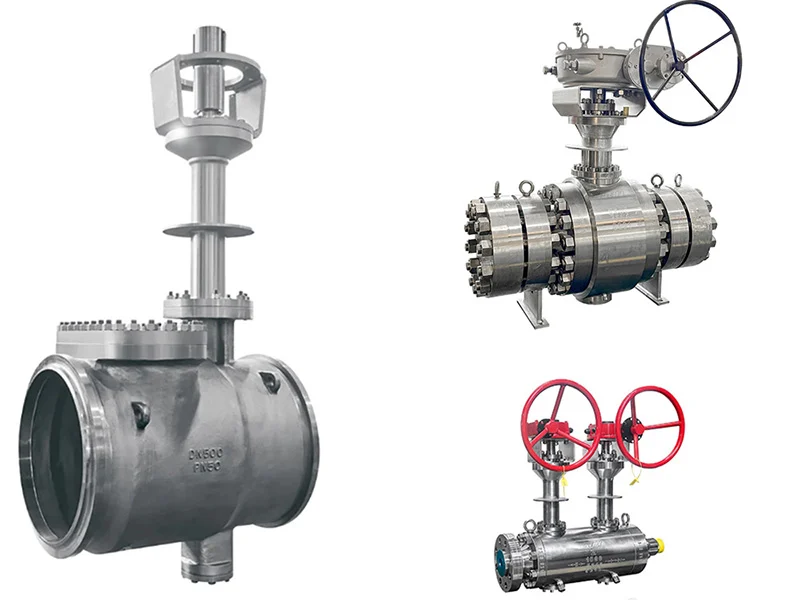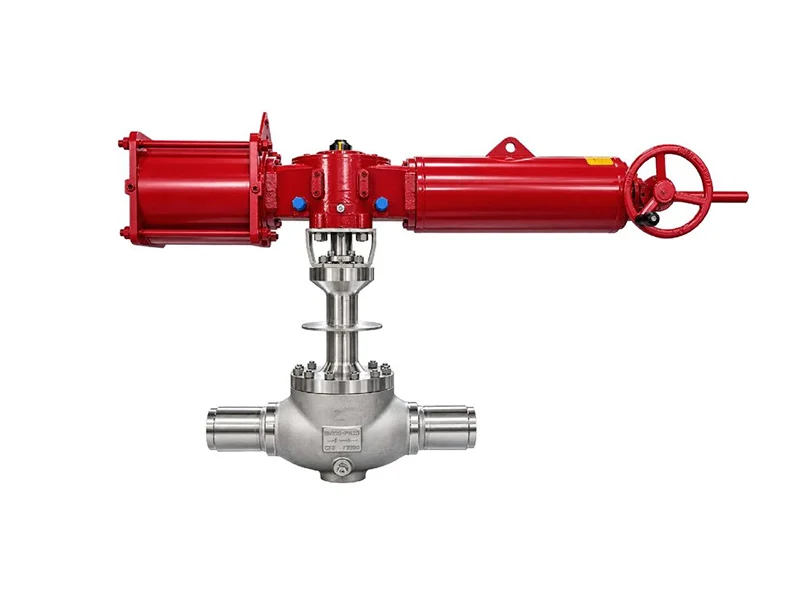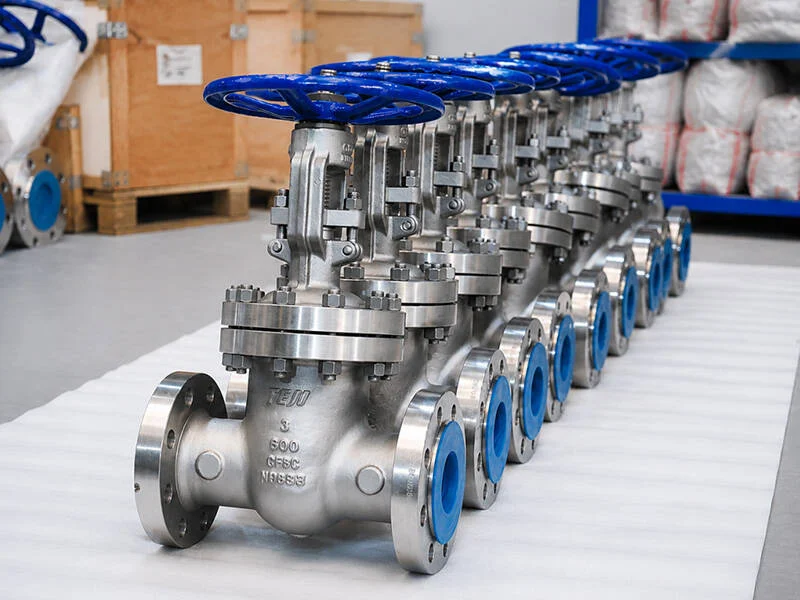
Cryogenic valves are specialized valves designed for use in media temperatures below 40°C. They are widely used in cryogenic applications such as liquefied natural gas (LNG), liquid nitrogen, and liquid oxygen. Cryogenic valves require extremely high sealing, thermal insulation, and operational reliability, making them key equipment in cryogenic storage and transportation systems in industries such as energy, chemical, and air separation.
Features of Cryogenic Valves
- Unique Structural Design: They often utilize a long neck structure to isolate the packing from the cryogenic medium, reducing heat transfer.
- Excellent Sealing Performance: They utilize specialized sealing structures and materials, such as bellows seals, overlays of cobalt-based carbide, polytetrafluoroethylene, and reinforced materials, to ensure effective sealing despite low-temperature contraction.
- Strong Cryogenic Resistance: The selected materials ensure excellent mechanical properties at low temperatures, preventing brittleness.
- Rigorous Manufacturing Process: Parts undergo a 2-6 hour cryogenic treatment to reduce stress. The assembly process requires strict cleaning to avoid oil residue. Valves must pass both room-temperature strength testing and low-temperature airtightness testing. Key components must meet 196°C impact testing requirements.
Classification of Cryogenic Valves
Of course, not all standard valves can be used as cryogenic valves. The primary reason is that their materials, structures, and designs are not designed to withstand the severe challenges posed by cryogenic environments, and forcing them into service can result in catastrophic failure. Therefore, cryogenic valves are specialized equipment tailored for extreme low-temperature environments, from material selection and structural design to sealing technology and manufacturing processes. They should never be replaced with standard valves used in water lines. The following are common valve types:
- Cryogenic Globe Valve: Used to connect or disconnect pipeline media, it offers excellent sealing performance but exhibits high flow resistance.
- Cryogenic Ball Valve: Its opening and closing member is a sphere, offering fast operation, low flow resistance, and excellent sealing. It is one of the most widely used cryogenic valves.
- Cryogenic Gate Valve: Its gate is perpendicular to the flow direction of the media, resulting in low flow resistance but a larger height dimension. It is typically used in large-diameter pipelines.
- Cryogenic Butterfly Valve: Its compact structure allows for fast opening and closing, making it suitable for applications with high flow rates and low pressure differentials.
- Cryogenic Check Valve: Used to prevent backflow and ensure system safety.
- Cryogenic Safety Valve: A safety valve that automatically opens to relieve pressure when system pressure exceeds a specified value.
Applications of Cryogenic Valves
Liquefied Natural Gas (LNG) Industry: Cryogenic valves are used throughout the entire LNG production, liquefaction, storage, transportation (including LNG ships and tankers), and regasification at receiving terminals.
Air Separation Plants and Industrial Gases: Control the production, storage, and transportation of these cryogenic liquids in air separation units, with widespread applications in metallurgy, healthcare, food refrigeration, and chemical industries.
Petrochemical Industry and Off-Gas Separation: Control the flow of cryogenic liquefied hydrocarbons in petrochemical plants and off-gas treatment systems to ensure process safety.
Aerospace: Used in rocket engine fueling systems, pressure regulation, and emergency shutoff for propellant tanks, these valves place extremely high demands on valve reliability and sealing.
Cryogenic Valve Testing
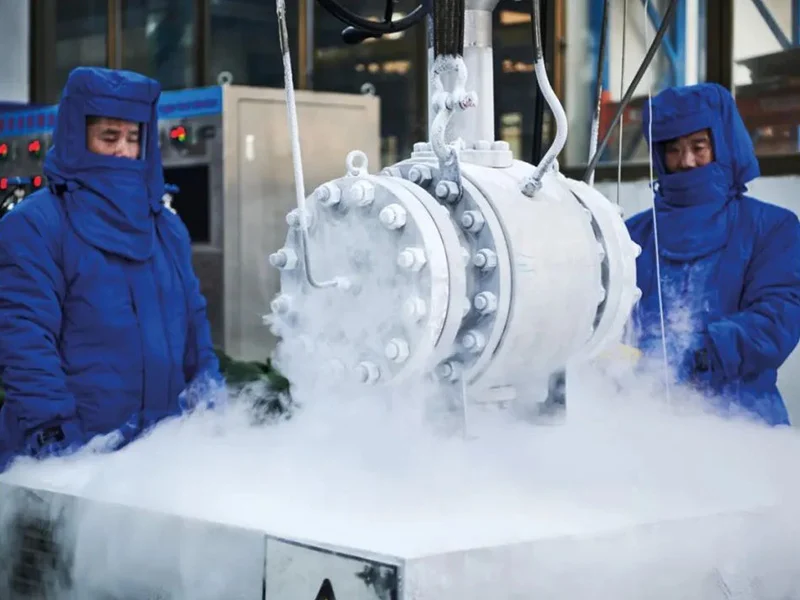
High-quality cryogenic valves undergo rigorous testing before delivery to customers. Let’s take a look at the specific tests they undergo.
Sealing Performance Testing
Leak rate is determined using helium mass spectrometry. In a cryogenic environment, valve sealing performance is assessed by measuring the amount of leakage at a specific pressure. Leakage rates must meet specific requirements, such as a helium mass spectrometry leak detection test of ≤1×10^-6 mbar·L/s (-196°C/4.0 MPa).
Cryogenic Shock Test
Valves are subjected to cyclic shock in a -196°C liquid nitrogen environment to test their toughness and impact resistance under extreme cryogenic conditions. Valves must withstand ≥500 shock cycles to ensure reliability in cryogenic conditions.
Pressure Cycle Test
Valves are subjected to pressure cycling tests, such as 2000 cycles of 0.1-6.4 MPa alternating pressure on a DN50 valve, to verify their durability and sealing performance under these conditions. Pressure cycling tests simulate the pressure fluctuations experienced during actual valve operation and assess their long-term operational stability and reliability.
Summary
The above is a summary of knowledge shared about cryogenic valves. If you are interested in purchasing cryogenic valves, please contact us. TEJI will provide you with valves of reliable quality and comprehensive service.