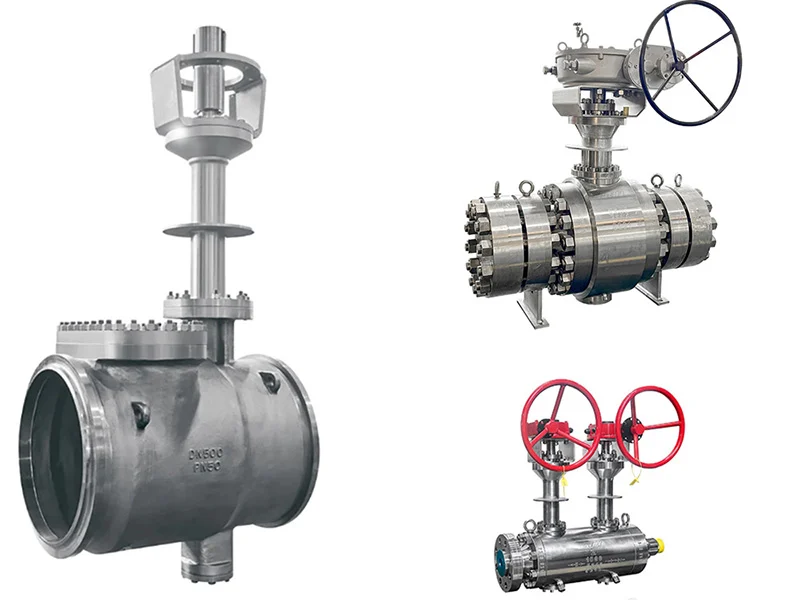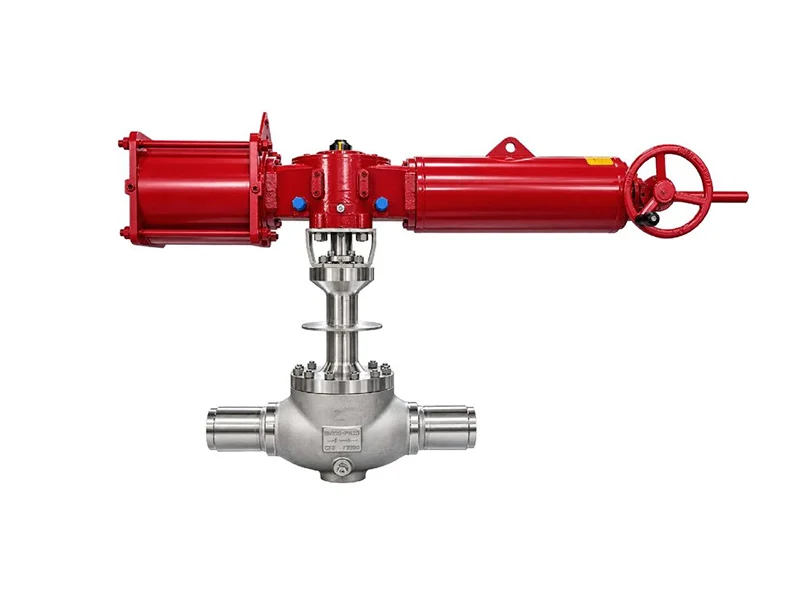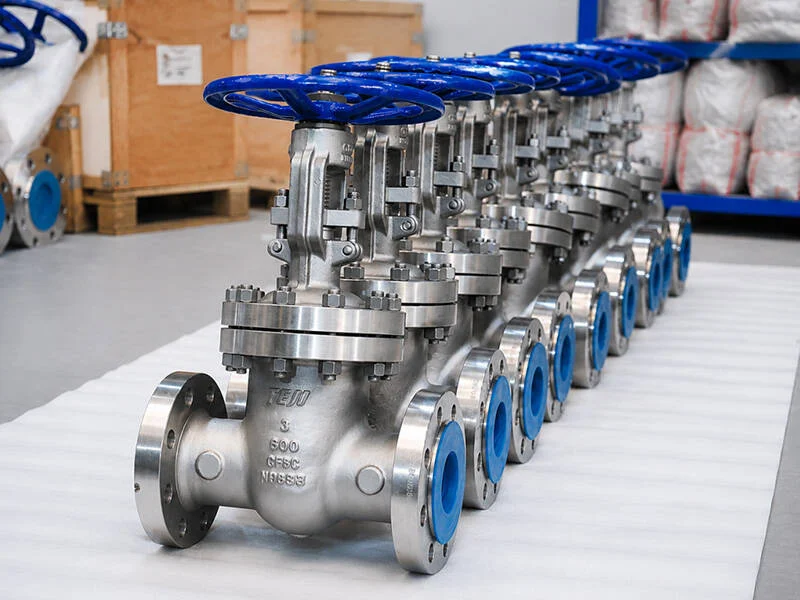
The double offset butterfly valve achieves a “double eccentric” structure by simultaneously offsetting the valve stem axis from both the butterfly plate center and the valve body center. Compared to center-line butterfly valves, it offers greater pressure resistance, stability, and service life; it also supports metal seats and can operate at temperatures up to 500°C, extending its application to high-temperature conditions. The valve has lower flow resistance, making it particularly suitable for large-diameter water, gas, oil, and corrosive media pipelines (DN200 and above) for regulation or shut-off applications.
Double Offset Butterfly Valve Working Principle
The working principle of the double offset butterfly valve is closely related to its unique double eccentric structure. Its valve stem center is offset twice, from both the butterfly plate center and the valve body channel center.
When the valve is opened, the valve stem drives the butterfly plate to rotate. Due to the double eccentric design, the butterfly plate quickly disengages from the valve seat, significantly reducing friction between the butterfly plate and the valve seat, lowering opening resistance, reducing component wear, and extending the valve seat’s service life. When the valve is closed, the butterfly plate rotates in the opposite direction, eventually fitting tightly against the valve seat to achieve a good seal and thus achieve flow control. During rotation, changing the butterfly plate angle alters the flow area of the medium in the pipeline, thereby regulating the flow rate.
Advantages of the Double Offset Butterfly Valve
• Reduced Wear and Extended Lifespan: The stem axis of the double offset butterfly valve is offset from both the butterfly plate center and the valve body center. After the valve opens, the butterfly plate quickly disengages from the valve seat, significantly reducing unnecessary compression and scraping between the butterfly plate and the valve seat, reducing wear, and extending the valve seat’s lifespan.
• Reduced Opening Resistance: The unique double-eccentric design significantly reduces the resistance when opening the valve, making operation easier, especially suitable for applications requiring frequent opening and closing.
• Excellent Sealing Performance: By optimizing the sealing contact form, it effectively improves sealing pressure and reliability, achieving a better sealing effect to meet the needs of different operating conditions.
• Wide Range of Applications: The use of a metal valve seat allows it to be used with more different types of media and operating conditions, broadening its application range.
Applications of Double Offset Butterfly Valve
Water Systems
Urban water supply, drainage, sewage treatment plants, and building fire protection pipe networks, mostly with diameters above DN200, used for main trunk shut-off or flow regulation.
Power and Heat Systems
Power plant circulating water, cooling water, and heating network systems, with a temperature resistance of ≤450℃ and a pressure resistance of ≤2.5 MPa. Can replace gate valves and globe valves, saving space and cost.
Oil and Gas Systems
Long-distance pipelines, stations, city gate stations, pigging and launching cylinders, bypasses, and gas wellheads. API 6D series ball valves are used in combination with double offset butterfly valve to achieve rapid shut-off and distribution.
Chemical and Metallurgical Systems
High-temperature furnace flue gas, clean coal gas, and flue gas desulfurization and denitrification devices. For media containing particulate or corrosive components, the metal hard-seal structure can withstand high temperatures of 400-550℃.
Intelligent Manufacturing and Special Operating Conditions
In applications requiring precise adjustment, automatic reset after power failure, or remote monitoring, such as nuclear power plant primary and secondary loop auxiliary systems, photovoltaic/lithium battery industrial park circulating water systems, and automotive painting workshops, integrating servo actuators can achieve high-precision flow control of ±0.5%.
Double Offset Butterfly Valve Installation Guide
Preparation Before Installation
Check the exterior for damage, valve body for defects, and valve cover for leaks to ensure the valve meets quality requirements; check the connecting bolts for integrity, thread damage, and tightness. Clean the valve working surface, flange, and pipe interior, removing welding spatter, scale, and foreign objects to avoid affecting sealing performance or damaging the resilient valve seat.
Weld the flange to the pipe first, and allow it to cool to ambient temperature before installing the valve; machine the flange edges smoothly using a lathe to ensure the flange surface is undamaged and undeformed, and remove dirt and dust.
Installation Process
Theoretically, it can be installed in any direction, but horizontal placement of the valve shaft is recommended to prevent sediment from the medium from entering the bearings. Ensure the valve flow direction matches the pipeline flow direction, and select a convenient operating position based on specifications and operational requirements.
Place the valve between the two pre-installed flanges (for flanged butterfly valves, allow space for gaskets at both ends), insert the bolts and nuts, and slightly tighten to adjust the flange surface flatness. Spot weld the flanges to the pipeline, remove the valve, and then completely weld them. After the weld has cooled, install the valve, ensuring sufficient movement space and a certain opening of the butterfly plate. Add a sealing gasket, adjust the position, and tighten the bolts, but do not overtighten.
During installation, fix the positioning bolts below the pipeline at the same height for support. Adjust the flange spacing so that the valve body is 6-10 mm apart on both sides. Open the valve from the closed position to 10°. Insert the lower guide rod bolts, avoiding damage to the resilient valve seat.
Post-Installation Inspection
After installation, conduct a quality inspection and functional test to ensure normal operation and good sealing. Adjust and repair as necessary.
TEJI has been deeply involved in the valve industry for over forty years, possessing mature and professional valve manufacturing technology and a comprehensive service system. Choosing TEJI is definitely an excellent choice.