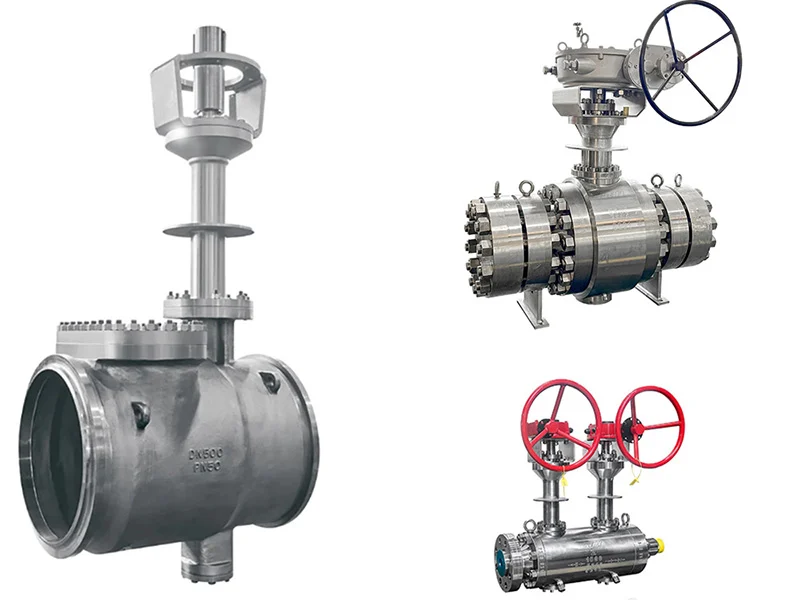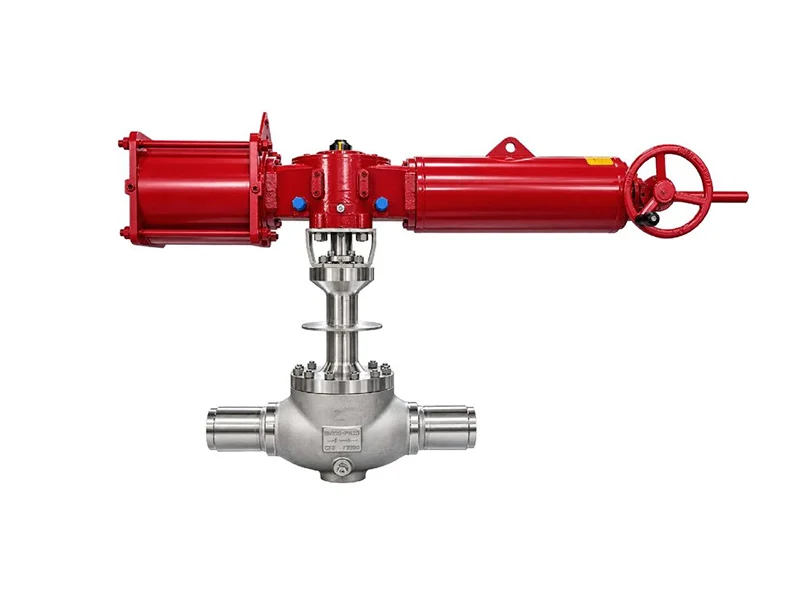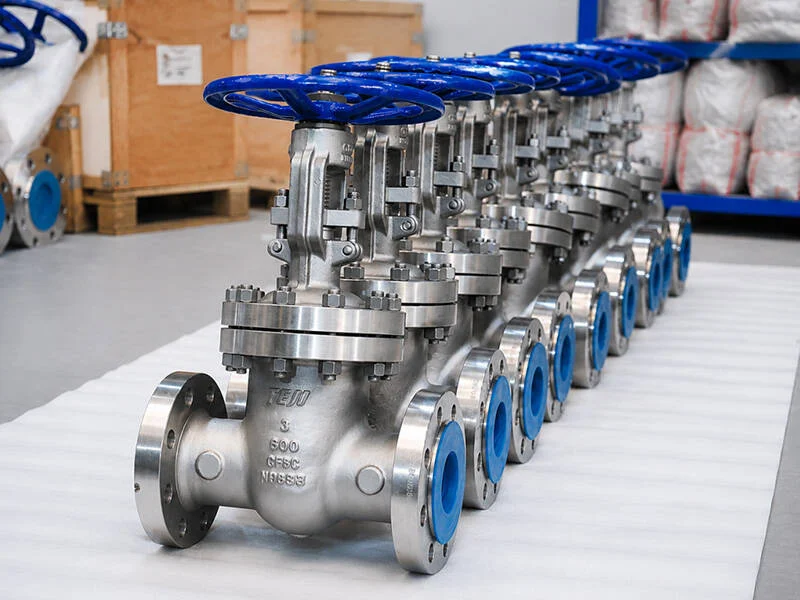
Valves are crucial control components in fluid transport systems, playing an indispensable role in our daily lives, industrial production, oil transportation, and more. Although a valve is just a small component, its function is extremely important.
It can perform opening and closing functions, cutting off or connecting the flow of fluid media by fully opening or closing, isolating equipment and pipeline systems; it has a regulating function, adjusting pipeline resistance by changing the valve opening, thereby regulating the fluid’s velocity, pressure, and flow rate; it can control the flow direction, such as check valves preventing fluid backflow, and distribution valves distributing and controlling the flow direction of fluid; it also has a safety protection function, when the pressure in the pipeline or equipment exceeds the specified value, safety valves will automatically release pressure to maintain a certain level and ensure safety.
Since valves are so important, proper valve maintenance is an unavoidable issue. How to maintain valves? TEJI brings you some practical tips.
Standard Operation
A. When opening and closing the valve, turn the handle or handwheel to drive the valve stem and piston to open and close. The force should be even during opening and closing, and the switching speed should be fast. A. When manually opening and closing valves, pay attention to the direction of rotation (clockwise to close, counterclockwise to open) to avoid unnecessary damage. Valves must be fully open or fully closed during use and must not be used for flow regulation.
B. For valves handling liquid media with an operating temperature below 0°C, the valve is permitted to tilt no more than 30° vertically within the switching operating range.
C. After installation, the valve must be in the fully open position during system or pipeline pressure testing. Never open the piston portion. The manufacturer is not responsible for any damage caused when using valves for flow regulation or emergency discharge.
D. Gate valves typically do not have insulation. When high-temperature or low-temperature fluids come into contact with the valve surface, do not touch the valve surface to avoid burns/freezing.
E. Valve surfaces and moving parts, such as the valve stem, sliding parts of the support, and gears, are prone to the adhesion and accumulation of ash, dust, oil, and media residues. This can easily lead to valve wear, corrosion, and even frictional heat, potentially causing combustion gases, which is extremely dangerous. Regular cleaning is necessary depending on the operating conditions.
Routine Maintenance
Valves are hybrid structures of pressure vessels and operating machinery. Their maintenance requirements must consider unexpected opening and closing, as valves are under pressure most of the time.
A. If a valve is held in one position for an extended period, its operational performance may deteriorate due to corrosion or the accumulation of harmful substances on the surfaces of moving parts. In some applications, a partial or full-cycle maintenance plan will eventually be developed for such valves.
B. The pressure boundary between the valve stem and body, fixed assembly connections, and effective seals should be inspected, maintained, and verified regularly.
C. The external structure of valves is generally easy to inspect and maintain. Appropriate measures should be taken to prevent mechanical damage to valves and to prevent corrosion from atmospheric deposits, chemicals, or humid gases. Working interfaces such as threads, bearings, and gears should be lubricated regularly.
Of course, valve damage is an unavoidable problem. Even the highest quality valves will face the challenge of failure. When customers face these problems, what can we, as valve manufacturers, do to help them? If you purchased your valves from TEJI, please don’t worry.
Our Commitment to Our Customers:
Product Quality Assurance: We guarantee our products will be of excellent quality and stable performance, meeting all customer needs. We will strictly adhere to relevant national laws, regulations, and industry standards to ensure product safety and reliability.
Excellent Service: We are customer-centric, providing satisfactory pre-sales consultation, after-sales service, and technical support. Our service team will pay close attention to customer needs and maintain communication with customers throughout the problem-solving process to ensure timely resolution of customer issues.
Honest Cooperation: We will cooperate with customers based on the principles of equality and fairness. In business dealings, we will abide by contracts and fulfill our responsibilities and obligations. We will maintain good communication with you to jointly promote project progress and achieve mutual benefit.
TEJI has been in the valve industry for over 40 years, possessing a highly professional technical team, a sound service system, and a commitment to bringing customers the highest quality valves. Choose TEJI, and let TEJI become your most trusted partner.