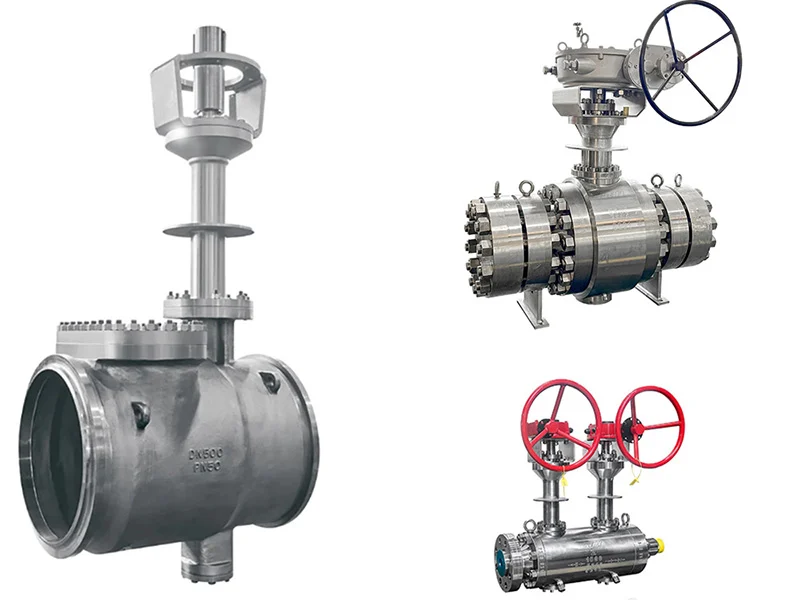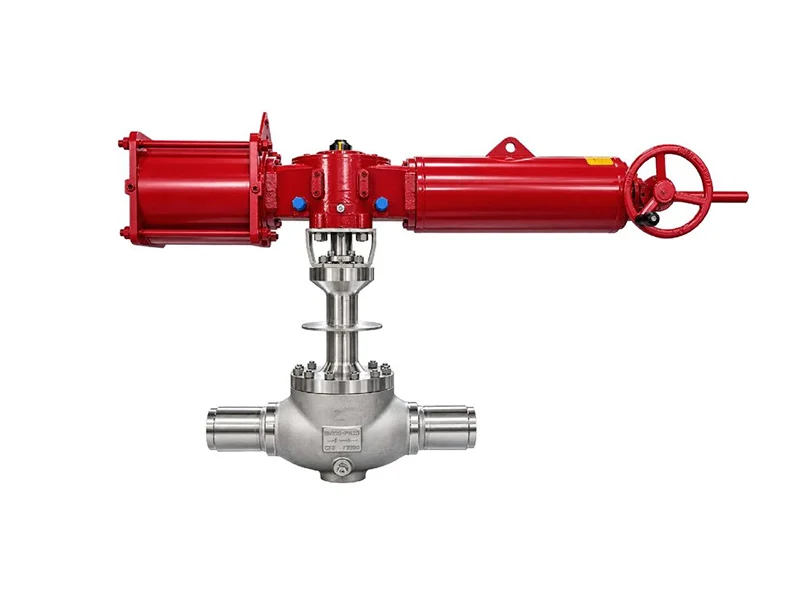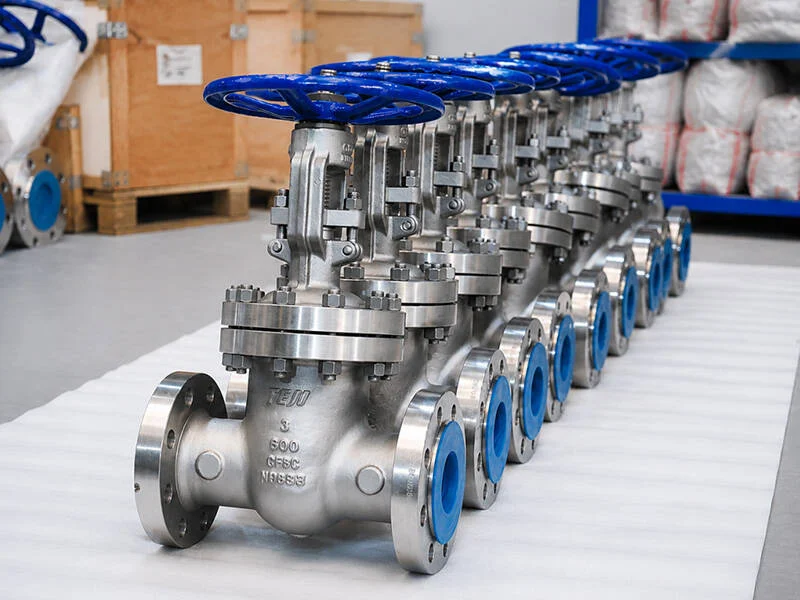
In heavy industries such as coal chemical, polysilicon, and petrochemical production, valves, as core pipeline control equipment, directly determine the operating efficiency of the production line. Traditional wear-resistant ball valves and imported track ball valves have long faced problems such as media erosion, valve cavity jamming, valve body seizure, and short service life. Frequent replacements and high-frequency maintenance not only delay production progress but also significantly increase enterprise operating costs.
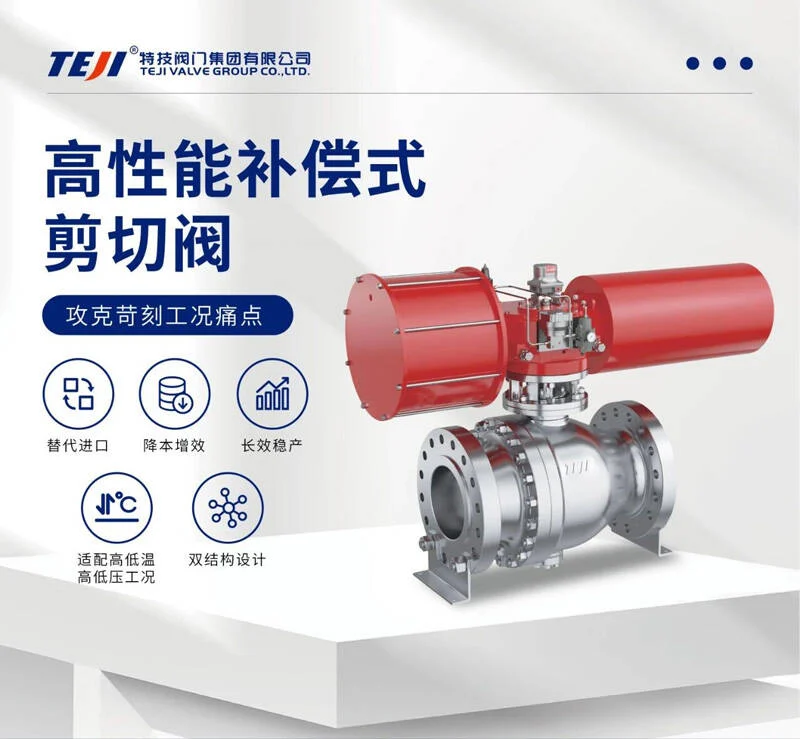
Addressing these common industry pain points, TEJI Valves Group has focused on the research and development of valves for various operating conditions and has launched its proprietary patented product—the high-performance compensating shear valve. Tailor-made for various harsh operating conditions, it precisely replaces traditional wear-resistant ball valves and imported track ball valves, fundamentally solving industry pain points and helping enterprises improve quality, reduce costs, and achieve long-term stable production.
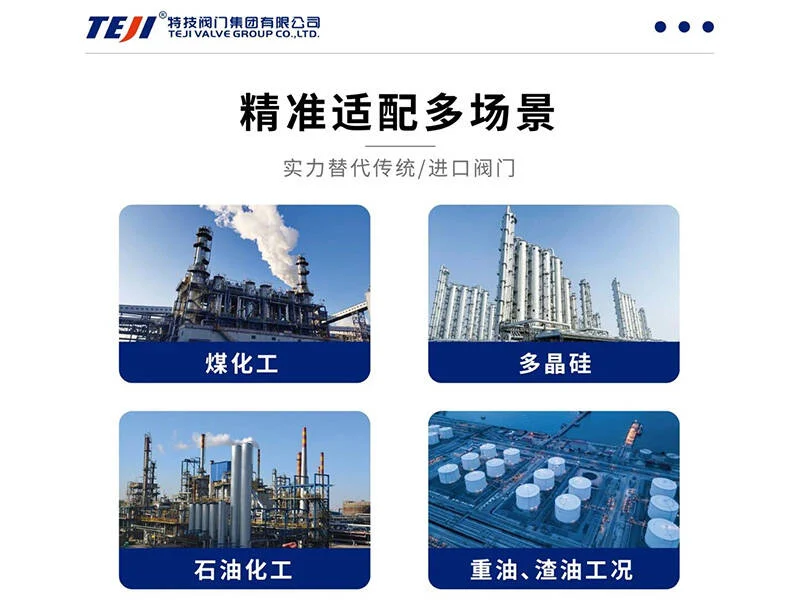
I. Precisely Adaptable to Multiple Scenarios, Powerful Replacement for Traditional/Imported Valves
This high-performance compensating shear valve breaks through the operating condition limitations of traditional valves, adapting to complex production environments in multiple industries, achieving a dual upgrade in performance and cost-effectiveness.
In the coal chemical and polysilicon industries, it can completely replace traditional wear-resistant ball valves, thoroughly solving common problems such as jamming, seizing, and media erosion damage during equipment operation, eliminating production line downtime and maintenance difficulties caused by valve failure.
In petrochemical heavy oil and residual oil applications, it perfectly replaces expensive imported track ball valves, significantly extending valve life, effectively reducing equipment replacement frequency and daily maintenance costs, breaking the monopoly of imported equipment, and saving enterprises substantial equipment procurement expenses.
II. Dual Structure Selection, Adapting to All Working Conditions
To match different media and production environments, the product adopts a modular structural design, divided into two main structural types, specifically adapted to various complex working conditions, eliminating the problem of insufficient equipment adaptability.
Based on the overall structure, it can be divided into spring-loaded and springless types: the spring-loaded type is suitable for conventional wear-resistant working conditions such as coal-water slurry, black water, and ash water; the springless type is specifically designed for viscous media conditions such as latex and polyurethane, which are prone to spring failure, structurally avoiding the risk of spring failure.
Based on valve body structure, they can be divided into full-bore and integrated types, adapting to different pipeline installation requirements and media transportation standards, balancing installation convenience and operational stability.
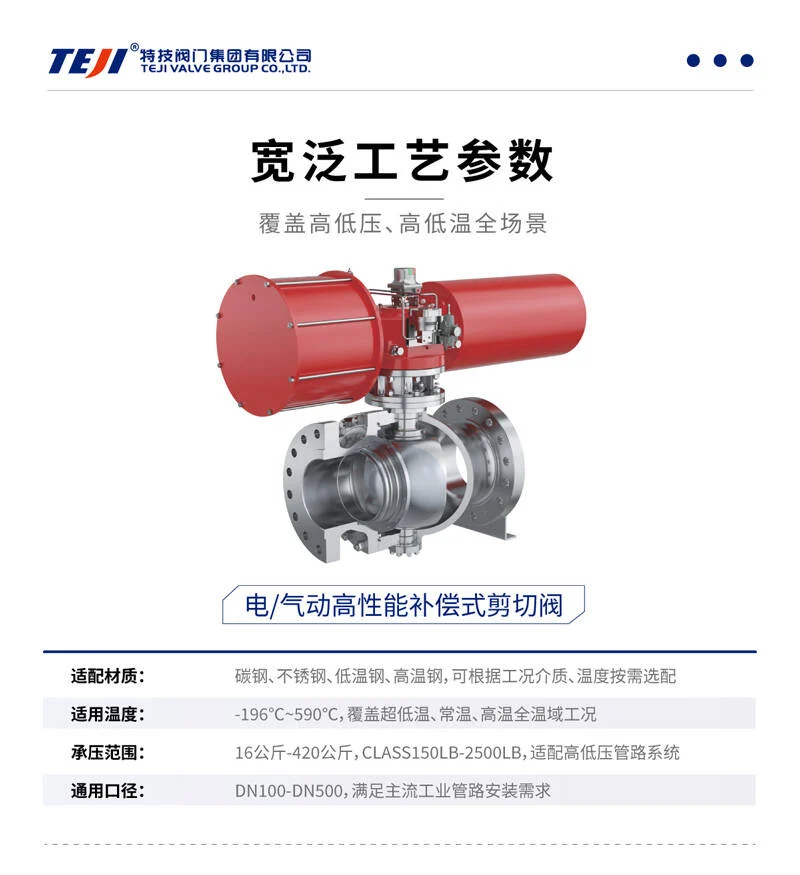
III. Wide Range of Process Parameters, Covering High and Low Pressure, High and Low Temperature Scenarios
Relying on mature casting and processing technologies, the valves are adaptable to an extremely wide range of temperatures, pressures, and diameters, meeting the stringent production standards of most heavy industries, maximizing versatility and adaptability.
Compatible Materials: Carbon steel, stainless steel, low-temperature steel, high-temperature steel, selectable according to working conditions, media, and temperature;
Applicable Temperature: -196℃~590℃, covering ultra-low temperature, normal temperature, and high temperature operating conditions;
Pressure Range: 16 kg-420 kg, CLASS150LB-2500LB, suitable for high and low pressure pipeline systems;
Common Diameter: DN100-DN500, meeting the installation requirements of mainstream industrial pipelines.
IV. Ten Core Structural Advantages, Forging Dedicated Strength for Harsh Operating Conditions
Compared to traditional valves, this compensating shear valve features a comprehensive upgrade in structural design. Multiple exclusive designs address industry shortcomings, achieving core advantages such as high sealing performance, erosion resistance, wear resistance, and minimal maintenance.
01 Full-Bore Anti-Accumulation Design
The valve body adopts a full-bore structure, ensuring a smooth transition at the medium contact points without dead angles or protrusions. This completely prevents medium accumulation in the valve cavity, reducing scaling and blockage problems at the source and ensuring smooth pipeline transport.
02 Eccentric Compensating Sealing Design
The innovative eccentric cam wedge-tightening structure allows the valve core to gradually enter the valve seat when closed, achieving a tighter sealing effect as it closes. The sealing performance automatically compensates for delays, ensuring stability and reliability. When opening, the valve core gradually exits the valve seat, only making slight contact with the sealing surface at the moment of opening and closing, significantly reducing wear on the sealing surface and effectively extending the equipment’s service life.
03 Dual Seats for Multiple Operating Conditions
Equipped with both spring-loaded movable valve seats and static valve seats. Spring-loaded valve seats absorb temperature-induced deformation, resolving sealing failure and opening/closing issues under high-temperature, large-temperature-difference, and high-pressure conditions. Springless static valve seats are suitable for viscous media such as latex and residual oil, eliminating the risk of spring failure, simplifying daily maintenance, and preventing wear and tear on the sealing surface.
04 Anti-Adhesion Shear Structure
When the valve is open, high-speed fluid automatically flushes away impurities and residual materials from the spherical surface; when closed, it forcefully shears viscous materials adhering to the spherical surface. This dual action achieves self-cleaning, keeping the sealing surface clean and preventing adhesion and jamming.
05 Slag-Proof Spring Chamber Structure
The spring chamber is equipped with a flexible graphite ring protection structure, effectively preventing media impurities and contaminants from entering the chamber, providing comprehensive protection for the spring structure, preventing spring jamming and failure, and ensuring long-term stable valve operation.
06 Bottom-Loaded Reverse Seal Design
Adopting an industry-preferred bottom-loaded reverse seal structure, even in the event of abnormal pressure rise in the valve chamber or packing plate failure, the valve stem can be firmly locked to prevent media from being blown out. This ensures valve stem sealing safety under all pressure conditions, strengthening the safety defense line of the production line.
07 Zero Radial Stress Structure for Valve Stem
When the valve is closed, the medium pressure is fully borne by the upper and lower support structures. The valve stem only bears the opening and closing torque and does not bear radial force, completely solving the problem of valve stem jamming and deformation under extreme working conditions, resulting in more stable operation.
08 High-Frequency Switching Wear-Resistant Design
Key contact points between the upper and lower support shafts and the valve core are made using a hard alloy welding process, significantly improving structural strength and wear resistance, perfectly adapting to the high-frequency opening and closing and frequent switching requirements of the production line.
09 High-End Hardening Treatment Process
The ball and valve seat sealing surfaces adopt advanced hardening technologies such as supersonic spraying, nickel-based fusion welding, and laser cladding. Supersonic spraying achieves a hardness of HRC70 or higher and a bonding strength of over 10,000 PSI, while metallurgical fusion spraying achieves a hardness of HRC65 or higher and a bonding strength of over 12,000 PSI. The sealing surfaces exhibit maximum wear resistance and erosion resistance, suitable for high-intensity and harsh working conditions.
10 Reliable Sealing Under All Operating Conditions
Customized thermal spraying and welding processes are employed to address varying temperatures, pressures, and media characteristics under different operating conditions. This ensures the valve maintains stable sealing performance even in complex environments such as ultra-low temperatures, high temperatures, high pressures, and strong erosion, making it ideal for demanding industrial scenarios.
Deeply Rooted in Customized Valve R&D, Focusing on Solving Industrial Fluid Control Challenges
TEJI Valve Group consistently focuses on the demanding operating conditions of the heavy industry, using technological innovation as its core to refine every high-performance valve product. This high-performance compensating shear valve, with its robust structure, mature processes, and stable performance, is suitable for complex operating conditions across multiple industries, making it the preferred equipment for industrial pipeline fluid control! For detailed product parameters, operating condition adaptation solutions, and customization services, please feel free to contact us!