Faced with numerous valve classifications and complex operating conditions, selecting the most suitable valves for pipeline systems requires, first, understanding valve characteristics; second, mastering the steps and criteria for valve selection; and third, adhering to the principles for selecting valves used in the petroleum and chemical industry.
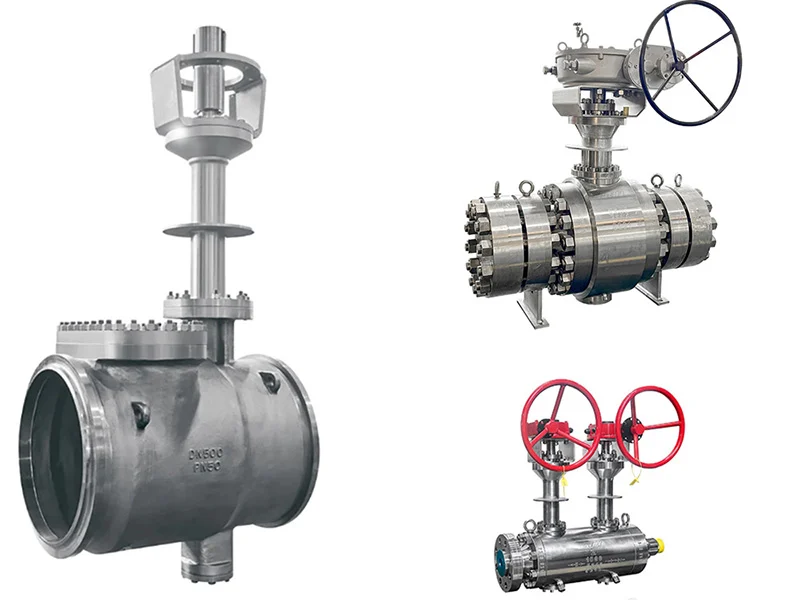
The principles for selecting valves in the petroleum and chemical industry are as follows: Valves with straight-through flow paths have lower flow resistance and are typically chosen for shut-off and opening of media; valves with easily adjustable flow rates are used for flow control; plug valves and ball valves are more suitable for directional flow control; valves with a wiping effect where the closing element slides along the sealing surface are most suitable for media containing suspended particles.
Valves for Shut-off and Opening of Media
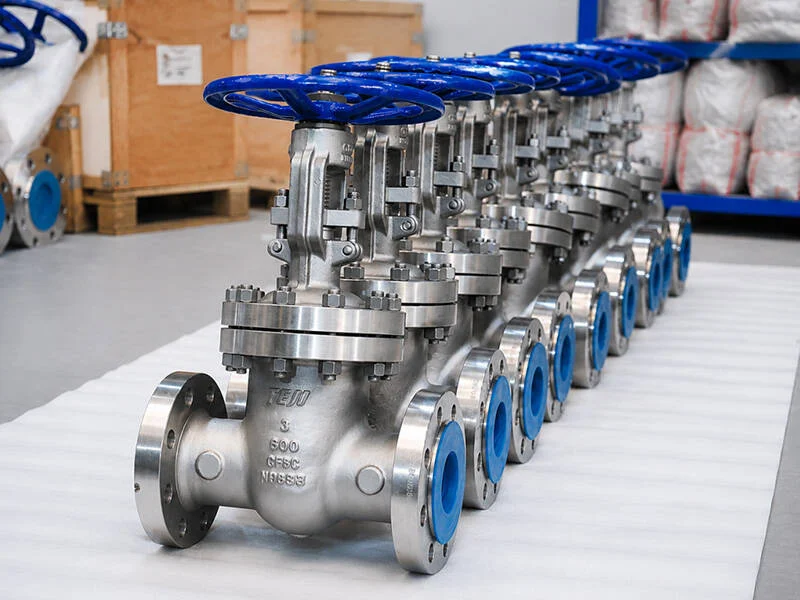
Valves with straight-through flow paths have lower flow resistance and are typically chosen for shut-off and opening of media. Downward-closing valves (gate valves, piston valves) have higher flow resistance than other valves due to their tortuous flow paths and are therefore less commonly used. In situations where higher flow resistance is permissible, closed-type valves can be selected.
Valves for Flow Control
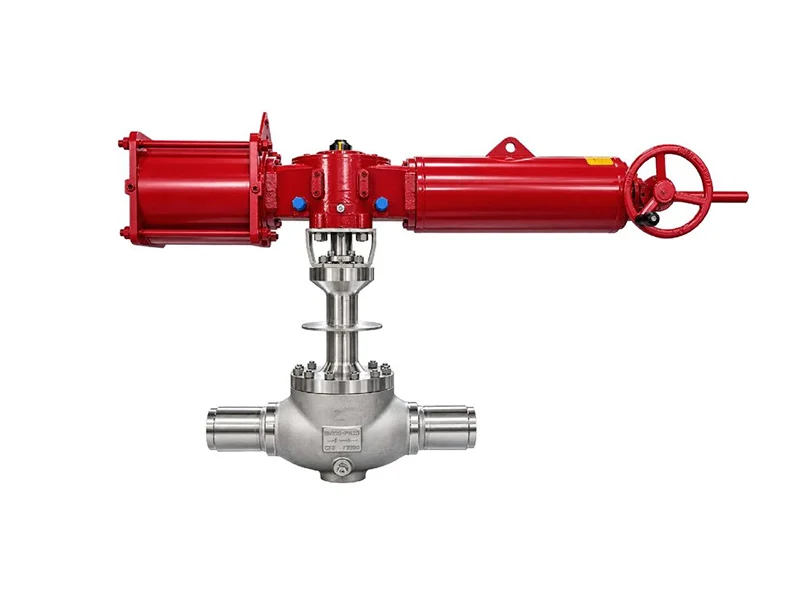
Valves with easily adjustable flow rates are typically chosen for flow control. Downward-closing valves (such as gate valves) are suitable for this application because their seat size is directly proportional to the stroke of the closing element. Rotary valves (plug valves, butterfly valves, ball valves) and flexible-body valves (clamp valves, diaphragm valves) can also be used for throttling control, but are generally only applicable within a limited range of valve diameters. Gate valves, with their disc-shaped gate traversing a circular seat, only effectively control flow near the closed position and are therefore generally not used for flow control.
Valves for directional flow control
Depending on the need for directional flow control, these valves can have three or more channels. Plug valves and ball valves are more suitable for this purpose; therefore, most valves used for directional flow control are either plug valves or ball valves. However, in some cases, other types of valves can also be used for directional flow control by appropriately connecting two or more valves together.
04 Valves for Media Containing Suspended Particles
When the medium contains suspended particles, valves with a wiping effect where the closing element slides along the sealing surface are most suitable. If the reciprocating movement of the closing element against the valve seat is vertical, particles may be trapped. Therefore, such valves are only suitable for basically clean media unless the sealing surface material allows for particle embedding. Ball valves, plug valves, and butterfly valves all have a wiping effect on the sealing surface during opening and closing, making them suitable for media containing suspended particles.
Currently, in pipeline systems across the petroleum, chemical, and other industries, valve applications, operating frequencies, and services vary greatly. To control or eliminate even minute leaks, valves remain the most important and critical equipment. Valves are the ultimate control of pipelines, and their service and reliability are unique across various industries. Specialty Valve Group not only specializes in producing high, medium, and low-pressure industrial valves and cryogenic valves, but also manufactures water system valves suitable for smart water management, long-distance water transmission, and other projects. With a complete product portfolio, strong supporting capabilities, high cost performance, and long lifespan, its comprehensive advantages place it at the forefront of the industry.