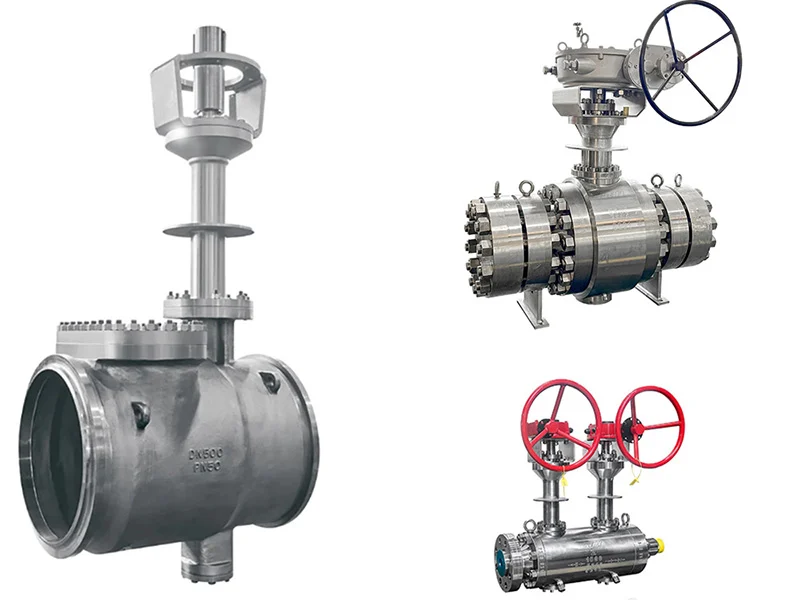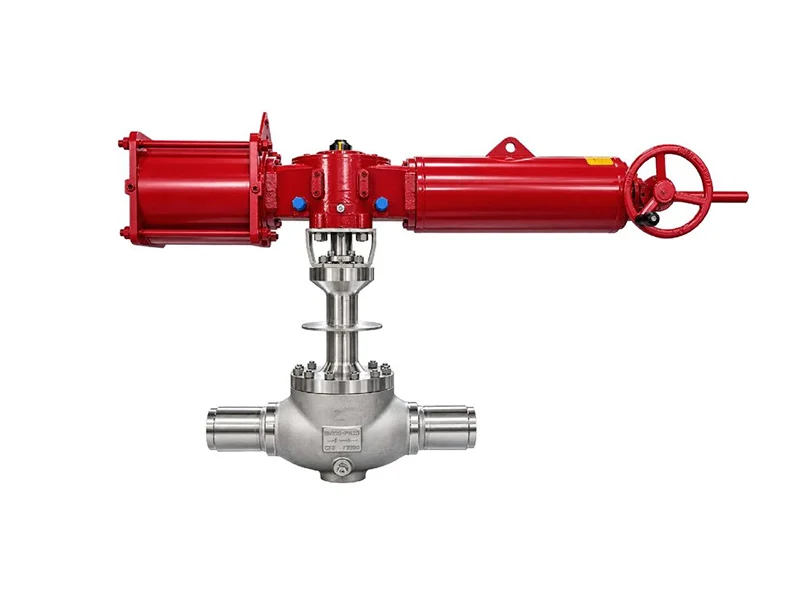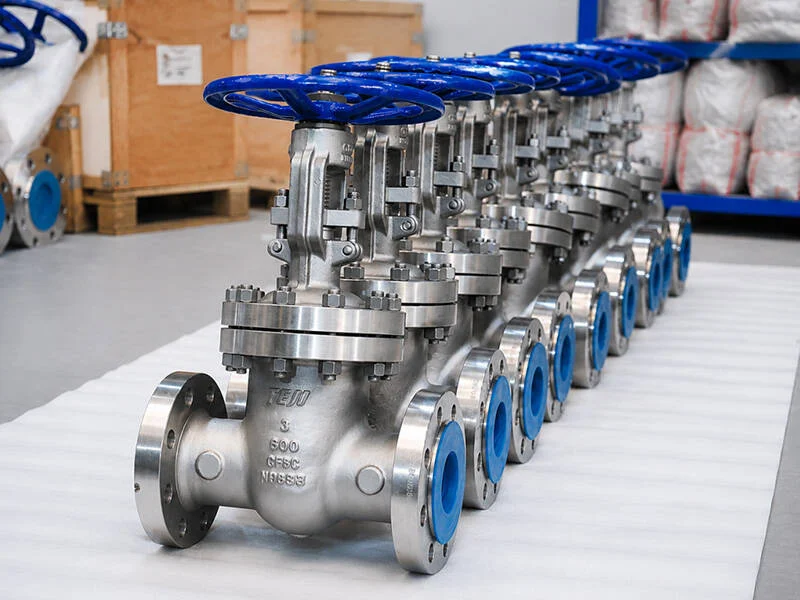
Forged steel valves are manufactured using forging technology and are renowned for their high strength, resistance to high temperatures and pressures, and impact resistance. Their core components, such as the valve body and cover, are made of carbon steel, stainless steel, or alloy steel through high-temperature forging, eliminating casting defects such as porosity and sand holes. Nominal pressures can reach 4500LB (76.0MPa). Their unique self-sealing design ensures increasingly reliable sealing at higher pressures, making them suitable for controlling the opening and closing of fluids such as steam, water, oil, and corrosive media.
Advantages of Forged Steel Valves in Material Properties
Mechanical Properties
• High Strength and Pressure Resistance: Forging compacts and restructures the internal grains of the metal, forming continuous metal flow lines. This results in a more uniform and dense structure, enabling it to withstand higher pressures, up to 4500LB (76.0MPa). Suitable for high-pressure and ultra-high-pressure systems, such as high-pressure pipelines in the petrochemical industry, cast steel valves are prone to porosity and cracking under high pressure.
• Good Impact Resistance: The uniform microstructure of forged steel valves better resists media impact and pressure fluctuations, ensuring stable operation under complex conditions. Cast iron valves are relatively brittle and have poor impact resistance.
Sealing Performance
• Self-Sealing Design: Utilizing a self-sealing structure, the higher the pressure, the more reliable the seal, effectively preventing media leakage and ensuring system safety. This is particularly advantageous in high-temperature, high-pressure steam systems, an effect that some valves made of ordinary materials cannot achieve.
• High-quality sealing surface: The sealing surface often employs hard alloy welding technology, and the valve stem undergoes nitriding treatment, improving the hardness and wear resistance of the sealing surface and ensuring long-term sealing reliability. In contrast, valves made of ordinary materials are prone to wear on their sealing surfaces, affecting sealing performance.
Corrosion Resistance
• Diverse Material Selection: Depending on the properties of the media, carbon steel, stainless steel, alloy steel, and other materials can be selected to meet corrosion resistance requirements. For example, in highly corrosive chemical media, forged steel valves made of stainless steel can effectively resist corrosion and extend service life.
• Strong Corrosion Resistance: Compared to materials such as cast iron, forged steel valves have a denser internal structure, making them less susceptible to media penetration and corrosion, resulting in better corrosion resistance.
Service Life
• Wear Resistance: The sealing surface and the spherical surface are constantly in a closed state, making them less susceptible to media erosion. Combined with surface treatment processes, wear resistance is enhanced, reducing failures caused by wear and extending service life.
• High Reliability: The overall structure is stable and can adapt to various harsh operating conditions. The low failure rate eliminates the need for frequent replacement and maintenance, reducing operating costs.
Key points for selecting forged steel valves
Basic Parameters
• Nominal Pressure and Diameter: The selection depends on the actual operating pressure and pipe diameter. Forged steel valves are generally suitable for medium to high pressure applications, with nominal pressures typically ranging from PN10MPa to PN100MPa, and ultra-high pressure models reaching PN160MPa. Nominal diameters are mostly DN10 to DN200; diameters above DN200 are less common due to the greater forging difficulty.
• Operating Temperature: The operating temperature range varies depending on the material of the forged steel valve. Carbon steel forged valves typically withstand temperatures from -40℃ to 450℃, while chromium-molybdenum alloy steel forged valves can extend to -60℃ to 550℃. The appropriate valve should be selected based on the ambient temperature.
Material Selection
• Media Properties: For non-corrosive high-pressure applications, carbon steel (such as A105) can be used. For water and neutral fluids resistant to mild corrosion, F304 forged steel can be selected. For highly corrosive fluids such as acids, alkalis, and chemicals, corrosion-resistant materials such as F316L forged steel are required.
• Special media: For media containing solid particles, valves must be wear-resistant; for special corrosive media, materials such as tantalum alloys may be considered.
Valve Types
• Shutdown Function: For simple shut-off or connection of pipeline media, forged steel ball valves or gate valves are suitable. Forged steel ball valves offer easy operation and reliable sealing, while gate valves have low fluid resistance.
• Flow Regulation: Forged steel globe valves are a good choice for regulating media flow, as they effectively control the flow rate.
• Backflow Prevention: Forged steel check valves should be selected to prevent backflow.
Sealing Performance
• Sealing Structure: Consider the valve’s sealing structure, such as hard metal seals or soft seals. Metal seals are suitable for high-temperature and high-pressure conditions, while soft seals offer better sealing performance and are suitable for normal temperature and low-to-medium pressure conditions.
• Sealing Class: Select a valve with an appropriate sealing class based on the application requirements. Valves with ANSI Class V-VI seals offer higher sealing reliability.
Drive Methods
• Manual: Suitable for applications with low operating frequency.
• Electric: Facilitates remote control and automated operation, suitable for large piping systems or scenarios requiring frequent operation.
• Pneumatic: Features explosion-proof design and fast response (≤1.5 seconds), suitable for environments with explosion-proof requirements.
Connection Methods
Select the appropriate connection method based on the pipeline connection requirements. For example, threaded connections are suitable for small-diameter pipelines; flange connections are easy to install and disassemble and are widely used; welded connections offer good sealing performance and are suitable for pipelines carrying high-temperature, high-pressure, and flammable/explosive media.
Standards and Certifications
Ensure that the selected valves comply with relevant industry standards and certifications, such as GB/T 12237, API 6D, ISO 9001, CE, ASME B16.34, etc., to guarantee valve quality and performance.
If you still have any questions, the following two tables may be helpful.
| Valve type | Applicable Scenarios | Disabled scenarios |
| Forged steel ball valve | Emergency shutdown (such as natural gas pipelines) and frequently operated control systems | Slurry media containing solid particles (prone to jamming) |
| Forged steel gate valve | Applications requiring low flow resistance in fully open/fully closed operating conditions (such as main steam pipelines). | Throttling regulation (high-speed medium erosion of the sealing surface) |
| Forged steel globe valve | Flow regulation (e.g., feeding into chemical reactors), small-diameter high-pressure pipelines | Large-diameter (>DN200) low-pressure systems (excessive flow resistance) |
| Forged steel check valve | In applications requiring rapid response and prevention of backflow of the medium (such as at the pump outlet) | Pulsating fluid systems (prone to water hammer damage) |
| Scenario | Recommended valves | Material | Special requirements |
| Catalytic cracking unit in an oil refinery | Forged steel ball valve | F316 | Hard alloy seal + fireproof certification |
| Nuclear power plant coolant system | Forged steel gate valve | A182-F321 | RCC-M certified + low-leakage packing |
| Liquefied Natural Gas (LNG) Receiving Terminal | Cryogenic Forged Steel Gate Valve | A352-LF2 | Extended Bore (-196℃) |
| Sulfuric acid conveying in chemical plants | PTFE-lined forged steel ball valve | A105+PTFE lining | Static electricity discharge device |
From the “main arteries” of energy transmission to the clean pipelines of precision pharmaceuticals, forged steel valves play a role beyond basic on/off control; they are crucial barriers to ensuring system safety and improving energy efficiency. With advancements in materials technology and intelligent manufacturing, the performance limits of forged steel valves in extreme environments continue to expand. TEJI‘s forged steel valves undergo professional production, rigorous inspection, and meticulous packaging, delivering them to you with lightning speed. Please feel free to contact us if you have any needs.