Municipal water supply systems are engineering facilities built to provide cities with water that meets quality requirements. They typically consist of water sources, water intake structures, water pipelines, water plants, and distribution networks.
Municipal water supply systems are not only the core of urban infrastructure but also crucial for maintaining public safety, economic vitality, and sustainable development. Their importance is self-evident.
1. Ensuring Basic People’s Livelihoods
• Providing residents with safe, sufficient, and stable drinking water is directly related to public health and quality of life.
• Assisting firefighting networks to maintain a constant pressure above 0.1 MPa ensures timely firefighting and minimizes loss of life and property.
2. Supporting Socioeconomic Operations
• The daily operations of industrial, commercial, and public service facilities (hospitals, schools, shopping malls, etc.) all rely on a continuous and reliable water source.
• A well-developed water supply network enhances a city’s flood prevention and disaster resilience, reduces economic losses caused by water outages, and enhances regional investment attractiveness. 3. Promoting Resource Conservation and Environmental Protection
• Through pipeline network upgrades, leakage control, and differentiated water supply, the tap water leakage rate is significantly reduced, conserving water resources.
• Sewage collection and treatment systems are coordinated with water supply systems to reduce direct sewage discharge and protect aquatic ecosystems.
4. Improving Urban Resilience
• Multi-source interconnection, emergency backup water sources, and intelligent monitoring methods enable rapid system recovery in the event of extreme weather, geological disasters, or sudden pollution incidents.
• Corrosion-resistant materials such as ductile iron pipes are used in the renovation of old pipelines, offering a long design life and reducing the risk of water outages for decades to come.
What Valves Are Used in Municipal Water Supply Systems?
There are many types of valves used in municipal water supply systems, which can be broadly categorized as on-off valves, check valves, regulating valves, safety valves, and special-purpose valves. Below is a brief introduction.
As the main valve in a city’s water supply network, butterfly valves regulate pressure throughout the entire network. When water demand in a particular area of the pipe network fluctuates, adjusting the opening of the mainline butterfly valve can balance the network pressure and ensure stable water supply. Furthermore, in the event of a pipe network fault, closing the mainline butterfly valve can quickly isolate the faulty area, minimizing the scope of water outages and facilitating repair and maintenance.
Installing butterfly valves in different zones of the water supply network allows for independent control of each zone. Flexible adjustment of the zone butterfly valve openings can be made based on the water demand and characteristics of each zone to rationally allocate water resources. For example, during peak water demand periods, the valve opening in high-demand areas can be appropriately increased to ensure normal water use.
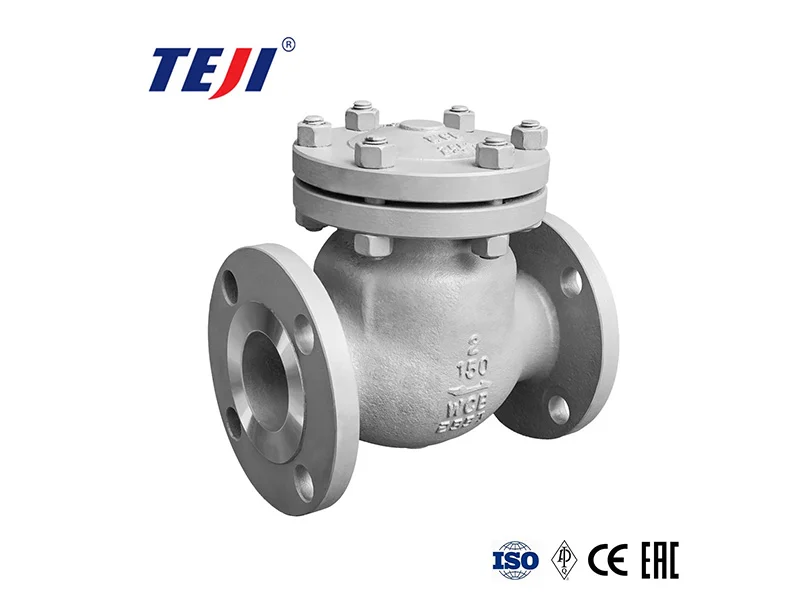
Check Valves: Swing Check Valves
In pumping stations in municipal water supply systems, pumps transport water from the source to the pipe network. When a pump stops operating, water backflows, potentially causing reverse flow and damaging the pump and associated equipment. A swing check valve is installed at the pump outlet. When the pump is operating normally and water is flowing in the forward direction, the valve disc rotates open under the pressure of the water flow, allowing water to flow smoothly through. When the pump stops and water flows backward, the valve disc automatically closes under its own weight and the pressure of the reverse flow, preventing backflow and protecting the pump and motor.
Municipal water supply may come from multiple sources, such as surface water and groundwater. Installing a swing check valve at the transition point between different water sources ensures that when one source stops supplying water, water from another source does not flow back into the stopped pipes, thus preventing contamination and interference between the different water sources.
Regulating Type: Pressure Reducing Valve
In high-rise buildings, due to their height, the municipal water supply pressure cannot directly meet the water needs of users on the top floors. Therefore, water must be pumped to higher levels through pressurized equipment. However, excessive pressure can damage pipes and water-using equipment. Therefore, pressure reducing valves are installed on different floors or zones to divide the water supply and reduce the pressure to an appropriate range to ensure the normal operation of water-using equipment on each floor. Fire water supply systems must provide sufficient pressure and flow in the event of a fire, but pipeline pressure may be higher during normal times. Pressure reducing valves can maintain pressure within an appropriate range to prevent damage to firefighting equipment, while also providing the required high-pressure water quickly during a fire.
Safety: Safety Valve
A safety valve is an automatic valve that uses the inherent force of the medium to discharge a specified amount of fluid without external force, preventing system pressure from exceeding a predetermined safety level. Once pressure returns to normal, the valve closes, preventing further flow of the fluid.
Hot water expands during heating, causing pressure to rise. If left uncontrolled, this can damage pipes and equipment. A safety valve opens when hot water system pressure exceeds a safe range, releasing excess pressure and preventing system failure due to overpressure, thereby ensuring a safe and stable hot water supply.
Municipal water supply sources typically come from natural sources such as rivers, lakes, and reservoirs, and may contain suspended particles and impurities such as silt, aquatic plants, and algae. The blade-shaped disc of a knife gate valve offers excellent cutting capabilities, capable of severing fibers and particulate matter during opening and closing, preventing them from compromising the valve’s sealing performance. Furthermore, the valve body of a knife gate valve generally lacks a traditional chamber structure, making it less susceptible to debris accumulation and ensuring smooth pipeline transportation of raw water to the water plant for treatment.
Municipal sewage treatment systems generate large quantities of wastewater containing solids such as sludge and waste residue. Knife gate valves are suitable for handling such particulate-laden media and can be installed in sewage inlet pipes, sludge discharge pipes, and other locations to cut off and control wastewater and sludge. The sealing surfaces can be either metal or rubber seals, effectively preventing leakage and ensuring the proper operation of the sewage treatment process.
Municipal water supply systems are complex systems, with countless valves playing a vital role. If you are interested in purchasing valves, please contact us. TEJI is committed to providing you with high-quality valves.