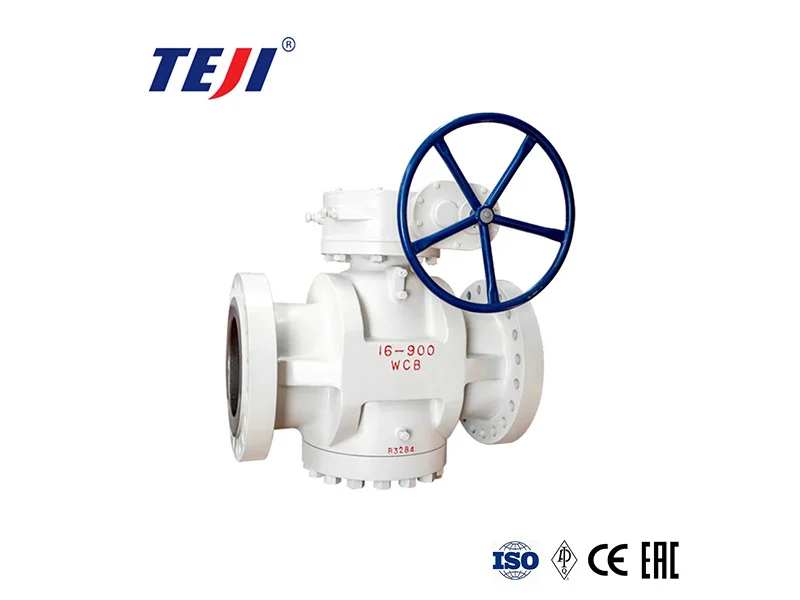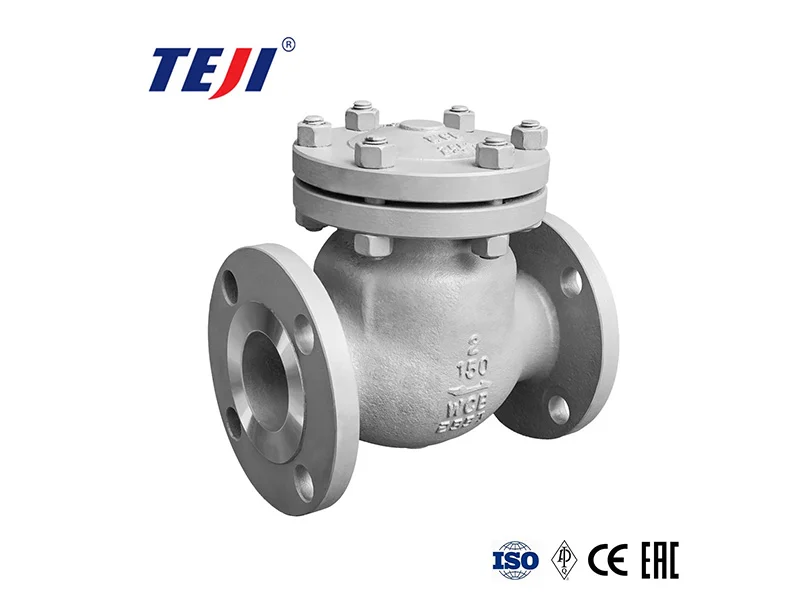
Fully welded ball valves are high-performance valves where all components are welded together, eliminating threaded or flanged connections. This results in a robust valve body, reliable sealing, and effective prevention of media leakage, making them particularly suitable for high-temperature, high-pressure, highly corrosive, and highly abrasive applications.
The ball and seat utilize precision machining and a metal sealing structure, providing a large flow capacity and a smooth, dead-angle-free flow path, reducing pipeline pressure loss. Furthermore, fully welded ball valves offer good fire resistance, a simple structure, corrosion resistance, and a long service life, reducing maintenance costs. However, they are more difficult to repair, have higher costs, and are heavier, requiring specialized equipment for installation and transportation.
As a professional valve manufacturer, TEJI produces a wide variety of easy-to-operate fully welded ball valves. Let’s take a look at the types of fully welded ball valves available from TEJI.
Forged Fully Welded Ball Valves
Fully welded ball valves use forged materials and welded valve bodies, rather than bolt and nut connections, to avoid potential leakage. The forged valve body has a regular structure and uniform thickness, avoiding defects common in cast valve bodies such as shrinkage cavities, pinholes, cracks, and sand holes. Fully welded ball valves are available in spherical and cylindrical shapes. Typically, spherical valve bodies have only one weld seam, while cylindrical valve bodies have two weld seams.
Standard Port Fully Welded Ball Valve
The standard port fully welded ball valve features a seat composed of a carbon PTFE sealing ring and a disc spring, enabling it to adapt to pressure and temperature variations and ensuring leak-free operation within the nominal pressure and temperature range. A special flux with fine particles is used during welding, resulting in excellent slag removal and meeting the requirements for high strength and toughness in the weld metal. Equipped with fireproof and anti-static devices, it offers enhanced safety and reliability. Furthermore, to meet customer needs, various drive mechanisms are available, including lever-type, worm gear type, electric, pneumatic, pneumatic-hydraulic, and electro-hydraulic types, providing a wide range of options for your selection.
Gas Exhaust Fully Welded Ball Valve
The Gas Exhaust Fully Welded Ball Valve is a one-piece welded ball valve with no external leakage. Thanks to its carbon fiber reinforced PTFE seal and butterfly spring, it is highly adaptable to pressure and temperature changes and will not leak within the specified pressure and temperature range. The ball’s machining process is tracked and monitored by an advanced computer-controlled inspection system, ensuring high precision. The Gas Exhaust Fully Welded Ball Valve is widely used in drain pipes, exhaust pipes, and natural gas pipelines.
The Gas Exhaust Fully Welded Ball Valve features a simple and safe dual-exhaust structure. The one-piece valve body ensures a tight seal. The ball is heat-treated. Suitable for gas pipelines, it offers reliability, impact resistance, and aging resistance. Quality is guaranteed, and the price is highly competitive. Front testing: Complies with ASME 16.10 and DIN 3202 standards; Fire safety testing: Complies with API 607/API 6FA standards.
Buried Fully Welded Ball Valve
Fully welded ball valves are primarily used in midstream natural gas transmission and distribution pipelines, typically installed underground. The ball is fixed, while the seat ring floats and can move freely along the valve axis. Lateral loads generated by the pressure acting on the ball are absorbed by bearings. At low pressures, the seat seal relies mainly on the spring thrust acting on the seat. As pressure increases, fluid pressure pushes the seat ring tightly against the ball, thus improving sealing reliability.
So what are the differences between these four types of fully welded ball valves?
| Classification Dimensions | Forging Fully Welded Ball Valve | Standard Port Fully Welded Ball Valve | Gas Exhaust Fully Welded Ball Valve | Buried Fullly Welded Ball Valve |
| Core Definition | The valve body is manufactured using a forging process, and the ball valve is connected by full welding. | All-welded ball valves conforming to international/national standard caliber series, with strong versatility. | All-welded ball valve with venting function (such as valve body vent pipe, valve seat grease injection pipe, etc.) | All-welded ball valve with extended rod operation, designed specifically for direct underground burial. |
| Structural features | The valve body blank is made by free forging or die forging, with small machining allowance and uniform wall thickness. | The valve body structure is standardized (cylindrical/conical/spherical) and conforms to ASME B16.34 and other standards. | Equipped with maintenance access channels such as exhaust pipe, grease injection pipe, and drain pipe; dual-piston effect valve seat. | The valve body features an extended stem design, with the stem extending to the ground, and is equipped with a cathodic protection coating. |
| Features | High strength and high pressure resistance, suitable for harsh working conditions. | Highly versatile, reliable sealing, and flexible operation. | Supports pressurized maintenance (grease injection, cleaning), fireproof and explosion-proof design. | No valve well required, resistant to soil corrosion, adaptable to ground subsidence. |
| Typical Applications | High-pressure pipelines, petrochemicals, liquefied natural gas | Heating networks, oil transportation, chemical media control | Live maintenance of main pipelines, pipelines containing solid particles | Direct burial of urban gas pipelines, underground centralized heating networks |
| Pressure/Temperature Range | Class 150~2500,-29℃~200℃ | Class 150~2500,-29℃~200℃ | PN16~64,-29℃~200℃ | PN16~40,-29℃~200℃ |
| Special Design | Forged valve body with thin wall thickness, ensuring uniform stress distribution | Complies with national standards such as GB/T 38202-2019 | Emergency sealing system for valve seat, dual shut-off and discharge functions | Anti-static, valve stem anti-blowout, 20-year warranty |
If you’re considering purchasing fully welded ball valves but don’t know where to start, we hope this article can help you. Of course, you can also contact us directly; TEJI is always ready to answer your questions.