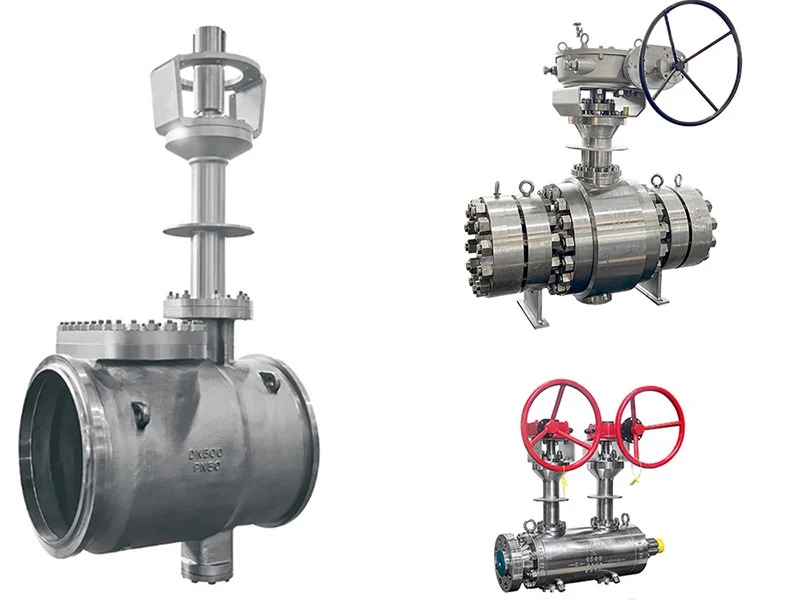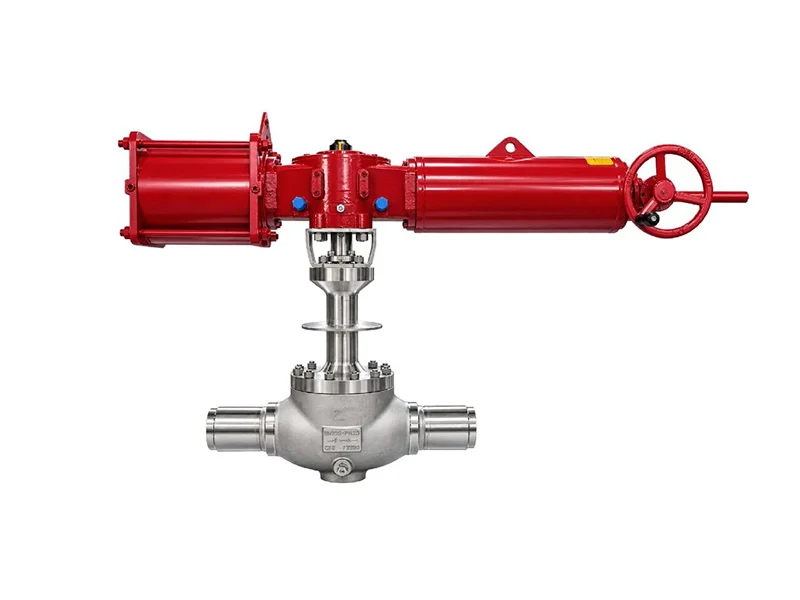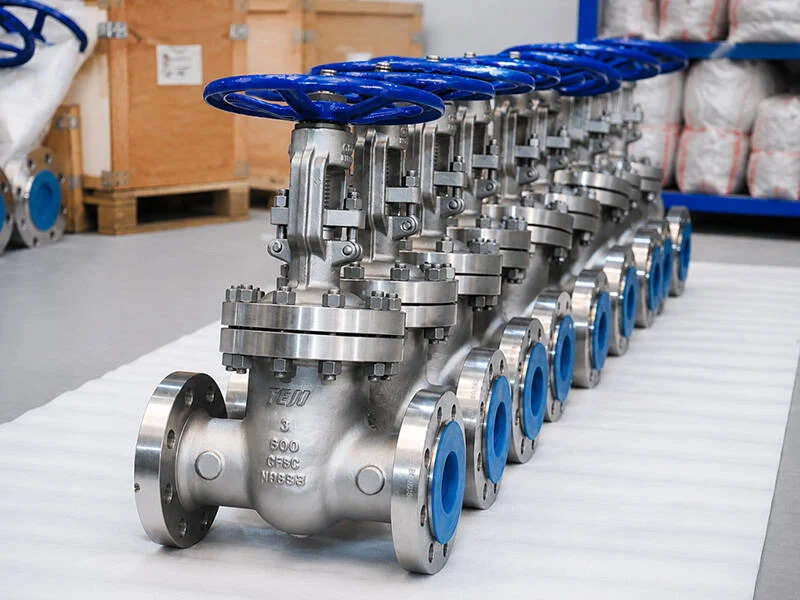
A trunnion ball valve consists of a valve stem and a ball. Its “trunnion” design allows the ball to be anchored in place by a central shaft (the trunnion) at the bottom. These valves are widely used for fluid control and come in various configurations. Key advantages include low cost, low operating torque, and excellent resistance to both corrosion and wear. Read on to learn more about this type of valve.
What Is a Trunnion Ball Valve?
A trunnion ball valve is a quarter-turn valve used to control the flow of media within a pipeline. Unlike the more common “floating” ball valve design, the trunnion ball valve features a distinct structure. In a trunnion ball valve, the ball is secured in position by being connected to the valve stem on one side and to a shaft—known as a “trunnion”—on the opposite side. In contrast, the ball in a floating ball valve is connected only to the stem, allowing it to “float.”
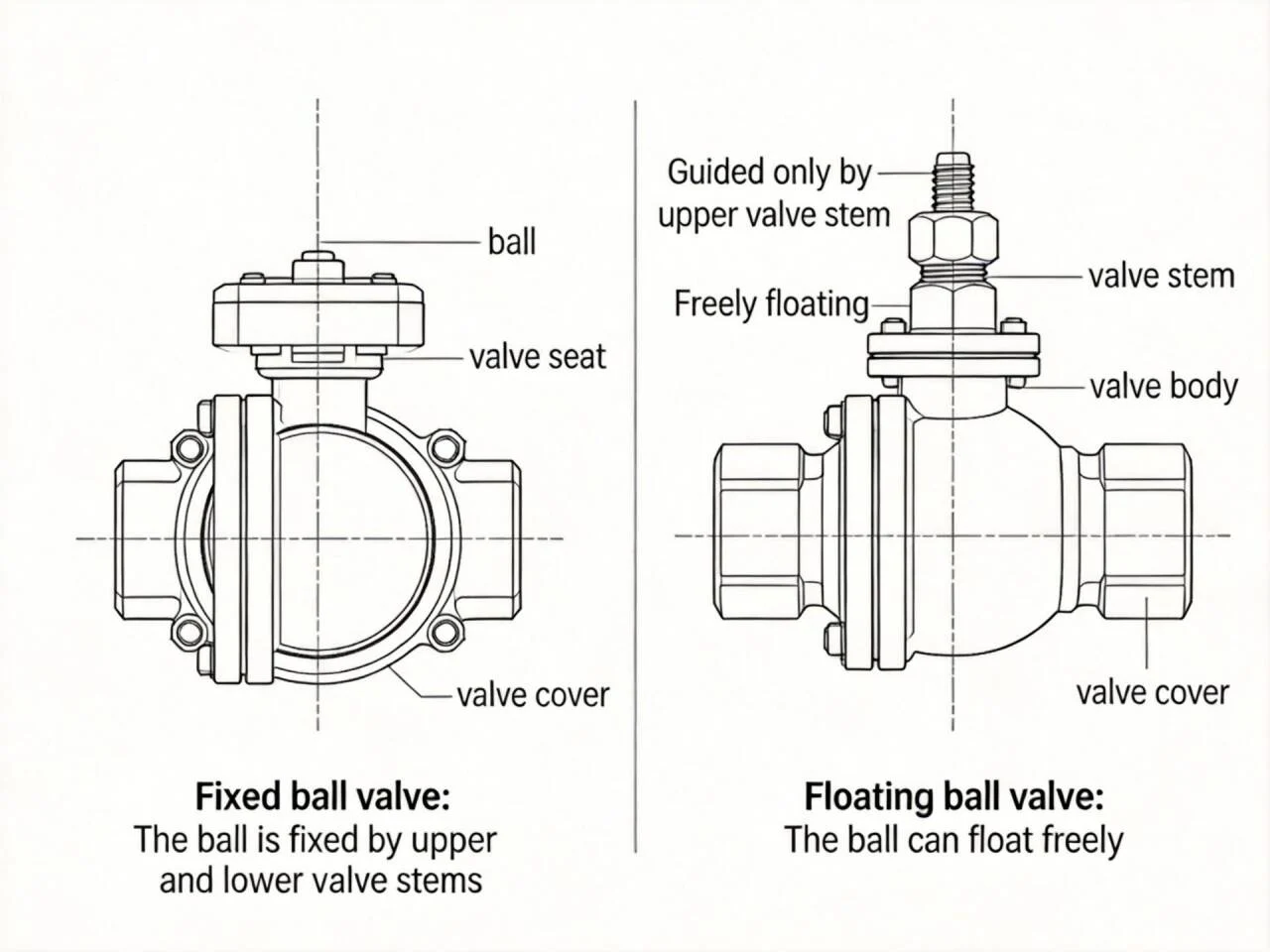
Trunnion ball valves offer several advantages over floating ball valves; they are suitable for both low-pressure and high-pressure applications, and their operational costs are generally lower.
How a Trunnion Ball Valve Works
The operation of a trunnion ball valve is based on controlled rotational movement. The valve stem transmits torque—from a manual handle or an automated actuator—to the ball, causing it to rotate about its axis.
When the valve is in the fully open position, a cylindrical passage through the center of the ball aligns with the pipeline axis, allowing the medium to flow directly through the valve body. This design ensures minimal pressure loss and smooth fluid transport. The flow path remains virtually unobstructed, which is one of the primary benefits of ball valve design.
To close the valve, the operator rotates the ball 90 degrees. This shifts the solid portion of the ball into the flow path, completely blocking it. Simultaneously, the outer surface of the ball is pressed firmly against the valve seat, creating a sealed interface that effectively prevents leakage.
Classification and Applications of Trunnion-Mounted Ball Valves
Cast Steel Trunnion Ball Valve
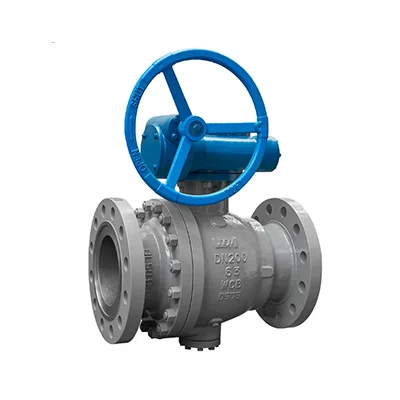
Cast steel trunnion ball valves feature a pressure-retaining body made of cast steel. The ball is securely fixed by upper and lower stems, ensuring it does not shift under fluid pressure during operation. Pre-tensioned, resilient seats on both sides convert fluid pressure into sealing force, achieving a “bubble-tight” zero-leakage seal.
Designed for demanding environments—such as the oil and gas industry, long-distance pipelines, and large-scale refining and petrochemical facilities—these valves can withstand severe erosion and high-pressure differentials. They serve as critical control valves in large-diameter, high-pressure fluid transport systems.
Forged Steel Trunnion Ball Valve
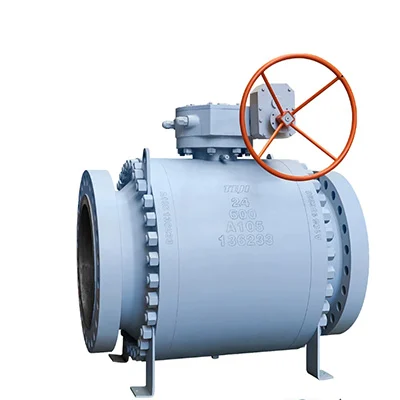
Forged steel trunnion ball valves feature a valve body produced through a comprehensive forging process. This results in a dense, uniform grain structure free from sand holes or porosity, offering significantly higher strength and impact resistance compared to cast steel counterparts.
These valves support bi-directional sealing and automatic pressure relief. They operate across a wide temperature range (from -196°C to 350°C) and can endure corrosive media, including those containing hydrogen sulfide or high levels of impurities. They are widely used in high-pressure, flammable, and explosive environments—such as long-distance oil and gas pipelines and hydroprocessing units—acting as essential shut-off equipment for critical industrial fluid transport.
Metal-Seated Trunnion Ball Valve
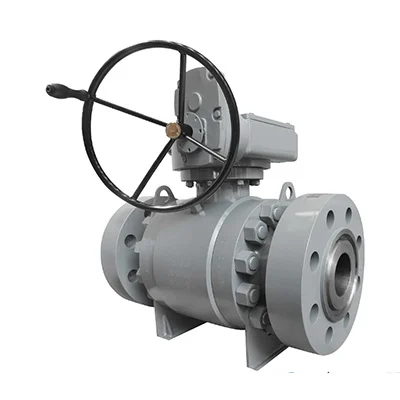
Metal-seated trunnion ball valves utilize a metal-to-metal hard-sealing interface. The sealing surfaces of the ball and seat undergo hardening treatments—such as high-velocity oxy-fuel (HVOF) spraying with tungsten carbide or Stellite alloy overlay—achieving a hardness exceeding HRC60. The ball is supported by upper and lower bearings, ensuring no axial displacement during rotation. The seat, energized by disc springs and the fluid pressure itself, “floats” against the ball; as fluid pressure increases, the sealing contact becomes even tighter.
These valves are unaffected by fluctuations in fluid pressure and inherently support a “double block and bleed” function. They offer exceptional resistance to high temperatures, high pressures, and particulate erosion, with a service life 2–4 times longer than that of soft-seated ball valves. They are ideally suited for extremely harsh operating conditions—such as coal-chemical processes, high-temperature steam systems, or applications involving abrasive slurries—where soft-seated valves would be inadequate.
Soft-Seated Trunnion Ball Valve
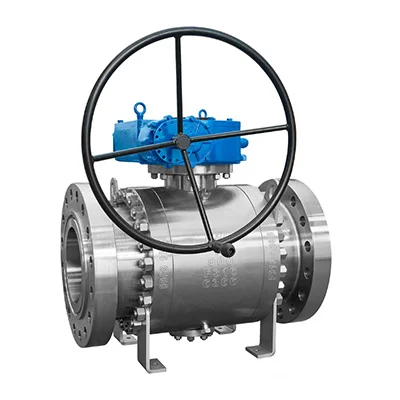
The soft-seated trunnion ball valve utilizes an elastic, non-metallic material for its seat sealing surface. Under the combined influence of pre-tightening force and medium pressure, this sealing material undergoes elastic deformation, conforming tightly to the spherical surface to achieve Class A, zero-leakage sealing.
Featuring low operating torque and a full-bore design that results in near-zero flow resistance, these valves are well-suited for applications involving clean media—such as water, municipal gas, and fine chemicals—at low to medium pressures. They are capable of absorbing pipeline vibrations and shocks, offering superior installation adaptability. With a significantly better price-to-performance ratio than hard-seated ball valves of the same specification, they represent a mainstream choice for conventional fluid control, balancing sealing reliability with cost-effectiveness.
Summary
The trunnion ball valve is a new generation of high-performance ball valve, ideal for long-distance transmission pipelines and general industrial piping systems. As a professional valve manufacturer, TEJI is committed to providing you with high-quality valves and exceptional service.