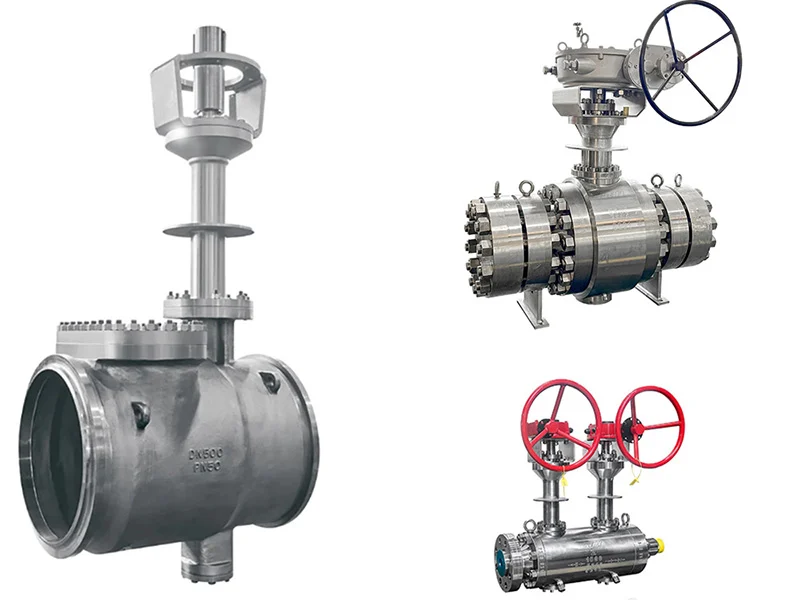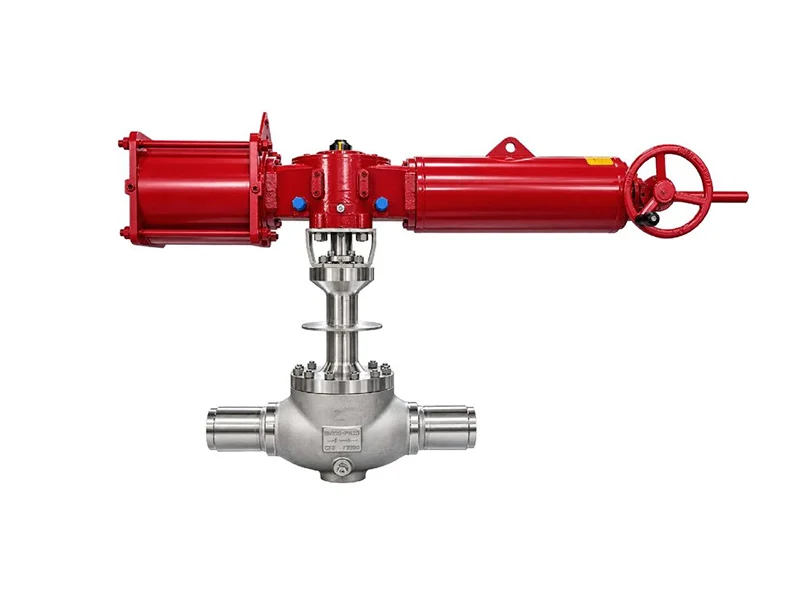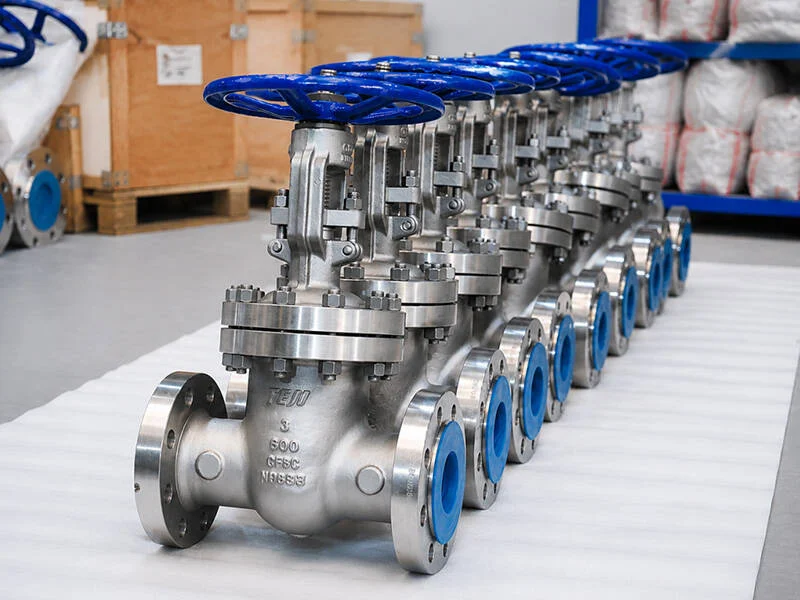
Cryogenic Side Entry Triple Offset Butterfly Valve are high-performance valves adapted to low-temperature environments. Their core design utilizes a triple offset structure: the valve stem axis is offset from both the valve body centerline and the butterfly plate center, and the valve seat sealing surface is inclined to the valve body channel axis, achieving torque sealing. The valve body, valve seat, and butterfly plate are made of special materials resistant to low-temperature impact and corrosion, such as stainless steel and alloy steel.
Some valve beginners may wonder why the valve stem axis is offset from both the valve body centerline and the butterfly plate center, and what advantages this structure offers.
The valve stem axis offset from the valve body center optimizes the contact trajectory of the sealing surfaces, resulting in a more uniform pressure distribution and preventing excessive wear due to localized excessive pressure, further improving sealing performance and durability.
The valve stem axis offset from the butterfly plate center allows the butterfly plate to quickly disengage from the valve seat when opening the valve; and delays the contact between the butterfly plate and the valve seat when closing the valve. This process effectively reduces friction between the sealing surfaces, reduces component wear, and thus extends the valve’s service life.
Therefore, the triple-eccentric structure increases the service life of the butterfly valve. Let’s look at some other advantages of the cryogenic side entry triple offset butterfly valve
Sealing Performance: The triple-eccentric butterfly valve uses a line seal. When closed, the contact pressure increases with torque, achieving “zero leakage,” meeting the requirements of different pressure levels. Furthermore, the bidirectional sealing is not limited by the direction of media flow; ordinary butterfly valves mostly use surface seals, resulting in relatively poor sealing performance.
High Flow Rate: The triple-eccentric structure increases the valve’s flow diameter, creating a straight flow path with a flow resistance coefficient ≤0.3, resulting in higher flow rates and significant energy savings, meeting the needs of large flow regulation.
Short Stroke: The valve shaft only needs to rotate 70-90° to complete a fully open or fully closed action, reducing the opening and closing time to 1/3 of traditional valves. It allows for rapid response and emergency shut-off, with a response time ≤3 seconds.
Bidirectional Sealing: The sealing surface cone angle is smaller than the friction angle, automatically locking when closed. It can withstand reverse pressure impacts, and installation is not limited by the direction of media flow, making it suitable for bidirectional shut-off applications.
While cryogenic side entry triple offset butterfly valves offer many advantages, what are their disadvantages?
Leakage Risk in Cryogenic Conditions (External Leakage)
Side-entry butterfly valves are sandwiched between two flanges and tightened by bolts. They seal well at room temperature, but when the medium temperature is extremely low (e.g., liquid nitrogen, liquefied natural gas), the metal materials of the valve body, bolts, and pipe flanges shrink at different rates. This asynchronous shrinkage leads to uneven stress on the gaskets at the connection points and loosening of the bolt preload, resulting in external leakage at the flange connection. This not only affects equipment operation but can also cause serious safety accidents.
Internal Leakage and Jamming Risk
When the temperature drops to a certain level (e.g., -196℃), the metal material may undergo a phase transformation (martensitic transformation), resulting in a change in volume. This deformation can damage the originally highly precision-ground sealing surface (especially conical seals), causing warping of the sealing surface and leading to internal leakage in the valve.
The contradiction between structure and fluid resistance
Triple eccentric butterfly valves typically have a thicker disc structure (to achieve a hard metal seal and eccentric angle). If used in small-diameter pipelines (below DN200), the disc occupies a large pipe cross-sectional area, significantly increasing the resistance to medium flow and causing unnecessary energy loss.
Seal erosion and wear
If the valve is in a continuously open state (used as a flow valve), the sealing rings on the disc and the valve seat sealing surfaces are directly exposed to the high-speed medium flow, suffering continuous erosion. Prolonged operation will wear down the sealing surfaces, causing the valve to fail to seal tightly when needed.
Cost and maintenance difficulty
Compared to ordinary center-line butterfly valves or soft-seal butterfly valves, triple eccentric butterfly valves have a complex manufacturing process (requiring high-precision conical surface machining and grinding). Furthermore, to adapt to low temperatures, expensive alloy materials (such as 316 stainless steel, duplex steel, etc.) are often used, resulting in high procurement costs. In the event of a malfunction, due to its precise structure, disassembly and repair usually require specialized technology and equipment, leading to high maintenance costs.
Having reviewed the advantages and disadvantages of cryogenic side entry triple offset butterfly valves, do you now have a deeper understanding of them? Next, let’s see where you can find examples of cryogenic side entry triple offset butterfly valves.
Natural Gas Liquefaction: This butterfly valve maintains excellent sealing and operational performance in such low-temperature environments, ensuring the safety and stability of the liquefaction process.
Food Processing: It can be used in liquid nitrogen supply pipelines to ensure precise control of liquid nitrogen for ideal quick-freezing effects.
Pharmaceutical Industry: It can be used in the refrigeration and vacuum systems of freeze-drying equipment to control the flow of cryogenic refrigerants and gases, achieving precise temperature and pressure control.
Cryogenic Air Separation: cryogenic side entry triple offset butterfly valves can be used to control the flow of cryogenic liquids and gases, ensuring efficient separation processes.
The above is a sharing about cryogenic side entry triple offset butterfly valves. If you would like to learn more, please contact us. TEJI has professionals who will discuss valve knowledge with you.