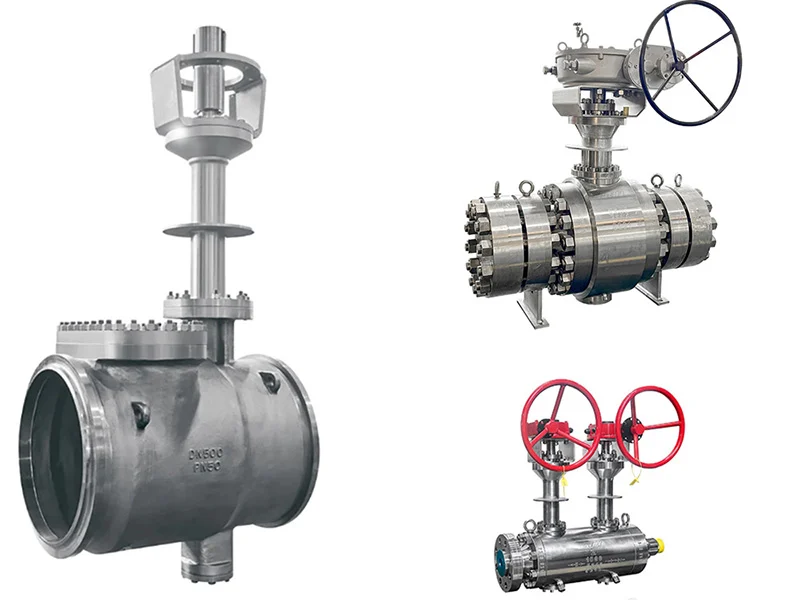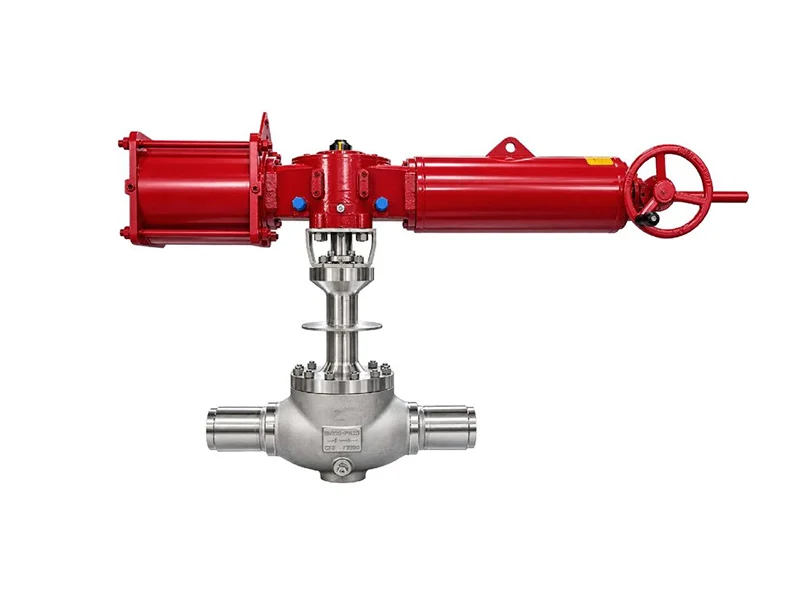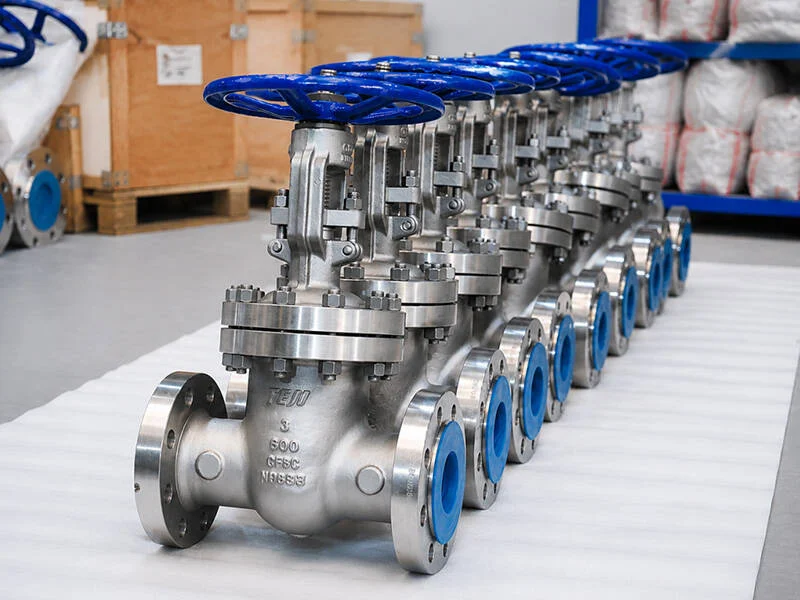
Valve manufacturing is a complex process involving multiple stages and technologies, requiring strict adherence to design specifications and quality standards to ensure reliable, safe, and durable products. Valve manufacturing typically comprises six major stages: design and development, material preparation, processing and manufacturing, assembly and commissioning, inspection and testing, and packaging and transportation. These stages are closely interconnected, forming a closed-loop management system.
Valve Manufacturing Process
Design and Development
Requirement Analysis:Determine the valve type (gate valve, globe valve, ball valve, etc.), pressure rating (PN16/Class 300), temperature range (-46℃ to 600℃), and sealing requirements based on the application scenario (e.g., oil and gas, chemical, water).
Structural Design: Utilize CAD software for 3D modeling and optimize flow path design to reduce pressure drop. For example, using a full-bore design for ball valves can reduce fluid resistance by 20%-30%.
Material Selection: Select valve body materials (carbon steel, stainless steel, duplex steel) and sealing materials (PTFE, metal hard seals) based on media characteristics (e.g., corrosiveness, solids content).
Material Preparation
Casting: Valve body blanks are produced through sand casting or precision casting (such as investment casting). For example, the DN300 gate valve body is produced using investment casting, achieving dimensional accuracy up to CT7 grade, reducing subsequent machining allowances.
Forging: Forging processes are used for key components such as the valve stem and valve disc to improve material density and mechanical properties. For example, the tensile strength of a 304 stainless steel valve stem increases from 520MPa to 620MPa after forging.
Heat Treatment: Stress-relieving annealing (550-650℃, holding for 4-6 hours) is performed on the castings to eliminate internal casting stress and prevent deformation during subsequent machining.
Manufacturing Process
Machining: CNC machining centers are used to machine the bore systems (such as flow channel holes and flange holes) of the valve body and valve cover, as well as for precision machining of the sealing surfaces.
Surface Treatment: Carbon steel parts are sandblasted to remove rust (Sa2.5 grade) and then coated with epoxy resin paint, achieving a corrosion resistance life of over 10 years; stainless steel parts undergo pickling and passivation treatment to improve corrosion resistance.
Special Processes: High-pressure valves (such as PN64 and above) employ a self-tightening sealing structure, using hydraulic expansion technology to ensure a tight fit between the valve body and valve cover, increasing pressure resistance by 30%.
Assembly and Commissioning
Component Cleaning: Use an ultrasonic cleaner to remove oil and metal shavings, ensuring the sealing surfaces achieve NAS 6 cleanliness.
Assembly: Install the valve body, valve cover, valve stem, seals, and actuator (e.g., electric or pneumatic) sequentially according to the process documents. For example, when assembling a ball valve, the coaxiality between the ball and seat must be ≤0.05mm.
Commissioning: Verify the valve’s opening and closing flexibility through manual or electric operation, and adjust actuator parameters (e.g., torque, stroke) to meet control requirements.
Inspection and Testing
Pressure Testing: Shell test (1.5 times design pressure, held for 5 minutes) and sealing test (1.1 times design pressure, held for 3 minutes) according to ISO 5208 or API 598 standards. Leakage rate must be ≤0.1%.
Non-destructive Testing: Radiographic testing (RT) or ultrasonic testing (UT) is performed on critical welds. Defect levels must comply with ASME VIII Div.1 standards.
Functional Testing: Valve performance is tested under simulated actual operating conditions (such as high temperature, high pressure, and corrosive media). For example, cryogenic valves must have their sealing performance verified at -46℃.
Packaging and Transportation
Protective Packaging: Moisture-proof and rust-proof packaging materials (such as VCI vapor phase corrosion inhibitor film) are used to individually package precision components (such as valve stems and balls).
Identification Management: The valve body is marked with the model number, pressure rating, material, and production batch number for easy traceability and maintenance. For example, the identification of a DN200 ball valve must include key information such as “Q41F-16C-DN200”.
Common Defects in Valve Manufacturing
Porosity is round or elliptical with smooth inner walls, mostly distributed inside or near the surface of castings; shrinkage cavities are located at hot spots (such as the center of the valve body), with rough pores and accompanying impurities. Porosity reduces the effective load-bearing area, leading to leakage during pressure testing.
Solidation shrinkage without replenishment by molten steel forms a loose area of dendritic crystals, extending to the body as a defect. Penetrating leakage is prone to occur during hydrostatic testing.
Interruption or splashing during pouring causes stratification of the metal flow, forming a diaphragm-like area defect with an oxide film on the inner wall. This is commonly seen at the bottom of the valve body or at abrupt structural changes.
Uneven grinding or embedded impurities lead to internal leakage (accounting for over 40% of valve failures).
Improper packing pressure, aging, or a rough valve stem cause external leakage (common in high-temperature conditions).
Incomplete penetration or stress cracks frequently occur at welded areas of the valve body.
Key Prevention Points
Casting Process: Optimize the gating system (large cross-section horizontal runner with slag blocking), and ensure molten steel settling time ≥ 15 minutes.
Process Control: 100% ultrasonic thickness measurement of valve body wall thickness; sealing surface roughness Ra ≤ 1.6μm.
Acceptance Standards: No porosity is allowed in pressure-bearing areas; ≤ 3 shallow pores (depth ≤ 1mm) are permitted on non-sealing flange surfaces.
TEJI is among the first in the industry to obtain multiple certifications, such as TS (A1/A2/B), ISO9001, ISO14001, ISO45001, CE, GOST, API, SIL, ECM, TUV, CNAS, etc. The company strictly adheres to JIS, BS, DIN, NF, ISO, and other standards in its production to meet the market demands of various industries and customers both domestically and internationally. If you wish to purchase high-quality valves, please contact us; TEJI will not disappoint you.