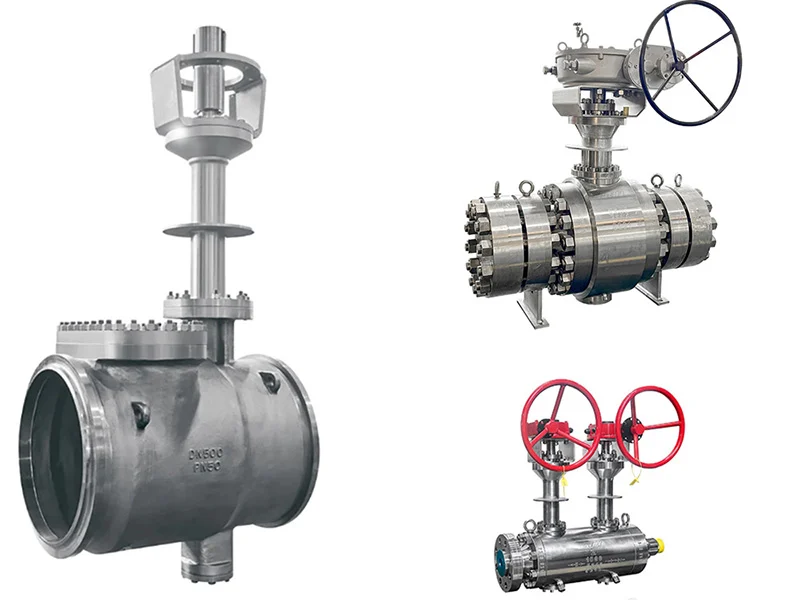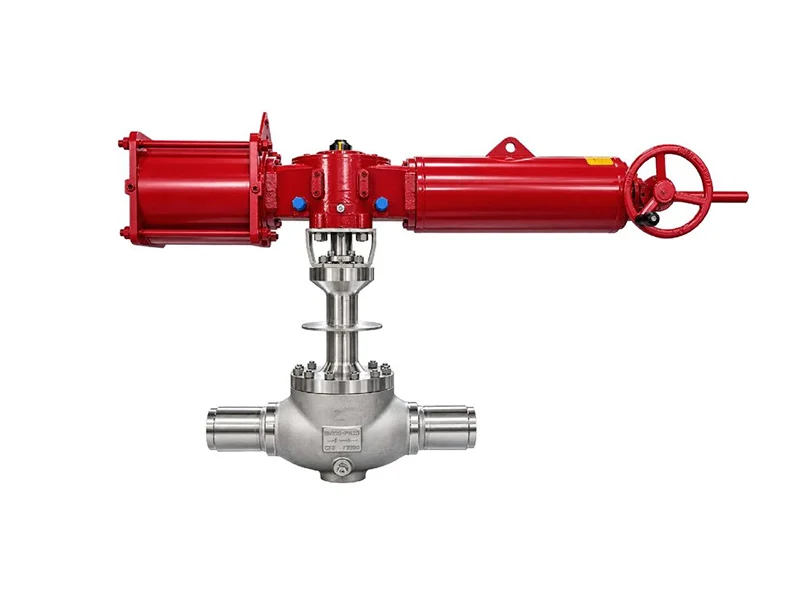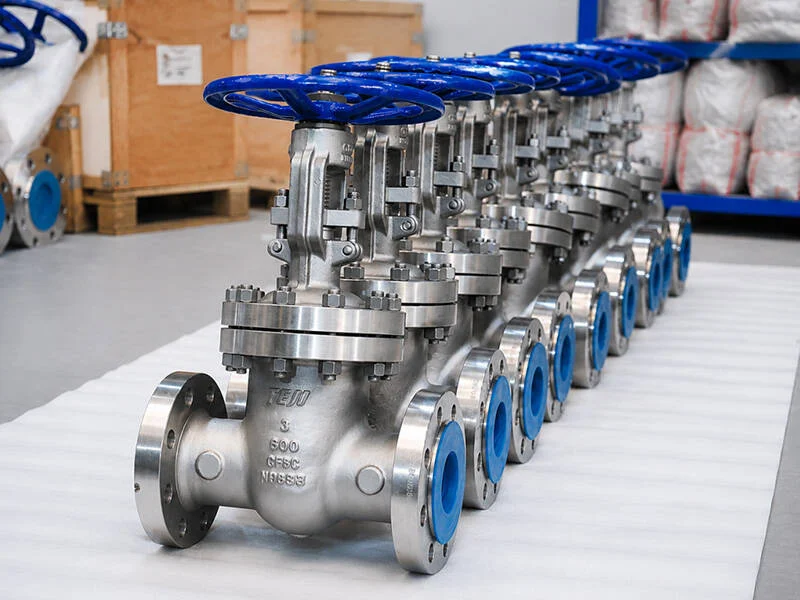
The Cryogenic Double Block & Bleed Ball Valves is designed for cryogenic conditions ranging from -196℃ to -46℃ and is widely used in storage and transportation systems for media such as liquefied natural gas (LNG), liquid nitrogen, and liquid oxygen. The valve body is made of cryogenically resistant materials (such as 304L and 316L), and the valve stem is lengthened with a drip tray to prevent cryogenic conduction to the packing. The sealing structure features fireproof, anti-static, and stem blowout prevention designs, ensuring flexible operation and zero leakage in cryogenic environments. It is a core safety component for critical equipment such as LNG receiving stations and air separation units.
Working Principle of a Cryogenic Double Block & Bleed Ball Valves
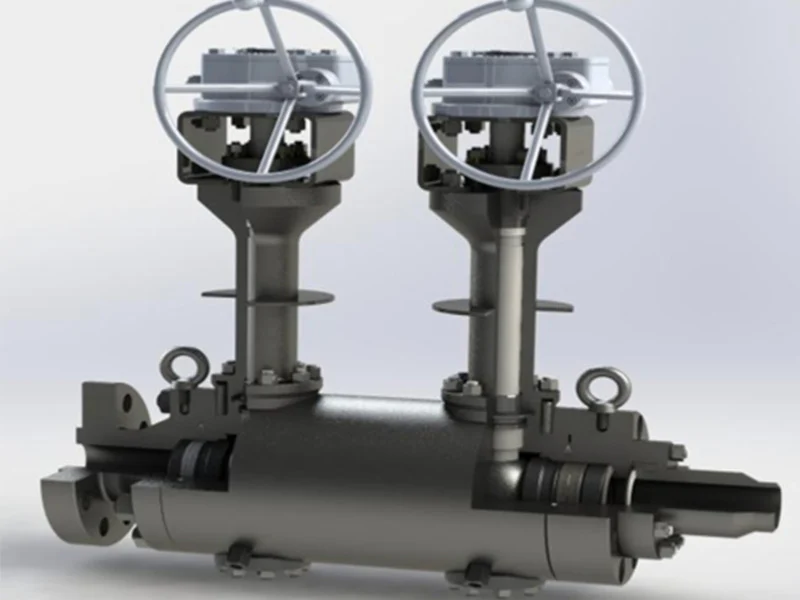
The Cryogenic Double Block & Bleed Ball Valves is a double-closing, double-stop, and relief function valve (DBB ball valve). It is a special ball valve that integrates double-blocking and relief functions. Its working principle mainly involves two aspects: double-blocking and relief.
Double-Blocking Function: When the valve is closed, it has two independent sealing surfaces (valve seats). These two sealing surfaces can simultaneously block the upstream and downstream fluids, forming a double sealing barrier. Even if one of the sealing pairs fails, the other sealing pair can still maintain the system’s tightness and prevent media leakage. Taking LNG cryogenic conditions as an example, ball valves made of duplex steel with a self-tightening metal seal design can withstand extreme temperatures from -196℃ to +600℃, preventing cryogenic embrittlement. High-precision sealing is achieved through precision grinding technology between the valve seat and the ball, ensuring zero leakage.
Relief Function: After the valve is closed, the relief port integrated on the valve body functions to drain any residual media or pressure within the cavity, creating a safe isolation space. The valve cavity between the two sealing pairs has a relief interface to release residual media or pressure, preventing abnormal pressure rise in the valve cavity due to thermal expansion or media evaporation, reducing the risk of seal failure, and facilitating system maintenance. Some valves also have an automatic relief device that automatically releases pressure when the valve cavity pressure is abnormal, preventing overpressure damage.
Furthermore, Cryogenic Double Block & Bleed Ball Valvess with different structural designs also have different operational implementation methods. For example, the key to the working principle of some ball valves lies in the movement of two sealing vanes mounted on the stopcock:
• Closing process: First, rotate the handwheel, rotating the stopcock and sealing vanes 90°. Then, the stopcock moves downwards, pushing the sealing vanes towards the valve body’s inner cavity surface until the elastic sealing ring is evenly compressed against the upper and lower ends of the valve orifice, forming a seal.
• Opening process: First, rotate the handwheel to lift the stopcock, pulling the sealing vanes back from the sealing surfaces on both sides of the valve body. After the vanes are completely retracted and detached from the valve body’s sealing surfaces, continue rotating the handwheel to rotate the stopcock and sealing vanes 90°, putting the valve in the open position.
Features of the Low-Temperature Double-Blocking Relief Ball Valve
High-Reliability Sealing: Independent sealing with dual valve seats, bidirectional zero leakage; a relief port in the middle cavity allows for the release of residual pressure at any time, maintaining safety.
High Low-Temperature Resistance: Made of austenitic stainless steel such as 304L/316L, cryogenically treated at -196℃ to eliminate phase transformation stress; an extended valve cover isolates the low temperature, preventing packing freezing.
High structural strength: Fully welded or top-mounted valve body, no external leakage points; valve stem anti-blowout design, fireproof, anti-static, suitable for high-pressure and high-risk working conditions.
Flexible operation and maintenance: 90° opening and closing, low torque; online removable valve cover for direct inspection or replacement of seals, reducing downtime.
Applications of Cryogenic Double Block & Bleed Ball Valvess
As a special ball valve with dual shut-off and relief functions, the Cryogenic Double Block & Bleed Ball Valves, with its dual sealing isolation and relief intermediate cavity capability, ensures strict sealing and safe operation in cryogenic environments. It is widely used in multiple fields:
Energy Industry: The Cryogenic Double Block & Bleed Ball Valves can provide dual blocking for LNG pipelines in LNG receiving stations, gasification stations, etc., preventing LNG leakage. Simultaneously, the relief function prevents abnormal pressure increases in the valve cavity due to temperature changes, ensuring system safety.
Chemical Industry: The chemical industry involves many toxic, flammable, and explosive cryogenic media, such as liquid chlorine and liquid ammonia. Cryogenic double-barrier venting ball valves can be used at the inlet and outlet of storage tanks and in pipelines for these media, providing double sealing isolation to prevent media leakage and safety accidents. Even if one seal fails, the other side remains effectively isolated. Simultaneously, the venting function discharges residual media from the cavity between the two sealing surfaces, avoiding pressure buildup or contamination risks.
Power Industry: In nuclear power plants, for some cryogenic coolant pipelines or special media pipelines, cryogenic double-barrier venting ball valves provide reliable sealing isolation, preventing media leakage from harming the environment and equipment. Their venting function helps to safely drain residual media from the valve cavity during maintenance or repair.
Aerospace Industry: In aviation kerosene storage and transportation pipelines, cryogenic double-barrier venting ball valves are ideal devices for cutting off the medium and preventing aviation kerosene leakage. The venting function prevents abnormal pressure rise in the valve cavity, avoids media backflow, and ensures the safety of aviation fuel systems.
All “TEJI” brand cryogenic valves are tested for normal temperature and low temperature performance according to international industry standards before leaving the factory, and are shipped only after they pass the test.Choosing TEJI will definitely not disappoint you.