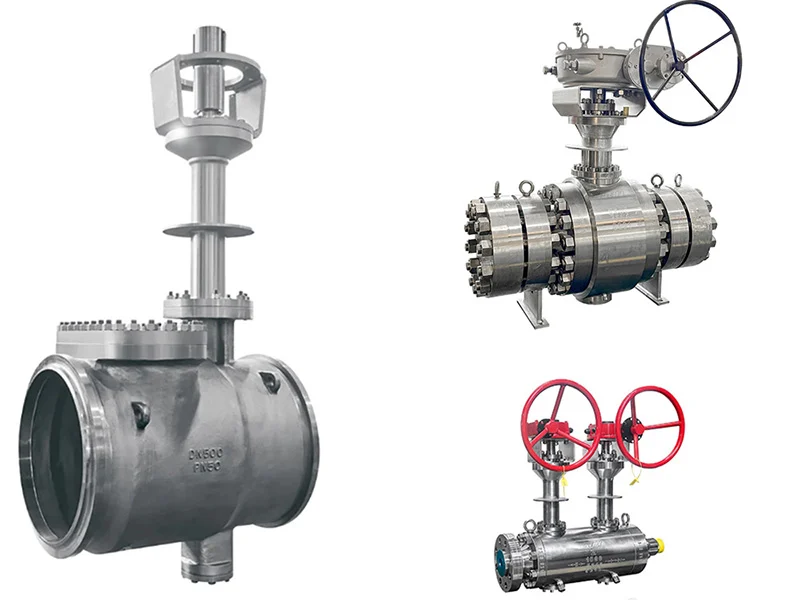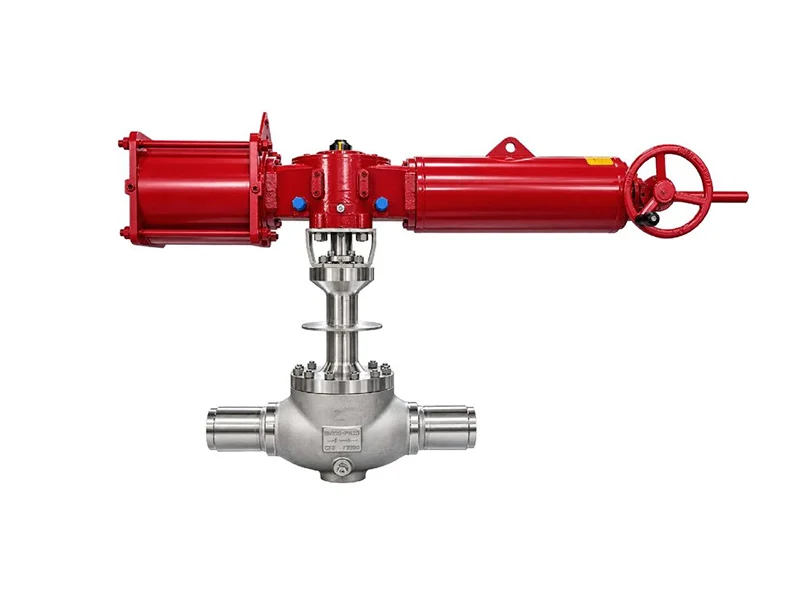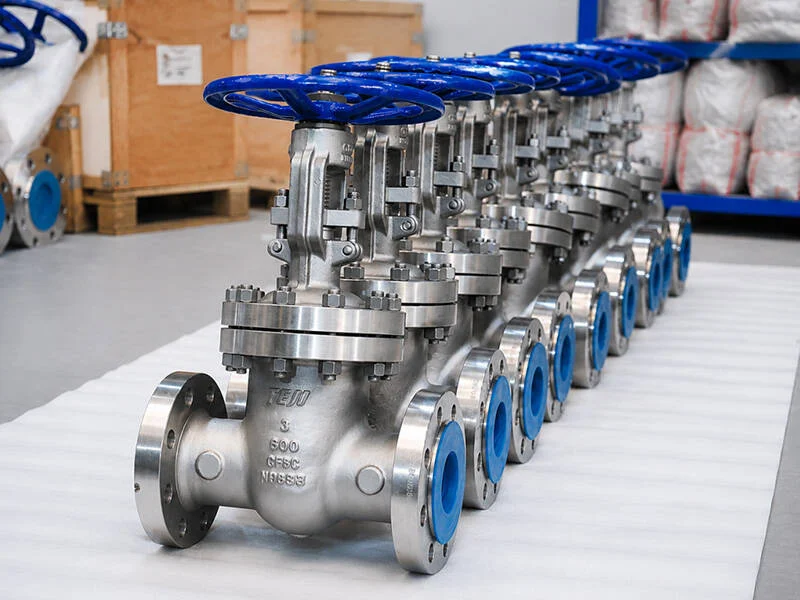
A trunnion ball valve is a common type of valve. Its core component is a ball with a circular through-hole. The ball is connected to the valve body via a valve stem and is fixed by upper and lower trunnions, making the ball’s rotation more stable. During operation, rotating the valve stem causes the ball to rotate 90 degrees to open or close the valve. When the through-hole is aligned with the valve bore, it is fully open, allowing the medium to flow smoothly; when perpendicular, it is fully closed, cutting off the medium.
Compared to ordinary ball valves, its valve body has trunnions, which enhances structural strength, enabling it to withstand high pressure and impact loads, and also simplifies installation and maintenance. It has good sealing performance, low operating torque, and large flow rate, making it suitable for harsh operating conditions such as high pressure and frequent switching. It is widely used in petrochemical, natural gas transportation, and other fields.
Hazards of Trunnion Ball Valve Failure
Production and Operation Level
Production Interruption: In continuous production processes such as chemical and petroleum manufacturing, trunnion ball valve failure can lead to abnormal media transport within pipelines. If the valve cannot open or close properly, it can disrupt the entire process flow, causing production stoppages and significant economic losses.
Reduced Production Efficiency: Even without a complete shutdown, the resulting flow instability and pressure fluctuations can prevent production equipment from operating at its optimal state, reducing product quality and output.
Safety Level
Leakage Risk: Failure in the sealing area can lead to media leakage. If the media is toxic, harmful, flammable, or explosive, it can cause poisoning, fire, explosion, and other safety accidents, threatening personnel lives and the surrounding environment.
Overpressure Hazard: When the valve cannot regulate pressure properly, the pipeline system may experience overpressure, damaging other equipment and even causing serious consequences such as pipeline rupture.
How to Test the Normal Operation of a Trunnion Ball Valve
Preliminary Inspection: Visually inspect the valve body, flange, and trunnion support for cracks, deformation, and corrosion; ensure the handle or actuator moves smoothly without jamming. Confirm that the pressure rating and flow direction markings on the nameplate match the actual operating conditions.
Sealing Performance Test
Low-Pressure Seal: With the valve fully closed, introduce 0.6 MPa compressed air or nitrogen into one chamber and hold for 10 seconds. Check the valve seat, stem, and flange connections with soapy water for air bubbles.
High-Pressure Seal: Increase the test pressure to 1.1 times the design pressure and hold for 15–60 seconds. Leakage must be ≤ the allowable value specified in API 6D or GB/T 13927.
Strength Test: With the valve fully open, inject clean water or inert liquid at 1.5 times the design pressure into the body and hold for 30–60 seconds. Ensure the body, trunnion support, and valve cover show no leakage or visible deformation. Operational Performance: Manually or actuator-driven, perform three full-stroke opening and closing cycles, recording the opening and closing torque. The measured value should be ≤1.2 times the design value, with no sudden changes or jamming. For emergency shut-off type, additional verification is required: full closure within ≤10 seconds.
Special Operating Conditions
Fire Resistance: Test by burning for 30 minutes according to API 607, followed by cooling. Repeat the low-pressure sealing test; leakage must still be acceptable.
Low Temperature: Place the valve at the design minimum temperature for 2–4 hours, then perform sealing and operational tests.
Recording and Judgment: Record all test data, holding time, leakage, and torque value in the report. Only after all items pass can the trunnion ball valve be deemed ready for normal use.
Troubleshooting Methods for Trunnion Ball Valves
Minor Leakage
Tighten External Bolts:If a minor leak occurs at the valve-to-pipe connection or valve body seal, it may be due to loose bolts. Tighten the bolts appropriately using tools, ensuring safety, but apply force evenly to avoid damaging the bolts or sealing surfaces.
Replace Seals:If the leak is caused by worn or aged seals, replace them promptly. Close the valve, release the pressure in the pipeline, disassemble the relevant parts, replace the seals with new ones according to the original specifications, and test after installation.
Inflexible Operation or Jamming
Cleaning and Lubrication:If the valve is inflexible due to accumulated impurities or lack of lubrication, first close the valve and disconnect the power source. Disassemble the valve, clean the valve stem, ball, and other parts, then apply a suitable lubricant, reassemble, and test.
Inspect Valve Stem and Drive Unit:If the valve stem is bent, broken, or the drive unit is malfunctioning, causing operational difficulties, replace the valve stem or repair/replace the drive unit. When replacing the valve stem, ensure its specifications match the original stem and that it rotates freely after installation. For the drive mechanism, strictly follow the maintenance manual for inspection or replacement.
Internal Component Damage Faults
Repair or Replace the Ball: If the ball is worn, scratched, or cracked, minor damage can be repaired; severe damage requires replacement. When replacing the ball, pay attention to the fit between the ball and the valve seat to ensure sealing performance.
Replace the Valve Seat: Damaged valve seats affect the valve’s sealing performance and should be replaced promptly. Clean the valve seat mounting area before replacement to ensure the new seat is securely installed and provides a good seal.
Fault Prevention Measures
Regular Maintenance: Establish a comprehensive maintenance plan, regularly inspect, clean, and lubricate the trunnion ball valve to promptly identify and address potential problems.
Install a Filter: Install a suitable filter upstream of the valve to reduce impurities in the medium entering the valve and lower the probability of malfunction.
The above is a sharing about trunnion ball valves. If you have any purchasing needs, please feel free to contact us. TEJI is always at your service.