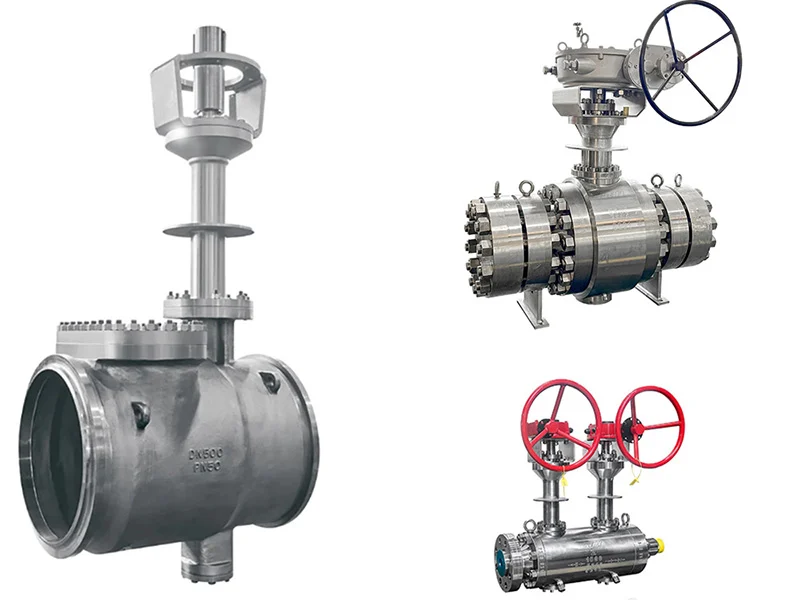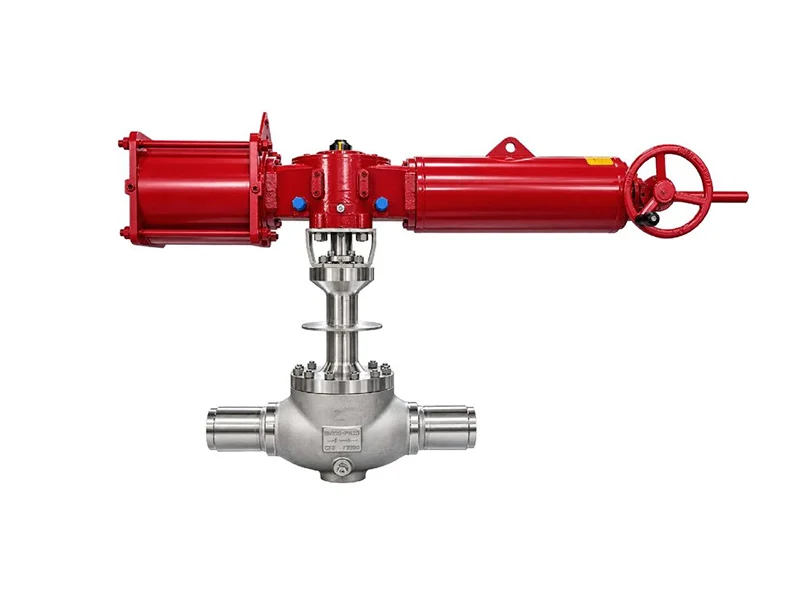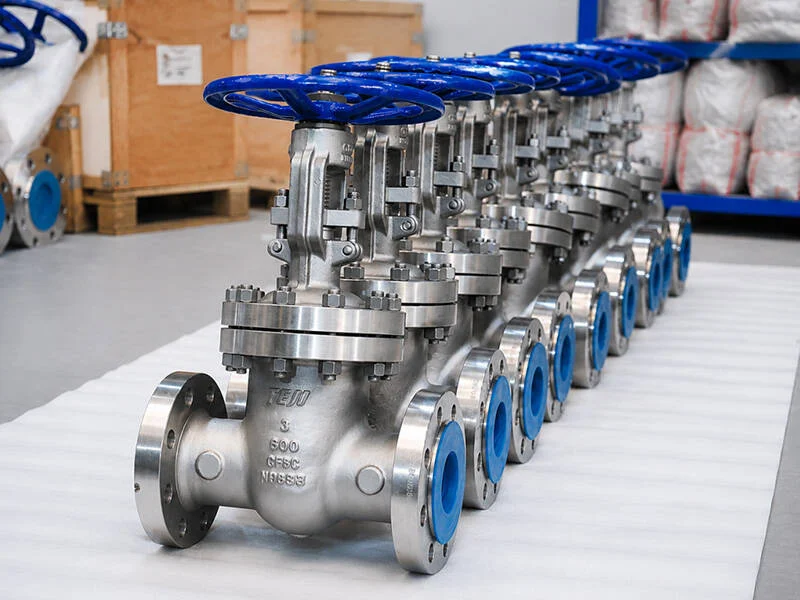
In industrial piping systems, ball valves, with their fast opening and closing, low flow resistance, and reliable sealing, are core devices for controlling media flow. 1PC (one-piece), 2PC (two-piece), and 3PC (three-piece) ball valves differ significantly in their application scenarios, ease of maintenance, and cost-effectiveness due to their structural differences.
1PC Ball Valve: The epitome of minimalist design
1PC ball valves utilize a one-piece body construction, with the ball, seat, and stem installed through a single-sided flow channel, forming an integral, integrated design. Their reduced-diameter flow channel limits flow capacity to the valve body size, but their overall light weight and compact size make them suitable for space-constrained piping systems.
2PC Ball Valve: The Choice That Balances Performance and Cost
2PC ball valves consist of a main valve body and an auxiliary valve body connected by bolts or threads. The ball and seat are installed from one side of the main valve body, and the auxiliary valve body completes the sealing. Their full-bore flow channel offers a flow resistance close to that of the pipeline itself, while also providing superior sealing performance compared to 1PC ball valves.
3PC Ball Valve: The Benchmark for Modular Maintenance
A 3PC ball valve consists of a main valve body and two auxiliary valve bodies, with a removable intermediate body, creating a “sandwich” structure. Its full-bore flow path is comparable to a 2PC valve, but maintenance requires no removal of the entire valve; simply loosening the intermediate body bolts allows for seal replacement or internal cleaning.
1PC, 2PC, and 3PC ball valves each have their own advantages, and choosing between them can be a difficult decision for some. Let’s take a closer look at their differences in this table.
| Comparison Project | 1PC Ball Valve | 2PC Ball Valve | 3PC Ball Valve |
| Flow capacity | Reduced bore, limited flow | Full bore, low flow resistance | Full bore, low flow resistance |
| Sealing | Generally, packing is susceptible to wear. | Good, bolt tightening is key. | Excellent, triple seal + automatic lubrication. |
| Voltage rating | Low pressure (≤1.6MPa) | Medium pressure (≤4.0MPa) | High pressure (≤10.0MPa) |
| Maintenance costs | Low, but requires complete replacement | Medium, partial parts can be replaced | High, but requires high long-term maintenance efficiency |
| Applicable media | Water, air | steam, oil, mildly corrosive liquids | chemical raw materials, high-pressure gas, steam |
As the table above shows, the evolution from 1PC to 2PC and then to 3PC ball valves is a continuous upgrade. So, will 1PC ball valves become obsolete, and can 3PC ball valves be used in all scenarios? Let’s take a look at their applications.
1PC Ball Valve
Civil Sector
In household water pipes, 1PC ball valves are often used to control water flow. For example, installed on the water supply pipes to kitchen sinks, toilets, and washbasins, users can conveniently open and close the ball valve to open and close the water supply. When repairing equipment like sinks or toilets, closing the ball valve stops the water flow, facilitating maintenance.
In central heating systems, 1PC ball valves can be used to regulate the flow of heating water and control the heating on and off. Users can adjust the amount of hot water entering the radiator by rotating the ball valve according to their needs, thereby adjusting the indoor temperature.
In Light Industry
In some small refrigeration systems, such as household refrigerators and small cold storage, 1PC ball valves are used to control the flow of refrigerant. 1PC ball valves can also be installed on the outlet pipe of small air compressors to control compressed air output. When equipment needs to stop supplying air or undergo maintenance, closing the ball valve prevents compressed air leaks, ensuring safe and normal operation.
Agriculture
In small agricultural irrigation systems, such as drip or sprinkler systems for home gardens and small farms, 1PC ball valves can be used to control the irrigation water supply. By installing the ball valve on the main or branch pipes, farmers can flexibly open or close the irrigation water source according to crop water needs, achieving water-saving irrigation.
2PC ball valves
Electronics and Light Industry
Ultrapure water, high-purity gas, chemical transportation, and FFU circulation ducts in cleanrooms. Its compact size and light weight facilitate compact layout and automated integration.
Cryogenic and Liquefied Gas
It can be used to shut off the inlet and outlet of liquid nitrogen, liquid oxygen, and liquefied petroleum gas (LPG) storage tanks, maintaining a reliable seal even at -196°C to prevent leakage. Mechanical Equipment Support
Machine tool hydraulic stations, air compressor cooling water, injection molding machine temperature controllers, and test bench loading circuits can be operated manually, electrically, or pneumatically, enabling remote monitoring and interlock protection.
3PC Ball Valve
Petrochemical Industry
During oil extraction, 3PC ball valves are used to control the flow of crude oil from wells to gathering and transportation systems. Their excellent sealing and pressure resistance ensure reliable operation under harsh operating conditions such as high pressure and high sulfur content, preventing crude oil leaks. On long-distance crude oil pipelines, 3PC ball valves can be used as shut-off valves, facilitating pipeline maintenance and inspection.
Chemical production involves a variety of corrosive media, such as acids, alkalis, and saline solutions. 3PC ball valves can be used to control the feed and discharge of chemical raw materials, as well as the flow of fluids during reactions, ensuring safe and stable production processes.
Food and Beverage Industry
In food and beverage production, 3PC ball valves control the flow of raw materials, semi-finished products, and finished products. These valves typically require excellent hygiene and corrosion resistance to ensure product quality and safety. The inner surface of a 3PC ball valve can be polished to reduce residual media and prevent bacterial growth. It is used for flow control during the transfer and mixing of liquids such as milk, juice, and beer.
Pharmaceutical Industry
The pharmaceutical industry places extremely high demands on valve hygiene. 3PC ball valves can be used to control the feeding of pharmaceutical raw materials, the transfer of drug solutions, and the flow of fluids during reactions, ensuring the quality and safety of pharmaceutical production.
Thus, 1PC, 2PC, and 3PC ball valves, with their respective advantages, play an important role in various industries.Each TEJI valve is manufactured in strict accordance with relevant standards and customer requirements, and undergoes final inspection before shipment to ensure that the valve can operate safely under various complex working conditions. TEJI will be your best valve partner.