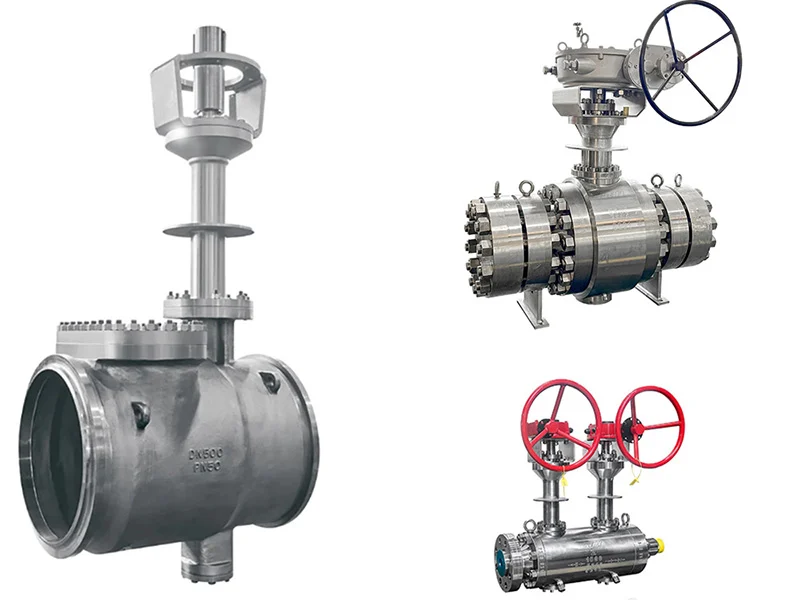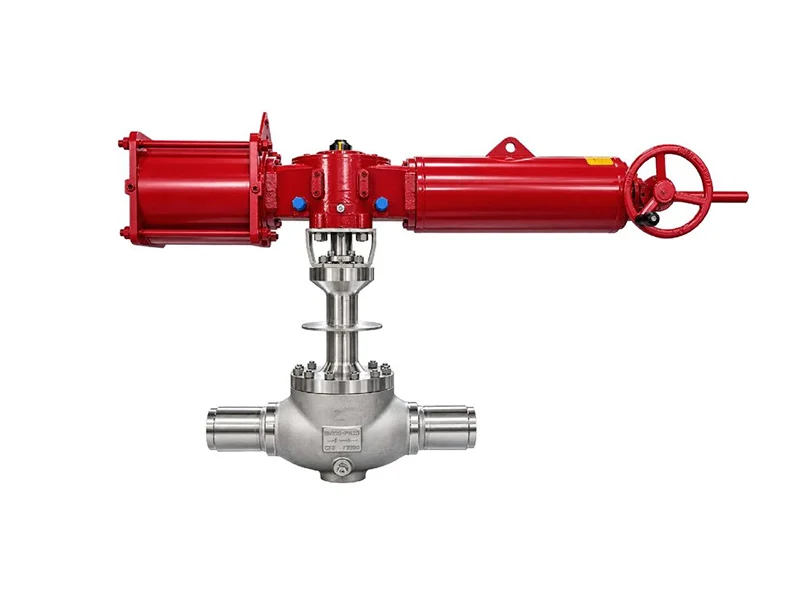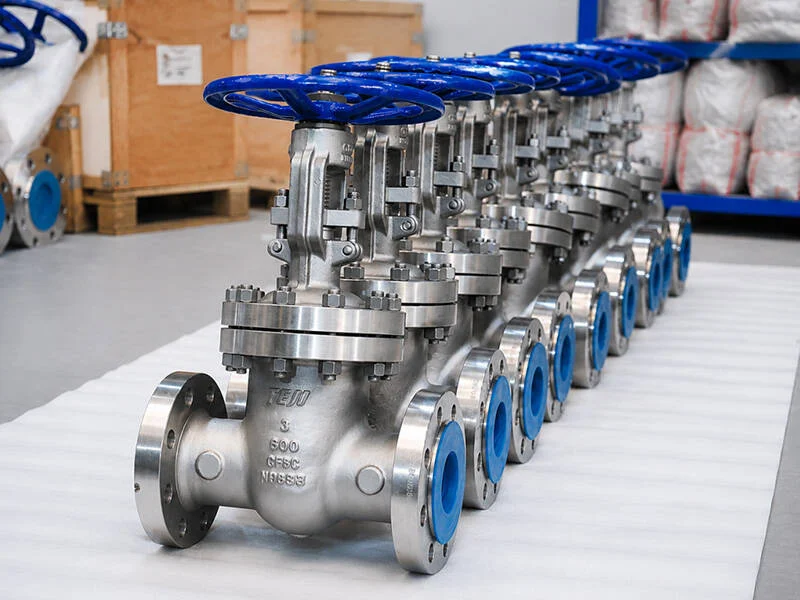
Valves come in many varieties, each with its own distinct functions. Choosing the most suitable valve from these diverse arrays poses a challenge for many valve users. This article, using ball valves and butterfly valves as examples, explores which is more practical in real-world applications. This may provide some insight.
Advantages and Disadvantages of Ball Valves
Advantages
Excellent sealing performance: The ball and seat seal fit tightly together, and soft-seal ball valves achieve zero leakage, preventing oil leaks and ensuring safe transportation.
Low flow resistance: When opened, the passage is unobstructed, allowing fluid to flow unimpeded, reducing pipeline pressure loss and improving oil transportation efficiency. Suitable for large-diameter pipelines.
Quick opening and closing: A 90-degree rotation allows for full opening or closing, enabling quick flow cutoff or adjustment, meeting emergency shutoff requirements.
Long service life: Under normal use, the ball and seat exhibit minimal wear. Hard-seal ball valves offer high wear and corrosion resistance, reducing maintenance and replacement frequency.
Wide adaptability: They can accommodate petroleum media of varying pressures, temperatures, and impurities, offering a wide pressure rating and temperature range. Good flow regulation: The ball’s rotation angle is approximately linearly related to the flow rate, enabling precise control of oil flow.
Disadvantages
Limited regulation accuracy: When precise, minute flow regulation is required, it is inferior to specialized regulating valves.
High price: This is especially true for high-performance ball valves made of specialized materials.
High cleanliness requirements: Oil containing large amounts of impurities or particles, if not pre-treated, can easily damage the sealing surface, affecting sealing performance.
Advantages and Disadvantages of Butterfly Valves
Advantages
Compact structure and light weight: Compared to gate valves and ball valves of the same specification, butterfly valves are smaller and lighter, making them particularly suitable for large-diameter pipeline systems.
Easy operation and fast opening and closing: Opening and closing can be achieved with a simple 90° rotation, resulting in low opening and closing torque, enabling fast operation.
Low flow resistance: When fully open, the thickness of the butterfly disc offers virtually no resistance to flow, resulting in minimal pressure drop and significant energy savings.
Cost-effectiveness: Simple structure and few parts result in low manufacturing and maintenance costs.
Good regulating performance: It enables graded flow control and is suitable for applications requiring regulation.
Disadvantages
Limited Sealing Performance: Compared to ball valves and gate valves, butterfly valves offer poor sealing performance and are particularly prone to leakage in high-pressure or high-temperature environments.
Inadequate High-Temperature and High-Pressure Resistance: Elastomeric sealing materials are subject to temperature limitations and are prone to failure under high-temperature and high-pressure conditions, making them generally unsuitable for extreme operating conditions.
Moderate Adjustment Accuracy: While flow can be adjusted, control accuracy is inferior to that of ball valves or globe valves, making them unsuitable for high-precision control needs.
Susceptibility to Media Affects: Particles or corrosive substances in the media may accelerate wear of the disc and seat, leading to leakage or control failure.
Comparison of Ball Valves and Butterfly Valves
| Comparison Project | Ball valve | Butterfly valve |
| Structural principle | It is composed of valve body, valve core and valve stem assembly. The ball rotates 90 degrees around the axis perpendicular to the channel and has a circular through hole. When fully open, the medium passes through without obstruction. When closed, the ball fits tightly with the valve seat and seals. | It is composed of valve body, valve seat, valve plate and valve stem. The butterfly plate rotates 90 degrees around the fixed axis in the valve body. When it is open, it is parallel to the center line of the pipeline and when it is closed, it is perpendicular to the center line of the pipeline. It cuts off or regulates the flow of the medium by squeezing or sealing with a sealing ring. |
| Connection method | There are flange connections, threaded connections, welding connections, etc. Flanges are used for large diameters, threads are used for small diameters, and welding is used for special working conditions. | Mainly wafer connection and flange connection. Wafer connection is suitable for medium and low pressure, and flange connection is suitable for various pressure levels. |
| Sealing performance | Soft seals are made of rubber and other materials, while hard seals are metal to metal, which can seal well, with zero leakage or trace leakage, and can adapt to high pressure and high temperature. | The sealing pair is made of rubber and other materials. The sealing is better at low pressure and room temperature. The sealing performance may decrease when the pressure and temperature change. However, the new butterfly valve has improved |
| Flow characteristics | When fully open, the flow resistance coefficient is small and the flow coefficient is large, which is suitable for large-diameter pipelines and large-flow transportation. The V-type ball valve can adjust the flow | The flow resistance is relatively large when fully open, but the structure is compact and suitable for large-diameter pipes. It is widely used in cost-sensitive occasions with no stringent flow requirements. |
| Operation | It can be operated by handle, pneumatic or electric actuator. The handle is used for small diameter and low pressure, while pneumatic and electric actuators are used for large diameter, high pressure or frequent operation. | Similar operation mode, small opening and closing torque, easy handle operation, wide range of pneumatic and electric applications |
| Applicable working conditions | It is suitable for various pressure and temperature ranges, and performs well in harsh working conditions such as high pressure, high temperature, high viscosity, and solid particles. It is used in key pipelines in the petroleum, chemical industry and other places with high flow control requirements. | Applicable to medium and low pressure, large diameter pipeline systems, commonly used in water supply and drainage, ventilation, air conditioning and other fields |
| Maintenance | The structure is complex, with many parts, and many parts need to be disassembled for maintenance. The cost is relatively high, but the service life is long. | Simple structure, few parts, easy maintenance, regular inspection of butterfly plate rotation and seal wear, easy replacement of seals, low cost |
Which is more practical, a ball valve or a butterfly valve?
As mentioned above, ball valves offer better sealing, a wider range of applications, and high flow control accuracy, but they come with relatively higher maintenance costs. Butterfly valves, due to their simple structure, ease of operation, and low cost, excel in low- to medium-pressure, high-flow applications where sealing requirements are less stringent. However, caution is advised when selecting butterfly valves for high-temperature, high-pressure applications or those requiring high-precision control.
If flow regulation is required and the pipe diameter is large, a butterfly valve may be more practical. If sealing and the convenience of frequent opening and closing are more important, a ball valve may be more suitable. Of course, the specific operating conditions, budget, and maintenance schedule must be considered when making the final decision.
TEJI has 45 years of experience in valve manufacturing and operation. If you are looking for valves, TEJI is a good choice.