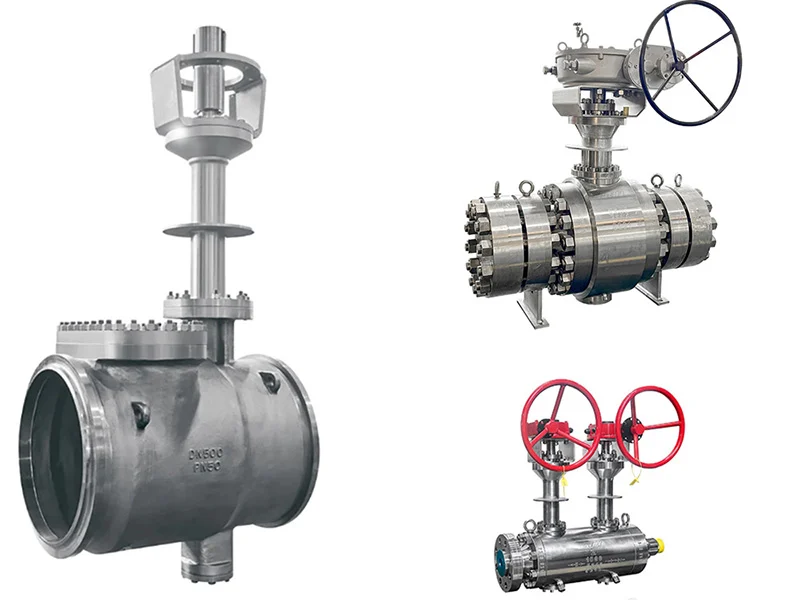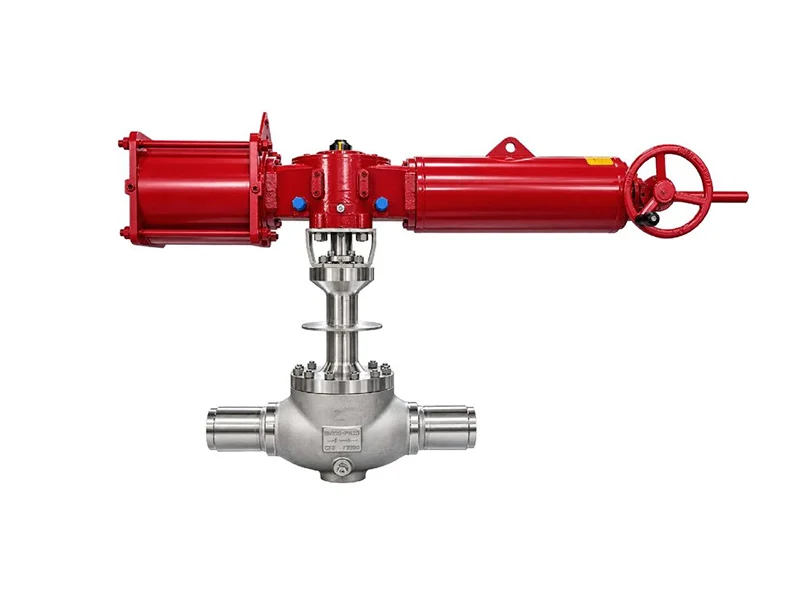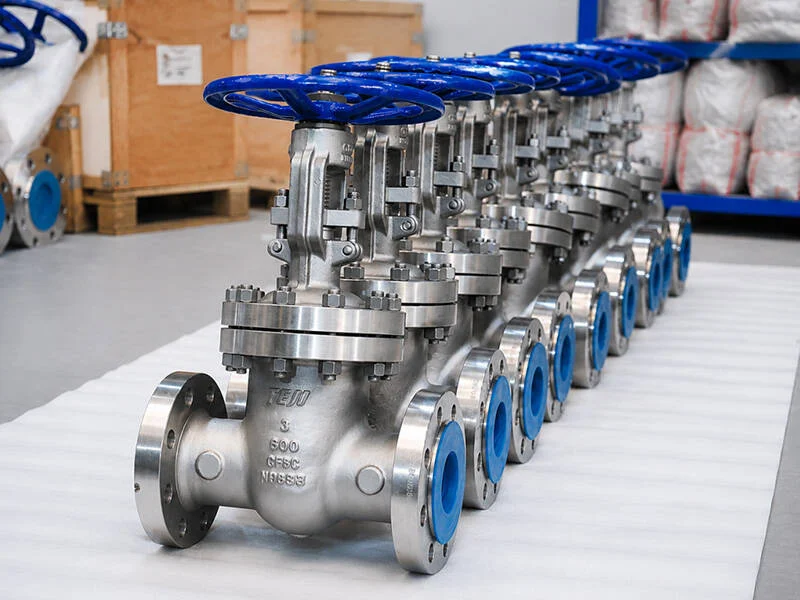
Forged steel valves are a general term for various valves made primarily of cast steel. Their bodies are typically constructed of cast steel, which offers superior plasticity and toughness compared to cast iron valves. They can withstand high pressures, temperatures, and complex operating conditions. They are widely used in industries such as petroleum, chemical, power generation, and metallurgy. Their excellent performance and reliability ensure the stable operation of various industrial systems.
Forged steel valves come in a variety of types, including ball valves, knife gate valves, and check valves. Ball valves can be rotated 90 degrees to shut off, distribute, and control flow, offering low fluid resistance and ease of operation. Knife gate valves are suitable for applications such as mine slag removal and sewage treatment. Check valves prevent backflow.
Forged steel valves come in a variety of styles, and there are countless manufacturers offering them. Choosing a high-quality cast steel valve can be a challenge. Don’t worry, we’ll analyze it in detail.
How to Choose a High-Quality Cast Steel Valve
First, clarify the operating requirements. Determine the valve type based on the application scenario. For example, choose a ball valve for controlling the flow of a medium; choose a check valve for backflow prevention. At the same time, parameters such as pressure rating, temperature range, and media characteristics should be determined based on the operating conditions. For example, heat-resistant and pressure-resistant Forged steel valves are required for high-temperature and high-pressure applications. For highly corrosive media, the valve’s corrosion resistance should be considered. For specific requirements, please refer to the following:
- Valve Body Material: Confirm whether it is ASTM A216 WCB, WCC, or higher-grade materials such as WC6 and WC9. Request the supplier to provide a Material Test Certificate (MTC) to ensure compliance with standards.
- Internal Material: The material of key internal components such as the disc, seat, and stem is crucial and should be selected based on the media characteristics.
- Casting Process: High-quality valves utilize precision casting to ensure a dense internal structure, free of defects such as pinholes and pores. The exterior is smooth and flat, with proper gating and riser treatment.
- Heat Treatment: Proper normalizing and tempering are essential to eliminate casting stresses, refine grain size, stabilize dimensions, and achieve ideal mechanical properties.
Secondly, high-quality Forged steel valves are typically made of high-quality cast steel, which offers excellent strength, toughness, and corrosion resistance. Manufacturing processes are also crucial. Advanced technology ensures valve dimensional accuracy and surface quality, improving durability and sealing. I hope the following references are helpful.
Design Standards
Mainstream standards include API, ASME, ISO, and GB. API 600 is the authoritative standard for bolted-bonnet steel gate valves used in the oil and gas industry. API 602 is applicable to compact gate valves, and API 603 is for corrosion-resistant flanged gate valves. Choose products that meet recognized standards.
Structural Design
- Flow Path Design: Full-port or reduced-port? Full-port offers low flow resistance and is suitable for applications such as pumping and pigging.
- Connection Types: Flanges (RF, RTJ), butt-weld (BW), and threaded. Butt-weld connections offer the highest reliability and are used in high-risk applications.
- Bonnet Configurations: Standard, extended (for thermal insulation or low-temperature applications), and pressure-tight seals.
- Seal Design: This is the heart and soul of the valve.
- Stuffing Box: Use multi-stage flexible graphite rings or PTFE packing, equipped with a disc spring-loaded gland to automatically tighten the packing, ensuring a long-lasting, adjustable stem seal.
- Sealing Surface: Is the seal hard (metal-to-metal) or soft (metal-to-non-metal)? Hard seals are more resistant to high-temperature wear, while soft seals can achieve zero leakage but are subject to temperature limitations. High-quality valves often utilize carbide overlays.
Finally, even the best design and materials require rigorous testing to verify their performance. Pressure testing must be 100% factory-tested, with a test report. This includes:
- Shell Strength Test: Tests the valve body’s pressure-bearing capacity at 1.5 times the nominal pressure.
- Seal Test: Tests the seat and disc’s tightness at 1.1 times the nominal pressure.
- Top Seal Test: Tests the seal between the stem and bonnet.
- Other performance tests: Depending on your needs, tests such as fire resistance testing (API 607/API 6FA), low-temperature testing, and fugitive emissions (low leakage) testing (ISO 15848/TA-LUFT) may also be required.
Furthermore, after-sales service is crucial in evaluating valve quality. Valves are long-term equipment, so after-sales support is crucial. Of course, if you’re still undecided, we recommend choosing TEJI, which offers a comprehensive after-sales service system and guarantees a positive user experience.