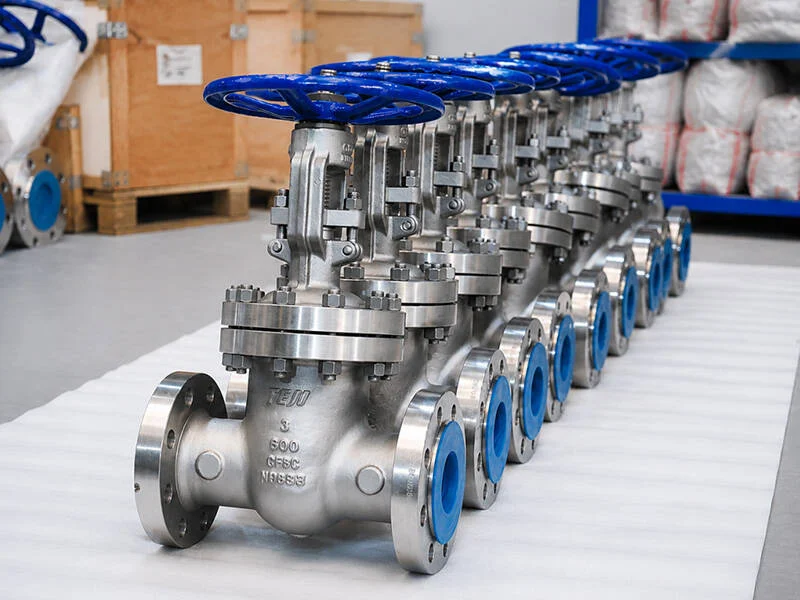
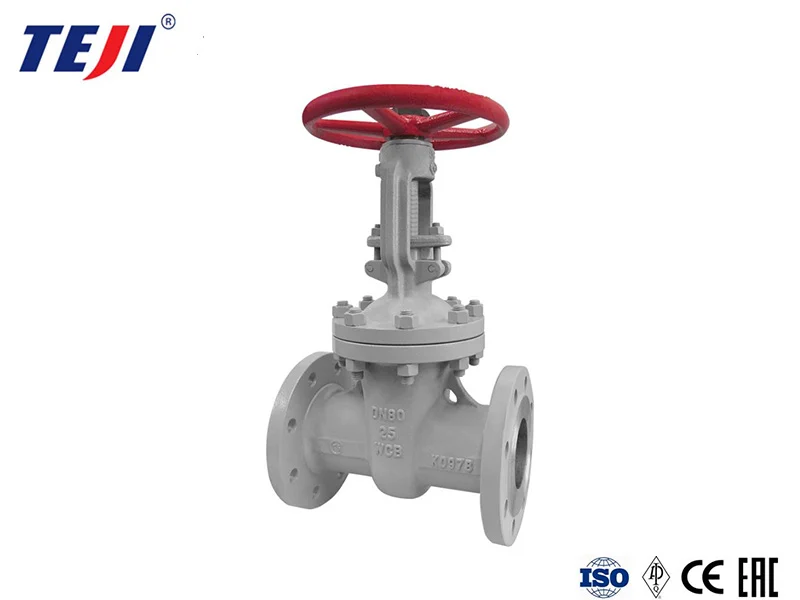
A gate valve is a control valve widely used in industrial piping systems. A gate valve opens and closes by moving a disc perpendicular to the flow direction of the medium. It can only be fully opened or closed and cannot be adjusted or throttled.
The main components of a gate valve include the valve body, bonnet, stem, gate or disc, and sealing ring.
The valve body is the core of the valve, housing the internal components and is typically made of ductile iron, cast iron, or stainless steel. The bonnet covers the valve body and houses the stem.
The stem is the rod-shaped component that connects the handwheel to the gate. There are two types of valve stems: rising stem and non-rising stem. A rising stem gate valve has a stem that rises when the valve is open, while a non-rising stem gate valve has a stationary stem.
The gate, or disc, controls the flow of fluid. Gates can be solid wedges, flexible wedges, or split wedges, each designed to suit different flow conditions. The sealing ring provides a sealing surface for the gate when the valve is closed, preventing leakage. Gate valve cross-sectional specifications are typically expressed in nominal diameter (DN). Common sizes include small, medium, and large.
Small diameter: DN15 – DN50, suitable for small piping systems such as domestic water supply and gas pipelines.
Medium diameter:
- DN40 – DN300: Steel gate valves have a nominal diameter range of this size (corresponding to NPS 1.5 – 12), complying with domestic and international standards such as API 600 and GB/T 12234.
- DN50 – DN600: Underground resilient seated gate valves have a nominal diameter range of this size (maximum size reaches DN600 by 2024). New models in 2025 support high pressures of 2.5 MPa.
- DN50 – DN1200: The nominal diameter range for resilient seated gate valves, typically operating at temperatures ≤ 200°C.
Large diameter: DN2000 is also used, but relatively rarely. Large-diameter gate valves are generally used in large industrial piping systems, water conservancy projects, and other applications requiring high flow rates.
Gate valves are categorized into different types based on their cross-section, which in turn determines their specific functions. The gate valve’s cross-section affects its operation in several ways, including flow resistance, flow regulation, and sealing performance. The following provides a detailed explanation:
Flow Resistance
Large Cross-Section: A gate valve with a larger cross-section provides a wider passageway for fluid flow through the valve. This reduces flow resistance and encounters less obstruction. These valves are commonly used in large water supply piping systems.
Small Cross-Section: A gate valve with a smaller cross-section narrows the passageway, forcing the fluid to overcome greater resistance, significantly increasing flow resistance. This slows the flow rate and increases pressure loss. Small-cross-section gate valves are commonly found in smaller-diameter industrial pipelines.
Flow Regulation
Large Cross-Section: A gate valve with a large cross-section provides a larger flow area when open, allowing large volumes of fluid to pass quickly. In applications requiring high flow rates, such as circulating water systems in power plants, large-cross-section gate valves can meet the system’s water flow requirements.
Small Cross-Section: Due to their limited flow area, small-cross-section gate valves have a relatively narrow flow regulation range. However, they offer certain advantages in regulating small flows, enabling more precise control of subtle flow changes. In pipelines in laboratories or small chemical plants, small-cross-section gate valves can be used to precisely regulate the flow of reagents or gases.
Sealing Performance
Large Cross-Section: Large-cross-section gate valves have a larger sealing surface, which increases the difficulty of sealing. Achieving a good seal requires higher machining precision and stricter installation requirements. Minor defects in the sealing surface or improper installation can easily lead to leakage.
Small Cross-Section: Small-cross-section gate valves have a relatively small sealing surface, making sealing easier. Under normal conditions, a reliable seal is easier to achieve. Furthermore, a smaller sealing surface makes seal maintenance and replacement easier. In small, low-pressure, ambient-temperature piping systems, small-cross-section gate valves can provide better sealing performance.
Understanding the cross-section of a gate valve can help you choose the right one. If you’re still struggling with the various gate valve options, please contact us. TEJI will provide professional guidance and answer any questions you may have.