Butterfly Valves – Concentric, Double-Offset, and Triple-Offset

You Are Here:

Butterfly Valves – Concentric, Double-Offset, and Triple-Offset

The butterfly valve is a quarter-turn valve that can be used as an on-off valve or throttling valve. There are two types of butterfly valve, a concentric and an eccentric type. The eccentric type can be single, double, or triple-offset type. Even though it is possible to have a single-offset butterfly valve, but it is rarely found in the market.

The most available in the market for an eccentric type are double-offset or triple-offset. Some times this 2 sub-type of butterfly valve is also called as a high-performance butterfly valve. With these 3 variants of a butterfly valve (concentric, double offset, and triple offset), in what condition we should use a concentric, double-offset, or the triple-offset one?

First of all, let’s see what is the difference between concentric, double-offset, and the triple-offset butterfly valve.

Concentric Butterfly Valves

The concentric butterfly valve is a standard or a general use butterfly valve. The shaft is located in the center of the disc. During opening or closing, there are some parts of the disc that always in-contact or rubbing the seat.

This arrangement will make the seat experience friction each time the valve is operating. In a typical application, this concentric butterfly valve is limited to class 150 due to its seat design.

butterfly valves – concentric double offset and triple offset

Double-offset Butterfly Valves

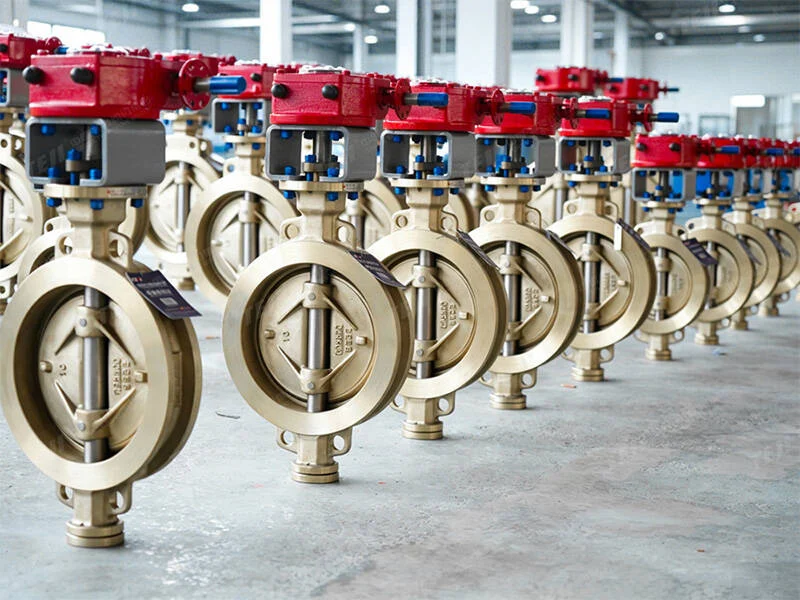
The double-offset butterfly valve is a valve that has 2 offset compare with the concentric butterfly valve. The first offset is the shaft located not in the center of the disk but located on slightly behind the disc. This offset will make the valve has a continuous sealing surface on the disc.

The second offset is the shaft located not in the pipe center-line but located on slightly in the right side of the center. This offset will make the valve didn’t touch the seat at all when it is fully opens (see illustration above). This arrangement will make the seat experience less friction than the concentric type butterfly valve and thus will prolong its lifetime. In a typical application, this double-offset butterfly valve is limited to class 600 only.

butterfly valves – concentric double offset and triple offset

Triple-offset Butterfly Valves

The triple offset butterfly valve is a valve that has 3 offset compare with the concentric butterfly valve. Just like the double-offset butterfly valve that has 2 offsets, this triple offset also has the same offset except it has one additional offset which is a conical shape seat. This conical-shaped seat will match with the disc that also fabricated to match the seat.

This arrangement will make the seat has no friction or rubbing while closing or opening. This arrangement will also make the valve has a bubble-tight in the high-pressure application and much longer lifetime rather than a double-offset butterfly valve. In typical application just like the double-offset butterfly valve, this triple-offset butterfly valve is limited to class 600 only.

butterfly valves – concentric double offset and triple offset

Difference between Concentric, Double-offset, and Triple-offset Butterfly Valve

triple offset metal butterfly valve

Search Here

Other News

MediaCompany News
The flow rate and velocity of a valve mainly depend on the valve diameter, are also related to the resistance of the valve’s structure to the medium, and are intrinsically related to factors such as valve pressure, temperature, and medium concentration.What exactly is the relationship between the two?
MediaCompany News
What exactly are “steel” and “iron,” what are their properties, and what is the relationship between them? Where do the terms 304, 304L, 316, and 316L come from, and what are the differences between them? Steel: A material with iron as its main element, generally containing less than 2% carbon, and also containing other elements. —GB/T 13304-91 “Classification of Steel” Iron: A metallic element, atomic number 26. Iron materials have strong ferromagnetism and good plasticity and thermal conductivity. Stainless Steel: A type of steel resistant to weak corrosive media such as air, steam, and water, or possessing rust-resistant properties. Commonly used grades are 304, 304L, 316, and 316L, which are the 300 series of austenitic stainless steels.
MediaCompany News
Valve Operating Temperature The operating temperature of a valve is determined by the material it is made of. The operating temperatures of commonly used valve materials are as follows:

Get In Touch

Welcome to Special Valve Group! As a leading manufacturer of high-performance valves, we specialize in custom solutions for industrial, oil & gas, and petrochemical applications. Whether you need technical consultation, product quotes, or after-sales support, our team is ready to assist. Feel free to email us at [email protected] or fill out the form below. We’ll respond to your inquiry within 24 hours.
Get A Quote
Welcome to Special Valve Group! As a leading manufacturer of high-performance valves, we specialize in custom solutions for industrial, oil & gas, and petrochemical applications. Whether you need technical consultation, product quotes, or after-sales support, our team is ready to assist. Feel free to email us at [email protected] or fill out the form below. We’ll respond to your inquiry within 24 hours.

Special Offer

20% off

on your first order

Welcome to Special Valve Group! As a leading manufacturer of high-performance valves, we specialize in custom solutions for industrial, oil & gas, and petrochemical applications. Whether you need technical consultation, product quotes, or after-sales support, our team is ready to assist. Feel free to email us at [email protected] or fill out the form below. We’ll respond to your inquiry within 24 hours.

Teji Valve Group Co., Ltd.
Welcome to Special Valve Group! As a leading manufacturer of high-performance valves, we specialize in custom solutions for industrial, oil & gas, and petrochemical applications. Whether you need technical consultation, product quotes, or after-sales support, our team is ready to assist. Feel free to email us at [email protected] or fill out the form below. We’ll respond to your inquiry within 24 hours.