Large-diameter ball valves are specialized valves designed for long-distance pipeline systems. They are critical for controlling high-pressure, high-flow fluid systems and are typically installed in pipelines to regulate or shut off the flow.
Before exploring large-diameter forged steel soft-seated ball valves, let us first clarify the criteria for defining “large-diameter.”
| Small bore | Nominal size ≤ 1 1/2 inches |
| Medium bore | Nominal size 2 inches – 12 inches |
| Large bore | Nominal size 14 inches – 48 inches |
| Extra-large bore | Nominal size ≥ 56 inches |
Classifying ball valves by bore size ensures the selection of the most suitable valve for specific pipeline requirements.
Structural Features of Large-Bore Ball Valves
- Valve Body: Houses the ball and ensures smooth fluid flow.
- Ball: Features a fixed (trunnion-mounted) design to minimize wear and ensure reliable sealing.
- Dual-Seat Sealing: Utilizes a two-stage structure to enhance sealing reliability.
- Stem and Actuator Compatibility: Supports integration with pneumatic or electric actuators for remote control.
- Pressure Balancing: Reduces operating torque and simplifies valve operation. Classification of Large-Bore Ball Valves—Fully Welded Ball Valves.
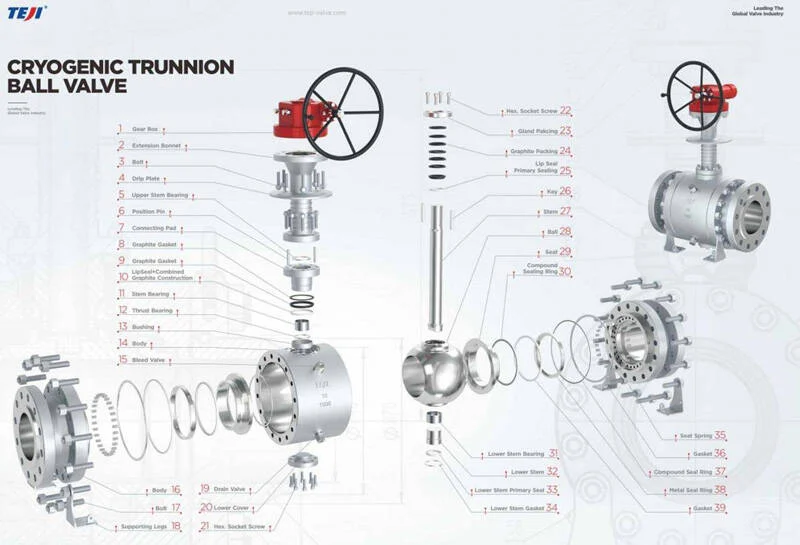
As a professional valve manufacturer, TEJI subjects every valve to 100% testing and inspection in strict accordance with standards—from raw materials to final packaging—before shipment. We are committed to providing high-quality products and services to meet the demands of the valve industry. If you are looking to make a purchase, TEJI’s 8-inch, 2500LB Cryogenic Ball Valve is an excellent choice to meet your needs.
Specifications
- Valve Size: 1/2” ~ 36” (Cast Steel) / 1/2” ~ 48” (Forged Steel)
- Pressure Rating: ASME 150# ~ 2500#
- Temperature Range: Down to -196°C
- Codes and Standards: API, BS, ASME, ASTM
- Configuration: End connections include socket weld, butt weld, or flanged connections.
Design Features
All valve components operating below -100°C undergo cryogenic treatment to prevent low-temperature brittleness and volumetric changes caused by material phase transitions at low temperatures.
An extended bonnet (long-neck) design keeps the packing operating temperature above 0°C, effectively preventing seal degradation or failure caused by low temperatures; it also facilitates cold insulation cladding to minimize thermal loss.
Floating ball valves utilize an “upstream pressure relief, downstream sealing” design, effectively preventing abnormal pressure buildup in the body cavity due to temperature fluctuations and ensuring the safe operation of the valve and pipeline.