With increasing global awareness of environmental pollution in recent years, countries and the world are striving to develop clean energy to gradually replace polluting traditional energy sources, providing impetus for development. In particular, liquefied natural gas (LNG) and liquefied petroleum gas (LPG) are rapidly emerging as new energy sources worldwide. This has led to the development of more similar cryogenic operating media, with LNG, CNG, liquid oxygen, liquid nitrogen, and liquid hydrogen being the most widespread.
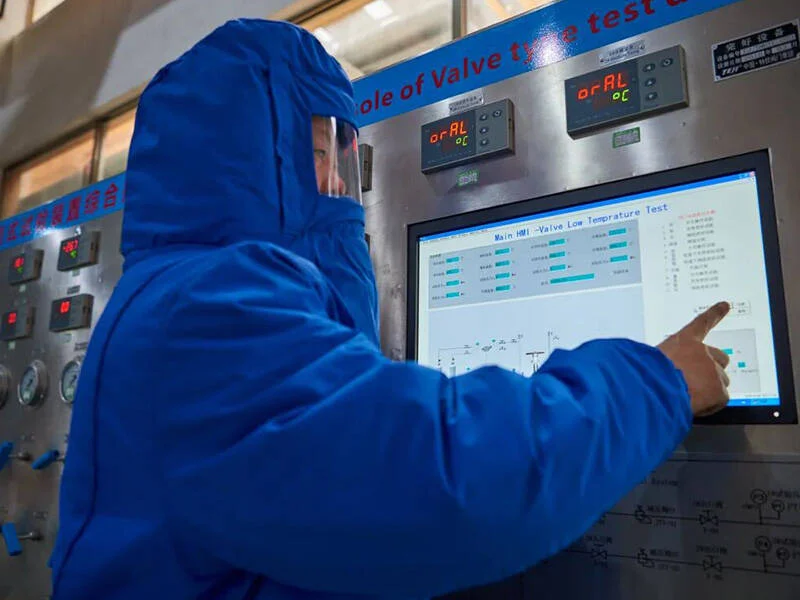
LNG, as a key clean energy source being vigorously developed by the state, has experienced explosive growth. Along with its development, cryogenic valves, as crucial control and shut-off components, face entirely new requirements, especially in structural design, process design, and testing, all of which must meet the new operating conditions. This article, based on practical application cases of cryogenic butterfly valves in my country, introduces a novel structural design for online maintenance butterfly valves, laying the foundation for a new development direction for cryogenic butterfly valves in China.
Existing Cryogenic Butterfly Valve Structure
Flange Connection Structure
The common flange connection structure of cryogenic butterfly valves in China is a modification of the existing conventional triple-eccentric butterfly valve. There are two main derived structures. The first type retains the internal structure but extends the support. The drawback of this structure is that the valve seat sealing structure cannot adapt well to the micro-deformation under ultra-low temperature conditions, making effective sealing difficult. The second type changes the valve seat to a movable structure, using a positioning plate and valve seat sleeve to press the movable valve seat into the valve body cavity. This structure optimizes the valve seat structure, making it movable and compensating for leakage caused by deformation under temperature variations. The drawback is that it does not allow for online maintenance; when valve internals need normal replacement, the valve must be disassembled for replacement.
Side-mounted structure with maintenance compartment
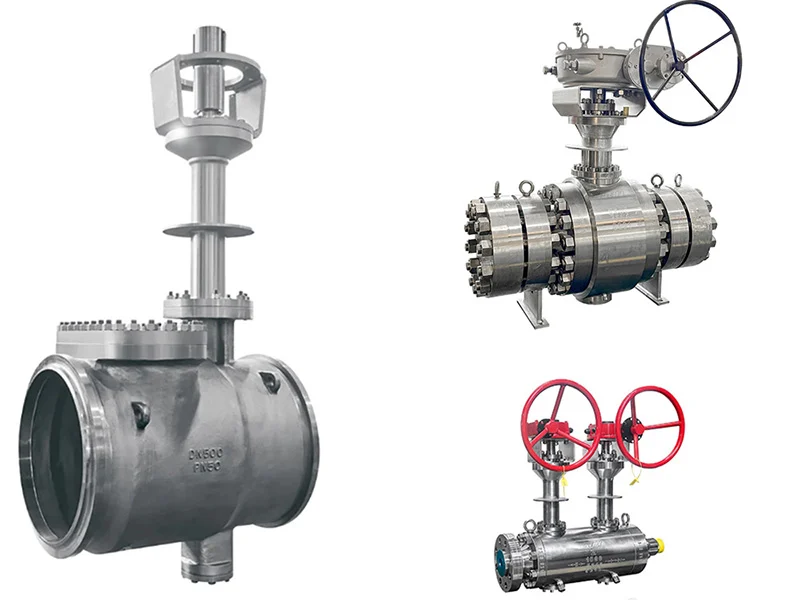
To further reduce leakage points, most ultra-low temperature valves are connected to pipelines by welding. To facilitate maintenance and replacement of internal parts, a side-mounted structure with a maintenance compartment, as shown in the right figure, has emerged. This structure, based on the previous structure, has a manhole on the side, through which the butterfly plate and sealing components are installed. When the valve needs maintenance, the maintenance cover can be opened to access the internal cavity for replacement. The disadvantages are that the valve structure is longer, and the valve body is several times heavier than a conventional valve; secondly, the length is not standardized, and each manufacturer designs a different length, making valve replacement in pipelines very troublesome.
Structural Design of the New Top-Mounted Detachable Online Maintenance Cryogenic Butterfly Valve
Main Components: Pressure plate screw, pressure plate, sealing ring, movable valve seat, pressure ring screw, accumulator ring, retaining ring, four-ring, pressure ring, valve stem, valve body.
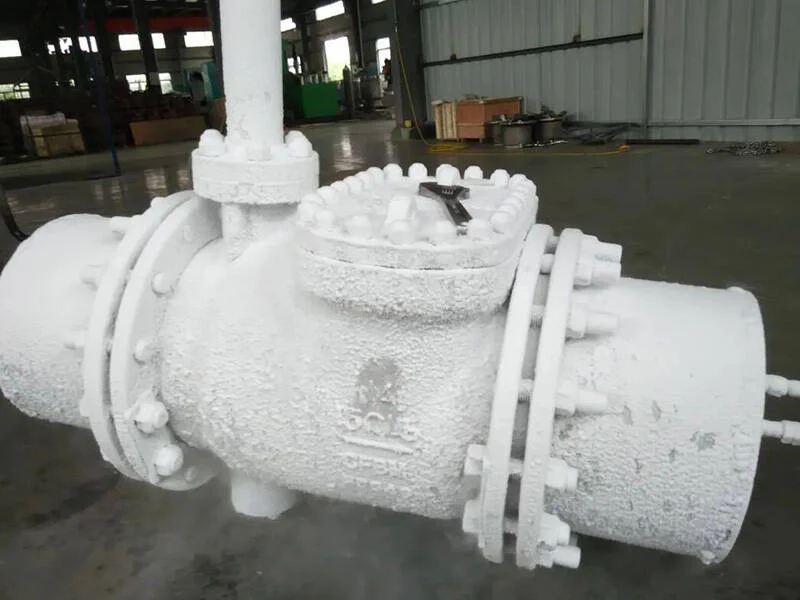
Main Features: Compared with the previous two types of cryogenic butterfly valves, this top-mounted detachable online maintenance cryogenic butterfly valve combines the advantages of the previous two valves with the characteristics of a wedge gate valve. The entire internal main sealing structure adopts a side-mounted internal mode with a maintenance compartment. The valve body and valve cover structure refer to the design concept of a wedge gate valve, and all internal parts are installed from the middle; when internal maintenance is required, the top valve cover is opened to access the compartment for maintenance or replacement of internal parts. Compared to the previous two types of butterfly valves, this structure eliminates the need for a separate inspection port, significantly reducing valve body weight. Secondly, it reduces leakage points. Thirdly, the overall valve length is halved, lowering the possibility of leakage caused by deformation due to temperature changes. Fourthly, the internal components such as the butterfly plate, pressure plate, and sealing rings are interchangeable with those of conventional structures.
Other Applications
Besides replacing existing butterfly valves on LNG pipelines, the new online maintenance butterfly valve structure can be widely adopted in other similar main pipelines where valve disassembly is inconvenient. In many process pipelines in my country’s petrochemical industry, there are areas where operation cannot be stopped 24 hours a day, or where work can only be temporarily suspended for emergency repairs. In such cases, disassembling valves for localized repairs is time-consuming, inefficient, and costly, especially in areas with large-diameter pipelines where disassembly and hoisting are difficult. This structure effectively avoids these problems, significantly saving time and reducing costs.
The new top-mounted, detachable, online maintenance cryogenic butterfly valve has enormous development potential in the current global trend of promoting new energy sources. Especially with the explosive growth of LNG in China, the research and development speed of cryogenic valves has lagged far behind the needs of new energy development. This structure’s online maintenance function combines the advantages of various cryogenic valves currently on the market, borrowing the structure of an ASME wedge gate valve bonnet while retaining the original side-mounted online maintenance structure. It also shortens the structural length, reducing irregular deformation caused by temperature changes, thus lowering the possibility of seal leakage and significantly improving the long-term stability of the valve.
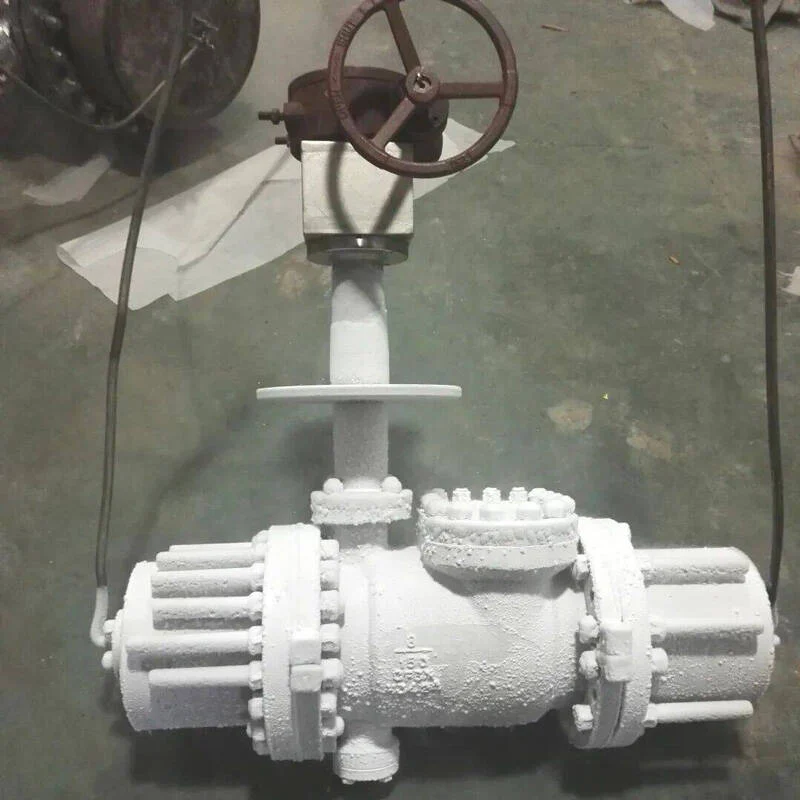
Secondly, this structure reduces external leakage points, avoiding the disadvantages of using LNG valves. In the current market economy, the high cost of top-loading cryogenic online maintenance ball valves is leading end-users to gradually replace them with cryogenic online maintenance butterfly valves. As cryogenic online maintenance butterfly valve technology continues to develop and its performance becomes increasingly stable, its popularity among customers will continue to rise, and its application will become increasingly widespread.
Teji Valve Group not only specializes in producing high, medium, and low-pressure industrial valves and cryogenic valves, but also manufactures water system valves suitable for smart water management and long-distance water transmission projects. With a comprehensive product portfolio, strong supporting capabilities, high cost-effectiveness, and long lifespan, the company boasts numerous advantages that place it at the forefront of the industry. The company is committed to providing the market with energy-saving, intelligent, environmentally friendly, safe, aesthetically pleasing, and durable products, along with worry-free service!