A butterfly valve is a type of valve whose closing part (valve disc) is a disc that rotates around the valve stem to open and close. It is mainly used for pipeline shut-off and throttling. The disc is driven by the valve stem, and a 90°rotation completes one opening and closing cycle. By changing the deflection angle of the disc, the flow rate of the medium can be controlled.
Common butterfly valves include wafer-type butterfly valves, lug-type butterfly valves, and flange-type butterfly valves. Butterfly valves are suitable for engineering systems that transport various corrosive and non-corrosive fluid media, such as generators, coal gas, natural gas, liquefied petroleum gas, city gas, hot and cold air, chemical smelting, power generation, environmental protection, and building water supply and drainage systems. They are used to regulate and shut off the flow rate of media.
As a professional valve manufacturer and supplier, TEJI offers a variety of butterfly valves suitable for various operating conditions to meet your diverse needs. Let’s take a look at some butterfly valve options.
TEJI’s Four Types of Butterfly Valves
A concentric butterfly valve is a basic valve where the valve disc’s center coincides with the valve stem axis and is located on the pipeline centerline. This valve features a simple and compact design, suitable for low-pressure, normal-temperature operating environments.
The double offset butterfly valve design is based on two eccentric structures:
First eccentricity: The valve stem axis is off-center.
Second eccentricity: The valve disc is off-center from the valve stem axis.
This design allows the valve disc to gradually contact the valve seat when closing, reducing impact and wear; simultaneously, it allows for rapid disengagement from the valve seat when opening, reducing friction.
A triple offset butterfly valve is a high-performance butterfly valve whose design principle utilizes three eccentric structures to achieve valve opening and closing.
The triple eccentric structure consists of:
First eccentricity: The valve stem axis is off-center.
Second eccentricity: The valve disc center is off-center from the valve stem axis.
Third eccentricity: The valve disc sealing surface is conically eccentric relative to the valve seat.
This design ensures the valve disc fits tightly against the valve seat when closed and quickly disengages when opened, thus improving the valve’s service life.
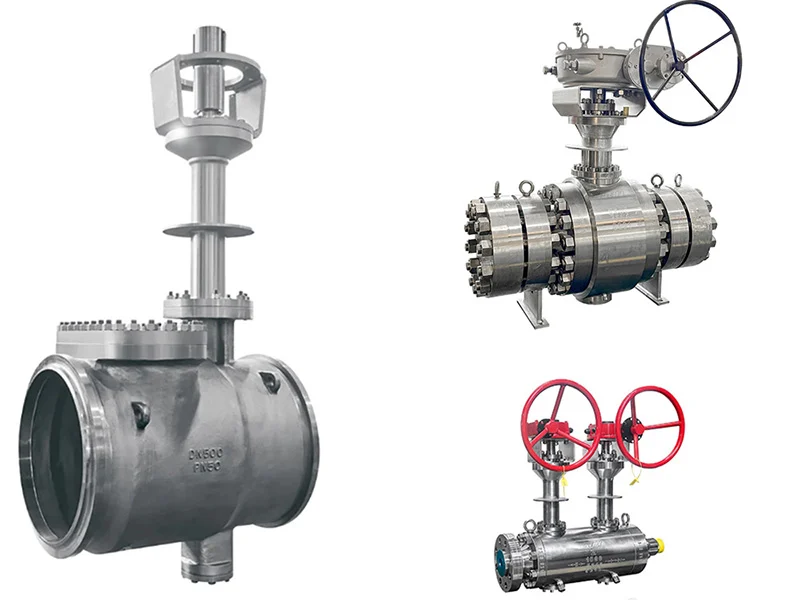
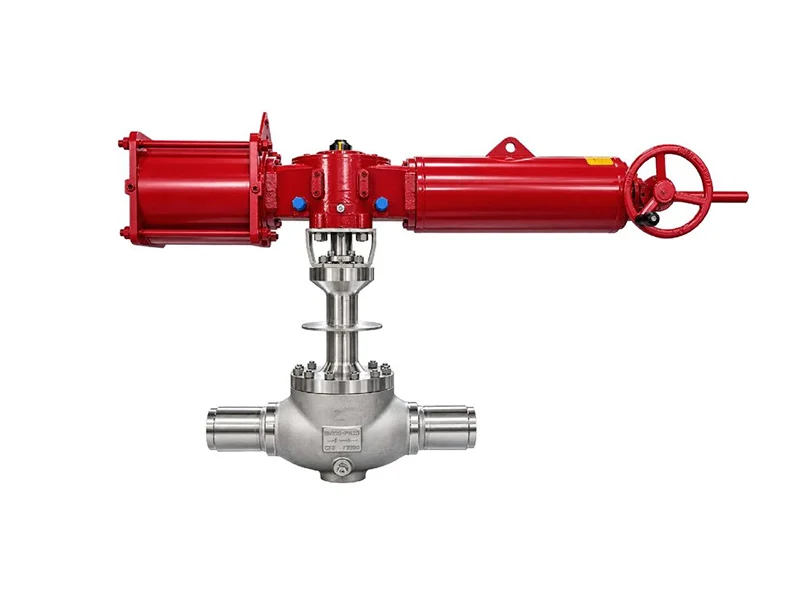
Compared to ordinary butterfly valves, cryogenic butterfly valves are more suitable for stringent ultra-low temperature conditions. TEJI, in designing cryogenic butterfly valves, strictly considers the user’s actual application, greatly emphasizing practicality.
The dual sealing design of valve stem lip seal + packing reduces packing usage; the extended bonnet design strictly controls the gap between the valve stem and the extended neck, reducing cold flow and preventing packing freezing, thereby avoiding malfunctions caused by valve stem scratches and increased reversing torque; the gland and gland sleeve adopt a self-centering design, effectively preventing uneven pressure on the gland and avoiding imbalance; finite element-assisted design is used to obtain the optimal wall thickness of the extended bonnet, ensuring optimal cooling effect.
Application Areas of Four Types of Butterfly Valves
For valve beginners, choosing the right valve for a specific application scenario can be confusing. Let’s take a look at these four types of butterfly valves and see which scenarios each is best suited for.
Concentric Butterfly Valve: Suitable for low-pressure, normal-temperature environments such as water supply, building air conditioning, food processing, and light industry.
Double Offset Butterfly Valve: Widely used in urban heating, gas, and water supply networks.
Triple Offset Butterfly Valve: Primarily used in demanding environments such as petrochemicals, power generation, and metallurgy.
Cryogenic Butterfly Valve: Specifically designed for LNG, air equipment, and liquid nitrogen/liquid oxygen transportation.
Valves are hybrid structures combining pressure vessels and operating machinery, and they operate under pressure most of the time. Therefore, routine inspection and maintenance are essential to extend their lifespan.
When valves remain in one position for extended periods, their operational performance may deteriorate due to corrosion or the accumulation of harmful substances on moving parts. Regular inspection, maintenance, and verification of the pressure boundaries between the valve stem and body, fixed assembly connections, and effective seals are necessary. The external structure of valves is generally easy to inspect and maintain; timely and appropriate measures should be taken to prevent mechanical damage and to protect them from corrosion by atmospheric deposits, chemicals, or humid gases. Regular lubrication of working interfaces such as threads, bearings, and gears is also crucial. These simple daily actions can save you a significant amount of money on valve maintenance or replacement costs.
If you are looking for a suitable valve supplier, please choose us; TEJI is always at your service.